Companion Plants
If you're dreaming of harvesting crisp, sweet 🥕 this fall, the key question is: when can I plant carrots in Zone 6?
Planting them 2-3 weeks before your last frost date (around mid-April) gives them the cool soil they crave to germinate smoothly, while waiting too long risks bolting or stunted growth.
But here's the catch: your exact planting window depends on whether you're in 6a (colder) or 6b (milder), and whether you're sowing in spring or late summer. Get this wrong, and you'll end up with forked roots or bitter flavors—neither of which you want after all that effort.
I'll break down the precise weeks before last frost that work for your specific sub-zone, plus pro tips for soil prep and avoiding common mistakes. By the end, you'll know exactly when to drop those seeds for perfect harvests from July to October.
Ready to transform your garden into a carrot powerhouse? Let's get those 🥕 growing on schedule—no guesswork, just results.

Zone 6 carrot planting calendar: exact weeks before last frost for success
In Zone 6, your carrot-growing success hinges on timing—specifically, planting 2–3 weeks before your last frost date (typically mid-April). This window ensures seeds germinate in 55–65°F soil, the sweet spot for carrot growth.
Miss it, and you risk frost damage or bolting from heat stress later in the season.
Carrots thrive in cool weather, making early spring (March–April) and late summer (July–August) your best planting windows. For Zone 6a (colder microclimates), aim for March 15–April 1; Zone 6b gardeners can push to April 1–15.
Always check your local frost dates—a quick online search for your zip code will give precise timing.
Here’s the golden rule: Plant when your soil reaches 55°F and stays above 40°F at night. Use a soil thermometer to confirm—cold, wet soil delays germination, while warm soil (above 80°F) triggers bolting (flowering = bitter roots).
| Planting Window | Zone 6a (Colder) | Zone 6b (Warmer) | Key Notes |
|---|---|---|---|
| Early Spring | March 15–April 1 | April 1–15 | Soil temp: 55–65°F; use row covers if frost threatens. |
| Late Summer | July 15–August 1 | July 1–15 | Soil temp: 60–70°F; choose short-season varieties (e.g., 'Early Nantes'). |
| Succession Planting | Every 2–3 weeks | Every 2–3 weeks | Stagger seeds for continuous harvest; stop 6–8 weeks before first frost. |
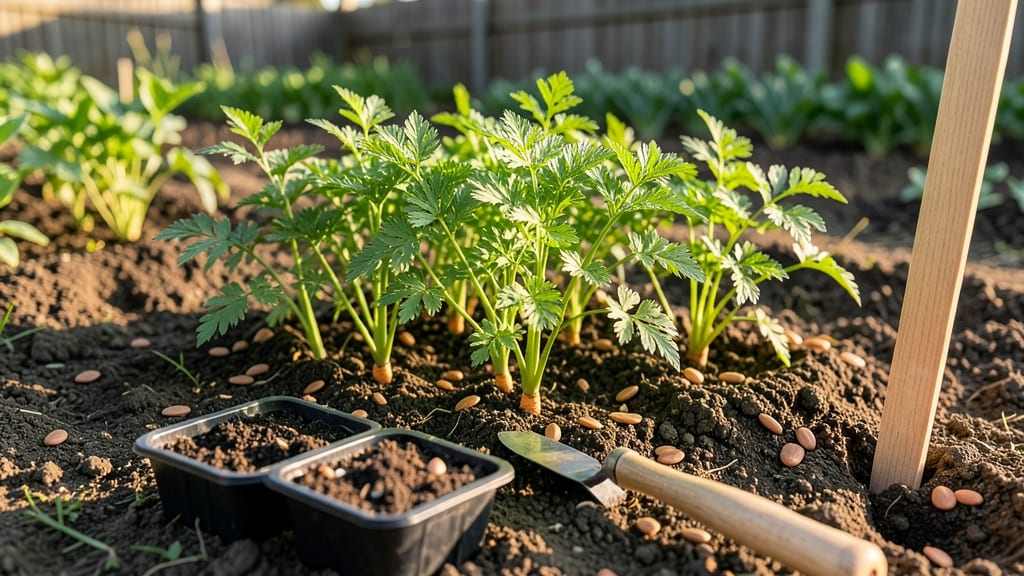
For direct sowing (the preferred method), scatter seeds ¼ inch deep in loose, stone-free soil—carrots hate rocks! Space rows 12–16 inches apart to prevent forking (split roots). If transplanting (risky for carrots), use seedlings no older than 4 weeks and plant in deep, fertile soil to avoid stunted growth.
Pro tip: Mix carrot seeds with sand before sowing—it improves spacing and reduces overcrowding, which leads to small, misshapen roots. Aim for thin seedlings to 2 inches apart once they’re 2 inches tall. Mulch with straw to retain moisture and suppress weeds.
In Zone 6, your last chance for carrots is late July–early August. After that, bolting risk rises as days shorten. For a fall harvest, choose fast-maturing varieties like 'Paris Market' (50 days) or 'Little Finger' (55 days). These tolerate cooler temps better than heirlooms.
Avoid planting in mid-summer (June–July) unless you’re in a high-elevation part of Zone 6—soil temps often exceed 80°F, causing seeds to bolt before forming roots. If you must plant then, use shade cloth and extra water to keep soil cool.
Track your harvest timeline: Most carrots need 70–80 days to mature. Plant succession crops every 2–3 weeks from spring through early summer to enjoy continuous harvests until October. Use a planting calendar to mark key dates—it’s the secret weapon for Zone 6 gardeners!
Remember: Frost-sensitive carrots can survive light frosts (28°F) but turn woody if frozen. If an early frost threatens, harvest what you can and mulch heavily to protect remaining plants. With the right timing, you’ll enjoy crisp, sweet carrots from June through October—no greenhouses needed!
5 Critical factors that determine your carrot planting schedule in Zone 6
Your carrot planting success hinges on five key factors that interact like a well-tuned garden orchestra. First, soil temperature must reach at least 45°F—cooler soils delay germination, while warmer soils (above 80°F) trigger bolting. In Zone 6, this typically means waiting until mid-April for spring plantings.
Next, frost dates dictate your window. Zone 6's average last frost falls around April 15, but planting 2-3 weeks before gives seeds time to germinate before potential late frosts. For fall crops, aim for July-August to harvest before the first frost in mid-October.
Day length affects growth speed—longer summer days accelerate maturity, while shorter fall days slow it. This is why succession planting every 2-3 weeks works best in Zone 6's 165-day frost-free season.
Seed maturity matters too. Fast varieties like 'Early Nantes' (60 days) work for late spring plantings, while slower 'Danvers Half Long' (80 days) need early starts. Always check seed packets for days-to-maturity when planning.
Don't overlook soil conditions—carrots hate compacted or rocky soil. Loosen the top 12 inches and remove stones before planting. In Zone 6, well-draining loam with pH 6.0-7.0 yields the crispiest roots.
Finally, weather patterns vary by Zone 6 sub-region. Northern 6a areas (like Chicago) may need to wait until late April, while Southern 6b (like Atlanta) can start in early AprilAlmanac frost dates for precision.
- 🌡️ Soil temp: 45°F+ for germination, 80°F+ causes bolting
- ❄️ Frost window: Plant 2-3 weeks before last frost (April 15)
- ⏳ Day length: Longer days speed growth; shorter days slow maturity
- 🌱 Seed variety: Fast (60 days) vs. slow (80 days) maturity types
- 📏 Soil prep: Loosen 12", remove stones, test pH (6.0-7.0)
- 🌦️ Local climate: Northern 6a waits longer than Southern 6b
Pro tip: Use a seedling heat mat if planting early in cool Zone 6 soils. This can jumpstart germination by 5-7 days in chilly springs. For fall crops, focus on short-day varieties like 'Paris Market' to avoid bolting before frost.
Remember, succession planting every 2-3 weeks ensures a continuous harvest. In Zone 6, this means starting new batches in April, May, June, and July for fall enjoyment. The key is balancing these factors—soil, frost, light, and variety—to match your local microclimate.