
Plants
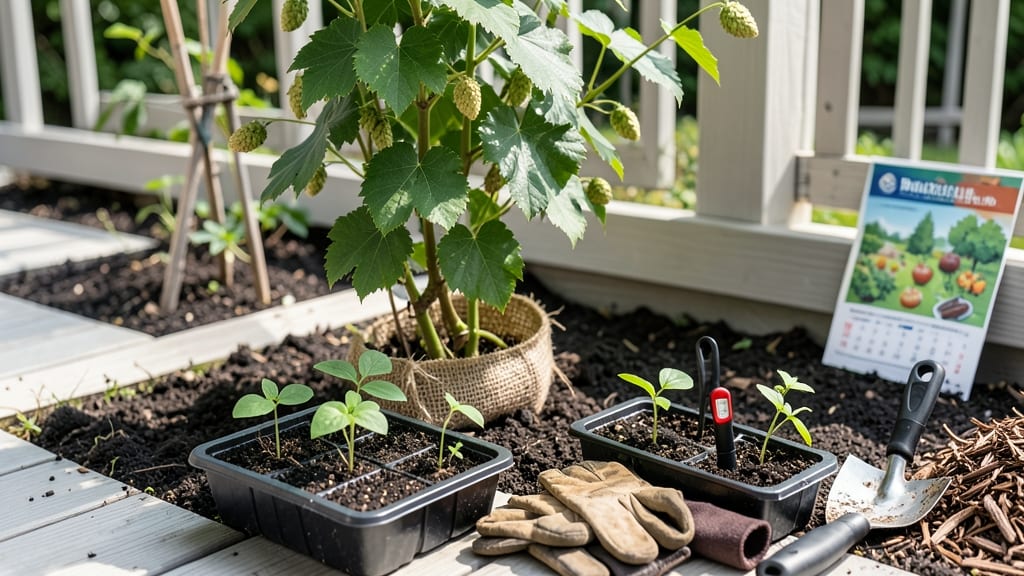
The best time to plant hops in Michigan isn’t just about the calendar—it’s about dodging frost, nurturing strong roots, and setting your vines up for a 20-foot climb by harvest.
With Michigan’s 5a-6b zones, a late April to early May window is your golden ticket, but one wrong move could leave your 🌿 hops struggling through a cold snap or wilting in summer heat.
Why does timing matter so much? Hops are finicky—they need 150 frost-free days to mature, and planting too early risks frost damage, while waiting too long stunts growth.
I’ll break down exactly when to prep your soil, how to spot the last frost in your region, and which hop varieties thrive best in Michigan’s short but sweet growing season.
Whether you’re a first-time gardener or a seasoned green thumb, getting this right means the difference between a bountiful harvest and a sad, scraggly vine.
Let’s make sure your hops get the strong start they deserve—because once those cones are ready in late August, you’ll want every bit of that hard work to pay off.
Ready to turn your backyard into a hop haven? I’ll walk you through the exact steps, from soil prep to safeguarding your plants against Michigan’s unpredictable weather. No guesswork—just proven techniques for stronger, healthier hops that’ll have your neighbors asking for tips.
Michigan’s hop planting zones: how USDA Zones 4-6 affect your timeline
Michigan’s USDA Zones 4-6 create dramatic differences in hop planting success, with Upper Peninsula growers facing shorter seasons than those in Southern Michigan. The key to thriving hops lies in understanding your last frost date and soil temperature thresholds—typically 50°F (10°C) for consistent germination.
In Zone 4 (UP), where frosts linger until mid-May, hops must be planted after May 10 to avoid cold damage. Meanwhile, Zone 5-6 regions (like Grand Rapids or Ann Arbor) can safely plant April 20-May 10, giving vines a 150-day growing window before first frost.
Soil temperature is equally critical—hops won’t sprout until soil reaches 50°F (10°C). Use a soil thermometer to confirm readiness, especially in sandy UP soils that warm faster than clay-heavy Southern Michigan soils.
🌱 Michigan Hop Planting Zone Comparison
| Zone | Last Frost Date | Optimal Planting Window | Soil Temp Threshold | Key Risk |
|---|---|---|---|---|
| 4 (UP) | Mid-May | May 10–May 25 | 50°F (10°C) | Late frosts |
| 5 (Northern Lower) | Early May | April 25–May 15 | 50°F (10°C) | Early-season drought |
| 6 (Southern) | Late April | April 15–May 5 | 50°F (10°C) | Humidity/fungal risks |
*Source: Michigan State University Extension, 2023
For Zone 4 growers, extending the season with row covers or black plastic mulch can warm soil faster and protect young plants. In Zone 6, prioritize disease-resistant varieties like Fuggle to combat Michigan’s humid summers.
Always check Michigan State University’s frost maps for your exact county, as microclimates (like lakes or urban heat islands) can shift planting windows by 1-2 weeks. Pro tip: Plant 1-2 weeks later if your spring has been unusually cold.
Hops planted too early risk cold damage, while late planting cuts cone development time. Aim for 60-70 days of growth before first frost to ensure viable harvests. In Zone 5-6, this means planting by May 15 at the latest.
Use hardened crowns (not bare roots) for Zone 4 to survive late frosts. In Zone 6, bare-root plants can be direct-sown 2 weeks earlier if soil temps are stable. Always acclimate plants for 24 hours before transplanting to avoid shock.
Michigan’s short growing season demands fast-maturing varieties. Prioritize 90-100 day varieties like Cascade or Centennial over slower growers. Start indoors in Zone 4 for a 2-week head start.
Remember: Hops need 6-8 hours of sun daily. In shady UP gardens, supplement with grow lights or choose tolerant varieties like Willamette. Southern Michigan growers should watch for powdery mildew in humid conditions.
Step-by-Step hop planting schedule: from soil prep to last-frost safeguards
Timing your hop planting in Michigan isn’t just about avoiding frost—it’s about giving your vines the longest possible growing season to reach their full 20-foot height.
In USDA Zones 5a-6b, the window between last frost (mid-April) and first frost (mid-October) is tight, so every day counts. My step-by-step schedule ensures you’re ready before the May 15 deadline for Zone 5 areas.
Start by testing your soil’s drainage and pH (aim for 6.0-7.0). Hops hate soggy roots, so amending with compost or sand is critical if your soil feels compacted. I’ve learned the hard way—waterlogged soil leads to root rot, and Michigan’s heavy clay can trap moisture like a sponge.
Mix in 2-3 inches of compost and till it into the top 12 inches of soil.
🌱 Step 1: Soil Prep (4-6 Weeks Before Planting)
- Test soil pH (use a home test kit or send to MSU Extension).
- Amend with compost (2-3 inches) and sand if needed for drainage.
- Install trellis system (hops need 10-15 feet of vertical space).
- Mark planting spots 12-18 inches deep and 6 feet apart.
Next, harden off your hop plants if starting indoors. Michigan’s cool springs can shock tender shoots, so I always acclimate plants outdoors for 7-10 days before transplanting. Place them in a shady spot for a few hours daily, gradually increasing exposure. This mimics the temperature swings they’ll face after planting.
🌱 Step 2: Planting (Late April–Early May)
- Plant crowns 12-18 inches deep in well-draining soil.
- Space plants 6-10 feet apart (hops spread aggressively).
- Water deeply after planting (5-10 gallons per plant).
- Mulch heavily (3-4 inches) to retain moisture and suppress weeds.
After planting, monitor soil moisture closely. Hops need consistent watering, especially during flowering (July-August). I use a drip irrigation system to deliver 1-2 inches of water weekly, avoiding overhead sprinklers that can spread powdery mildew.
Michigan’s humid summers create the perfect conditions for fungal diseases, so circulation is key—prune lower leaves to improve airflow.
Finally, protect young plants from late frosts. Use row covers or frost cloth if temperatures dip below 40°F after planting. I’ve lost entire plants to unexpected spring frosts, so I always keep a weather alert app handy.
Once established, hops are hardy to Zone 4, but young shoots are extremely vulnerable.
With this schedule, your hops will have 120+ frost-free days to grow, ensuring a bountiful harvest of cones by late August. The key is preparation—soil, timing, and trellis—before the first sprout appears. Now, let’s talk about the best hop varieties for Michigan’s short but sweet growing season! 🌿