
Plants
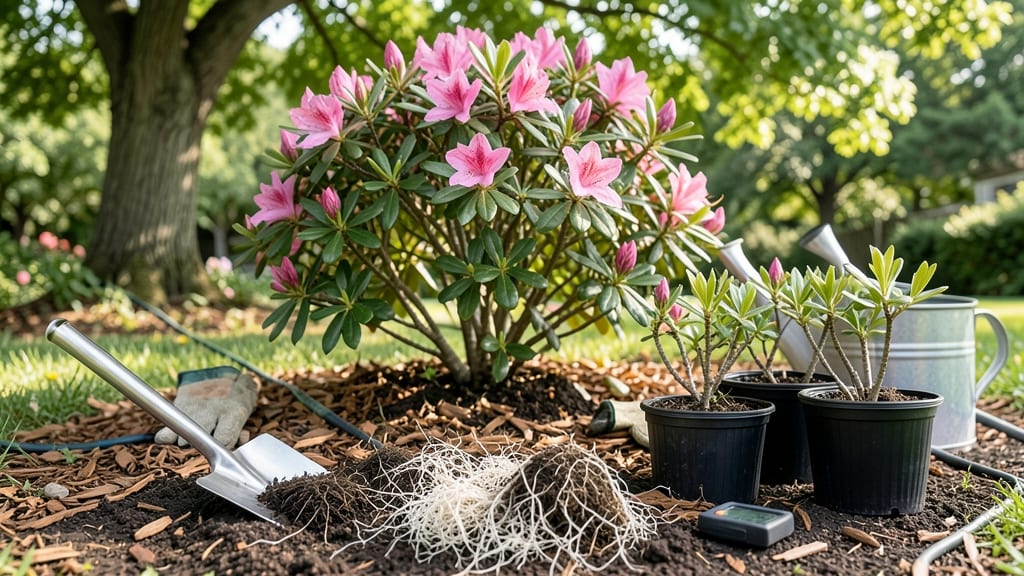
If you're dreaming of vibrant spring blooms from your azaleas 🌸 but struggling with when to plant azaleas in Maryland, the state’s climate can make timing tricky. Planting too early risks frost damage, while waiting too long can stunt root growth—both mean fewer flowers next season.
The secret lies in understanding your azalea variety's chill-hour needs and Maryland's 7a-7b zone quirks.
Most gardeners assume fall planting is the only option, but Maryland's microclimates—from drier western regions to humid eastern coasts—create two prime windows: late October through November for fall planting, or early March to mid-April for spring.
Evergreen varieties handle spring better, while deciduous types thrive when planted in fall before dormancy sets in.
Don't let Maryland's unpredictable frost dates (around November 15) catch you off guard. We'll break down exactly how to time your planting based on whether you're working with container-grown azaleas or digging in-ground.
Plus, I'll share the one soil prep trick that makes all the difference in Maryland's clay-heavy soils.
Ready to transform your garden into a springtime showcase? Let's dive into the precise timing and care tips that'll have your azaleas bursting with color year after year—without the guesswork.
Maryland azalea planting timeline by chill-hour requirements
Azaleas thrive in Maryland's climate, but their blooming success hinges on chill-hour needs—the number of hours below 45°F they require to set buds. Maryland spans USDA zones 5-8, so timing varies by variety.
Most azaleas need 300-900 chill hours, with Southern azaleas (300-600 hours) faring better in coastal areas and deciduous/evergreen azaleas (600-900 hours) thriving inland.
Planting at the wrong time can lead to missed blooms or weak root establishment. For example, Everest azaleas (900 hours) planted in Zone 8 need fall planting to meet their chill requirements, while Southern Indica varieties (300 hours) can handle spring planting in Zone 7b.
Let’s break down the best planting windows for each category.
🌸
| Variety Type | Chill-Hour Needs | Best Planting Window | Maryland Zones | Notes |
|---|---|---|---|---|
| Southern Azaleas | 300-600 hours | Fall (Oct-Nov) or Early Spring (Mar-Apr) | 7b-8a (Coastal) | Tolerates milder winters; blooms early. |
| Deciduous Azaleas | 600-800 hours | Fall (Oct-Nov) only | 6a-7b (Piedmont) | Drops leaves in winter; needs dormancy. |
| Evergreen Azaleas | 700-900 hours | Fall (Oct-Nov) only | 5a-7a (Western) | Retains foliage; needs cold for bud set. |
For Zone 5-6 gardeners (Western Maryland), fall planting is critical—especially for evergreen varieties like Girard's Pink or Ralph S. Moore. These shrubs need 800+ chill hours, so planting in October ensures roots establish before winter.
In Zone 7b-8a (Eastern Shore), Southern azaleas like Hino Crimson can handle spring planting in March, but fall is still preferred for root establishment.
Pro tip: Container-grown azaleas can be planted year-round in Maryland, but avoid summer heat (June-August) when transplant shock is higher. If you’re planting in spring, do it before buds swell (typically by mid-April) to avoid bud blast from late frosts.
🌿
Maryland’s microclimates also play a role. In humid Piedmont regions (e.g., Frederick County), fall planting reduces stress from summer heat, while coastal areas (e.g., Annapolis) can push spring planting slightly later due to milder winters.
Always check your last frost date—most of Maryland sees frost until mid-November, but Zone 8 areas (like Calvert County) may escape frost until December.
After planting, mulch heavily (3-4 inches) to protect roots from temperature swings and retain moisture. In dry Western Maryland, consider drip irrigation for the first 30 days to prevent transplant shock. For coastal gardens, prioritize well-draining soil to avoid root rot from heavy rains.
💧
Remember: Azaleas planted in fall have 6-8 weeks to establish roots before winter, while spring-planted shrubs need cool soil to avoid root burn.
If you’re unsure about your chill-hour zone, consult your local Cooperative Extension office—they often provide free soil tests and microclimate maps tailored to your county.
With the right timing, your azaleas will reward you with vibrant spring blooms for years to come—and Maryland’s diverse climate zones make it possible for nearly every gardener to succeed! 🌸
Best months to plant azaleas in Maryland's microclimates
Maryland's diverse geography means Western, Eastern, and Piedmont regions have different microclimates that affect azalea planting. While fall planting (October-November) is ideal statewide, spring planting (March-April) works best in coastal areas with milder winters.
In Western Maryland, drier conditions and colder winters favor late fall planting (November) to establish roots before frost. Eastern Maryland's coastal humidity allows early spring planting (March) when soil warms but before summer heat arrives.
The Piedmont region—with its high humidity and clay-heavy soil—benefits from fall planting (October) to avoid summer stress. Evergreen azaleas thrive here with morning sun protection.
| Region | Best Planting Months | Key Consideration |
|---|---|---|
| Western Maryland | November (fall) or April (spring) | Drier soil; avoid summer drought |
| Eastern Maryland | March (spring) or October (fall) | Coastal humidity; protect from salt spray |
| Piedmont Region | October (fall) or March (spring) | Clay soil; amend with organic matter |
For container-grown azaleas, adjust timing slightly—plant 1-2 weeks earlier in spring or 1-2 weeks later in fall. Bare-root azaleas must be planted immediately upon arrival to prevent root desiccation.
Always check local frost dates—Baltimore averages last frost on April 15, while Western Maryland may see frost until May 1. Evergreen varieties need extra care in windy coastal areas.
After planting, mulch heavily (3-4 inches) to retain moisture and regulate soil temperature. Water deeply once a week for the first month to encourage root establishment. 🌸