
Plants
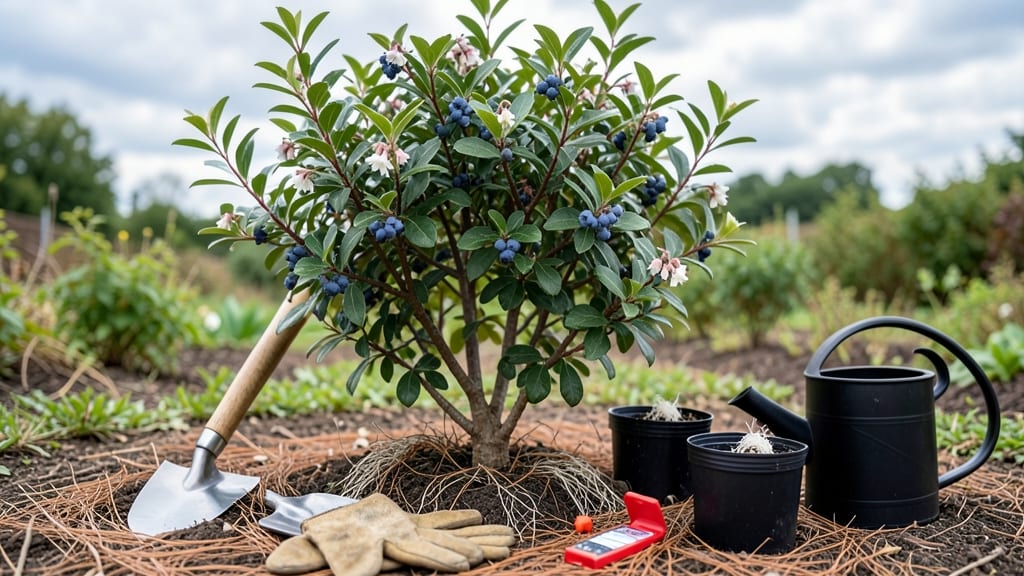
Timing your blueberry planting in Kentucky isn't just about the calendar—it's about surviving the state's unpredictable chill hours and sudden frost. If you plant too early, your 🫐 shrubs could freeze; too late, and they won't establish strong roots before summer heat hits.
The sweet spot? Late March to early April for bare-root plants or May to June for containers, when soil warms but frost risk drops.
Kentucky's USDA zones 6a-7a demand careful planning because blueberries need chill hours (400-1,000+ depending on variety) to fruit well. Skip this step, and you'll end up with leafy bushes but no berries.
I'll break down which varieties thrive here and exactly when to plant them—plus how to prep your soil for Kentucky's clay-heavy, alkaline conditions that blueberries hate.
You might think spring planting is your only option, but fall has its advantages too—just not in Kentucky's wet autumns. I'll show you how to time it right for either season, whether you're buying bare-root plants or container-grown shrubs.
The key? Avoiding that 30-day window before the first frost (usually mid-November) when new roots can't harden.
Ready to grow blueberries that produce gallons of fruit instead of just a few berries? Let's dive into the exact months, soil prep secrets, and variety choices that'll turn your Kentucky garden into a blueberry bonanza—without the common mistakes that kill most first-time growers.
Kentucky blueberry planting calendar: exact months by chill-hour needs
Kentucky’s USDA zones 5-8 create a tricky balance for blueberry growers—too early, and frost zaps young plants; too late, and heat stress stunts growth. The chill-hour requirements of your variety dictate the perfect window, with Northern Highbush needing 700-900 hours and Southern Highbush just 300-500.
Let’s break down the exact months to plant for each type, plus how to prep soil before the first frost risk.
For bare-root plants, the sweet spot is late March to early April, right after the average last frost date of March 15 (though this shifts 1-2 weeks depending on your microclimate).
Container-grown blueberries, however, can handle early May to June planting, giving them time to establish roots before summer heat peaks. Fall planting is only viable for container plants in September, but requires protecting roots from early frosts.
Your soil pH must be 4.5-5.5—Kentucky’s native clay is often alkaline, so test and amend with peat moss or sulfur at least 4-6 weeks before planting. Spread 3-4 inches of organic mulch (pine straw or wood chips) immediately after planting to retain moisture and acidify the soil over time.
Skipping this step is a common mistake that leads to poor yields.
| Variety Type | Chill Hours Needed | Best Planting Window | Soil Prep Deadline | Frost Risk |
|---|---|---|---|---|
| Northern Highbush | 700-900 hours | Late March–Early April | February (pH adjustment) | High (avoid late planting) |
| Southern Highbush | 300-500 hours | Early May–June | March (light amendment) | Low (heat-tolerant) |
| RabbitEye | 500-700 hours | September (container only) | August (mulch prep) | Moderate (root protection needed) |
If you’re in Northern Kentucky (zones 5-6), prioritize high-chill varieties like Bluecrop or Duke, planting by April 1 to avoid late frosts. Gardeners in Southern Kentucky (zones 7-8) can extend planting to mid-April and opt for low-chill varieties like Tifblue or Climax, which thrive in warmer microclimates.
Use a frost calendar for your county to fine-tune timing—Kentucky’s microclimates can vary by 10+ days even within 50 miles.
Pro tip: Soak bare-root plants for 4-6 hours before planting to revive roots, then trim any damaged stems with sterilized pruners.
Plant at the same depth as the root flare (where roots meet the stem), and water deeply immediately after. Container plants should be planted with their root ball slightly above soil level to prevent rot.
This small detail can mean the difference between a thriving bush and a struggling one.
Kentucky’s humid summers demand extra attention to watering and mulching after planting. New blueberries need 1-2 gallons of water per week (more in June-August) to establish roots, but overwatering can suffocate roots in clay soil.
Use a drip irrigation system to deliver water directly to the root zone while keeping leaves dry—this prevents fungal diseases like botrytis, which thrive in Kentucky’s damp air.
One critical trade-off in Kentucky is choosing between spring vs. fall planting. Spring planting gives plants the entire growing season to establish, but fall planting (for container plants) allows roots to grow before dormancy.
If you opt for fall, mulch heavily and use burlap wraps around the base to protect from early frosts. Never plant in fall with bare-root shrubs—they won’t survive Kentucky’s sharp winter temperature swings.
Finally, pollination is non-negotiable for blueberries. Plant at least two varieties within 50 feet of each other to ensure cross-pollination, unless you’re growing a self-pollinating variety like Bluegold. Kentucky’s native bees will handle most pollination, but a small bird feeder nearby can attract hummingbirds, which also help.
Skip this step, and you’ll end up with tiny, seedy berries—or none at all.
With these exact months and soil prep tips, your Kentucky blueberries will burst with flavor instead of struggling against the climate. Start planning now—your first harvest in late June will be worth the effort!
How to choose the right blueberry variety for Kentucky’s climate
Kentucky’s humid subtropical climate and USDA zones 6a-7a mean not all blueberry varieties will thrive. The wrong choice could leave you with leafy bushes but no berries—or worse, dead plants. The key?
Matching your variety to chill-hour requirements (the number of hours below 45°F needed to fruit) and heat tolerance. Southern Highbush varieties, like Duke or Misty, need only 200-300 chill hours, while Northern Highbush types like Bluecrop demand 800-1,000 chill hours.
Plant the wrong one, and you’ll waste years waiting for fruit.
For Northern Kentucky (zones 6a-6b), go for high-chill varieties like Bluecrop or Jersey, which handle Kentucky’s long winters and produce early-season berries. In Central/Southern KY (zones 7a-7b), low-chill varieties like Tifblue or Climax shine—they fruit reliably even with fewer than 400 chill hours.
Rabbiteye varieties (e.g., Powderblue) are a gamble in KY unless you’re in the far south, where they tolerate hot summers better.
🌱 Pro Tip: If you’re unsure about chill hours, check your local Cooperative Extension Service records—some KY counties hit 1,000+ chill hours, while others barely reach 500. Planting a mix of varieties (e.g., one high-chill, one low-chill) can extend your harvest season from June to August.
Top Blueberry Varieties for Kentucky
Bluecrop
Chill Hours: 800-1,000
Best For: Northern KY
Fruit Time: Mid-June
Pros: Reliable, large berries
Cons: Needs pruning
Duke
Chill Hours: 200-300
Best For: Central/Southern KY
Fruit Time: Late June
Pros: Heat-tolerant, early ripening
Cons: Smaller berries
Tifblue
Chill Hours: 300-400
Best For: Southern KY
Fruit Time: July-August
Pros: Large, sweet berries
Cons: Needs warm winters
🌿 Variety Tip: Pair one high-chill and one low-chill type for a longer harvest!
Beyond chill hours, watch for disease resistance. Kentucky’s humidity makes mummy berry and botrytis common threats. Varieties like Chester (Northern Highbush) or Premier (Southern Highbush) are bred to fight these issues.
Avoid older varieties like Stanley, which struggle in KY’s climate unless you’re willing to spray fungicides every season.
💡 Pollination Matters: Most blueberries are self-pollinating, but planting two compatible varieties (e.g., Bluecrop + Duke) boosts yields by 20-30%. Cross-pollination also improves berry size and flavor. Skip this, and you’ll end up with small, tart berries instead of sweet, juicy ones.
Finally, consider mature size. Dwarf varieties like Top Hat (3-4 ft tall) work for containers or small gardens, while standard types (6-12 ft) need 6+ feet of space. In Kentucky’s clay-heavy soils, dwarf varieties also root deeper, avoiding waterlogging during summer downpours.
If space is tight, opt for patio-friendly types like Peach Sorbet (semi-dwarf, 4-5 ft).