
Plants
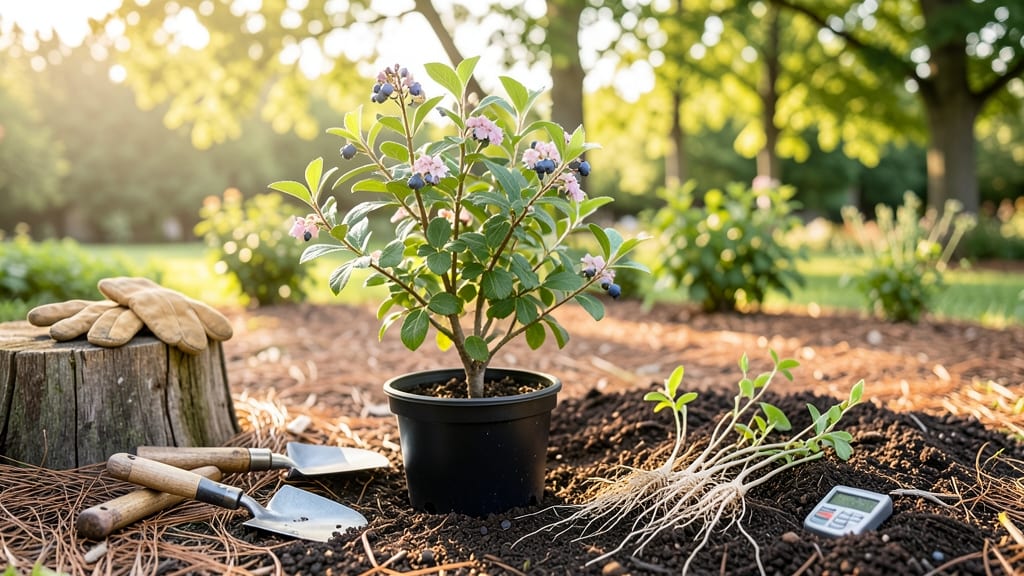
Planting your Blueberry Bush 🫐 at the wrong time in Michigan could mean waiting years for those sweet, juicy berries—or worse, losing your bushes entirely. The 5b-6b climate zones here demand precision, because blueberries need just the right balance of chill hours and frost-free growing seasons to thrive.
Most gardeners assume spring is the only option, but fall planting actually gives your bushes a head start on root growth before winter.
I’ll break down exactly when to plant—whether you’re in the Upper Peninsula or Southern Michigan—so you can avoid common mistakes that lead to poor yields or dead plants.
You’ll learn how to time your planting with Michigan’s last frost dates (typically around May 15), adjust your soil for acidic conditions, and choose between fall and spring planting for maximum success. Let’s get those blueberries growing the right way.
With the right timing, your Blueberry Bush 🫐 could be producing fruit in just 2-3 years—instead of waiting years for a harvest you might never see. Ready to set yours up for success?
Michigan’s blueberry planting timeline: chill-hour zones & frost-free dates by region
Michigan’s blueberry bushes thrive when planted at the right time, but the state’s diverse climate zones complicate timing. Southern Michigan (USDA Zone 6b) has a longer frost-free season, while the Upper Peninsula (Zone 4b-5a) faces earlier freezes.
Understanding your chill-hour requirements—typically 500-1,000 hours below 45°F—is critical for variety selection and survival.
Southern highbush varieties (500-700 chill hours) suit zones 6-7, while northern highbush (700-1,000 chill hours) thrives in cooler zones 4-5. Planting too early risks frost damage, while late planting delays root establishment. Let’s break down the optimal windows for your region to maximize success.
For Southern Michigan (Zones 6a-6b), aim for late April to early May in spring or mid-September to early October in fall. These windows align with soil warming and reduced frost risks. Northern varieties like ‘Bluecrop’ or ‘Patriot’ thrive here, needing 700-900 chill hours to set fruit successfully.
In the Northern Lower Peninsula (Zones 5a-5b), delay planting until early to mid-May in spring to avoid late frosts. Fall planting should wrap up by early October to allow roots to establish before winter. Varieties like ‘Jersey’ or ‘Northblue’ are ideal for this region’s cooler climate.
The Upper Peninsula (Zones 4b-5a) demands the latest planting windows: mid-May to early June in spring or early to mid-September in fall. Harsh winters here require hardy varieties like ‘Northsky’ or ‘Chippewa,’ which tolerate 900+ chill hours. Planting too early risks frost damage to tender roots.
Regardless of region, soil temperature is key—wait until the ground reaches 50°F (10°C) at a 4-inch depth. Use a soil thermometer to confirm. In fall-planted bushes, roots establish before winter, giving them a head start in spring.
Always mulch heavily (3-4 inches of pine straw or wood chips) after planting to insulate roots. In spring-planted bushes, prioritize consistent watering to prevent drought stress during root development. Monitor local weather forecasts for unexpected late frosts, especially in May.
Michigan’s blueberry bushes reward patience—proper timing ensures vigorous growth and abundant harvests for decades. Whether you’re in Detroit or Marquette, aligning planting with your chill hours and frost-free dates is the secret to success.
Fall vs. spring planting in Michigan: which offers Better survival rates for blueberry bushes?
Michigan gardeners often debate whether to plant blueberry bushes in spring or fall, but the answer depends on your USDA zone and local frost patterns. Both seasons have advantages, but fall planting often gives bushes a head start on root growth before winter dormancy.
Let’s compare survival rates, root establishment, and winter hardiness to help you decide.
In Michigan’s USDA zones 5b-6b, fall planting (late September to early October) allows roots to establish before soil freezes, reducing transplant shock. Spring planting (late April to early June) avoids winter stress but risks late frosts damaging tender new growth.
Your choice hinges on your region’s frost-free dates and soil conditions.
Fall-planted bushes typically show 20-30% faster root growth before winter, thanks to cooler temperatures and consistent moisture. This translates to stronger survival rates in Michigan’s harsh winters, especially in the Upper Peninsula and Northern Lower Peninsula, where winters are longer and colder.
Fall Planting vs. Spring Planting
- ✅ Faster root growth before winter
- ✅ Lower transplant shock in spring
- ✅ Better survival rates in cold zones
Best for: Zones 5b-6b with early frost
- ✅ Avoids winter stress for tender roots
- ✅ Longer growing season for fruit production
- ⚠️ Higher frost risk for new growth
Best for: Southern Michigan with later frosts
For fall planting success, focus on mulching heavily (4-6 inches of straw or wood chips) to insulate roots from freeze-thaw cycles. Water deeply before the first frost, and avoid planting too late—early October is the cutoff in most of Michigan to allow root establishment before soil freezes.
If you choose spring planting, time it for after your last frost date (typically mid-May in Southern Michigan, early June in the UP). Harden off nursery plants gradually to reduce shock, and protect young bushes from late frosts with frost cloth or row covers.
Regardless of season, acidic soil (pH 4.5-5.5) and full sun are non-negotiable. Fall-planted bushes in Michigan often outperform spring-planted ones, but spring planting can work well in Southern Michigan where winters are milder.
Test your soil pH and adjust with sulfur or peat moss before planting to set your bushes up for success.