
Plants
Planting grass seed at the wrong time in California can turn your green dreams into a patchy, uneven mess—especially when coastal and inland climates play by totally different rules.
Whether you're in Zone 9-10 near the coast or Zone 7-9 inland, getting the timing right means the difference between a lush lawn and wasted effort.
I’ve seen firsthand how late summer to early fall (August–October) is the golden window for most of California, but coastal areas can stretch it later thanks to milder winters. The key? Soil temperatures between 60–75°F and consistent rainfall—something that’s harder to nail in inland valleys where drought lurks.
What you’re about to discover isn’t just about picking a month—it’s about reading your microclimate like a pro.
We’ll break down exactly when to plant for your specific corner of California, plus how to prep your soil and choose seeds that won’t wilt under the state’s Mediterranean whiplash of wet winters and bone-dry summers.
Skip the guesswork and learn the exact timing that’ll give you that thick, vibrant lawn without the headaches. Let’s get started.
California grass seed planting timeline by region: coastal vs inland best times
California’s Mediterranean climate creates dramatic differences between coastal and inland regions, making timing everything for grass seed success.
In coastal areas like San Francisco or Santa Barbara, mild winters and consistent rainfall favor fall planting (August–October), while inland valleys (e.g., Sacramento or Fresno) thrive with spring planting (February–March) to escape summer drought.
Soil temperatures below 60°F (15°C) or above 75°F (24°C) can stall germination, so knowing your microclimate is key.
For coastal California, the optimal window is late summer to early fall—when temperatures hover around 65–70°F (18–21°C) and rainfall increases. Inland areas, however, should aim for early spring (February–March) to take advantage of warming soils and spring showers before summer heat arrives.
Skipping these windows often leads to patchy growth or weed competition, especially in drought-prone zones.
🌱
In Northern California, cooler coastal zones (e.g., Humboldt or Mendocino) can extend the fall window into November, while Southern California’s inland deserts (e.g., Palm Springs) must plant by mid-October to avoid winter dormancy.
Always check your USDA zone—coastal areas (Zone 9–10) have a 300+ frost-free days, while inland valleys (Zone 7–9) face 200–250 frost-free days, shrinking the safe window.
For spring planting, inland regions should start by mid-February to ensure seeds germinate before April’s heatwave. Coastal areas can push planting to April, but May planting risks summer drought and weed competition.
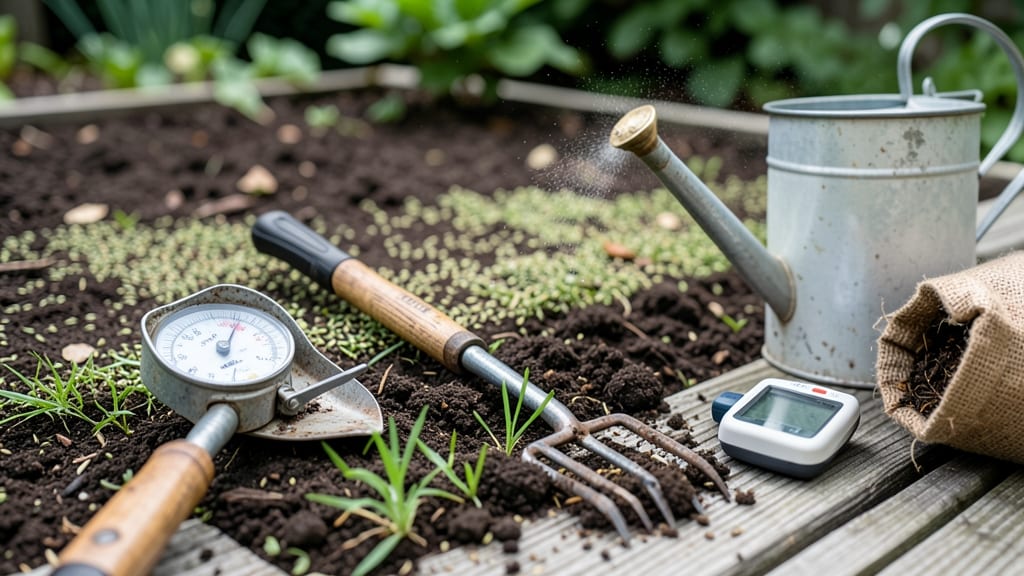
Pro tip: Use a soil thermometer—ideal temps are 60–75°F (15–24°C)—to avoid waiting too long in unpredictable springs.
Another critical factor is rainfall patterns. Coastal regions rely on winter rains, so planting in late summer ensures moisture is available. Inland areas often depend on spring showers, making February–March the sweet spot.
If natural rain is unreliable, supplemental irrigation (1–1.5 inches/week) is non-negotiable for the first 3–4 weeks after planting.
🌿
Mistiming can lead to slow germination or uneven growth. For example, planting in July inland means seeds bake in 100°F+ soil, while coastal December planting risks fungal diseases from persistent dampness.
Always align your schedule with local weather forecasts—apps like NOAA Climate or Almanac provide 7-day soil temp and rainfall predictions to fine-tune your timing.
Finally, grass seed varieties play a role. Cool-season grasses (e.g., fescue, ryegrass) thrive in coastal fall plantings, while warm-season grasses (e.g., Bermuda, Zoysia) need spring in inland zones. Match your seed to your climate—mix varieties for year-round green coverage if your region has <
How to prepare your soil and choose the right grass seed for California’s climate
Preparing your soil is just as critical as timing when planting grass seed in California. The state’s diverse climates—from coastal fog to inland heat—demand specific soil conditions for successful germination. Start by testing your soil’s pH level, which should ideally range between 6.0 and 7.0 for most grass types.
Coastal areas often have acidic soil, while inland regions may be alkaline, so adjust with lime or sulfur accordingly.
Next, focus on drainage to prevent waterlogging, especially in low-lying areas. California’s Mediterranean climate means dry summers, so improving soil structure with compost or sand (depending on your region) helps retain moisture while allowing excess water to escape.
Aerate compacted soil with a core aerator in late summer to create pockets for seeds and roots to thrive.