
Plants
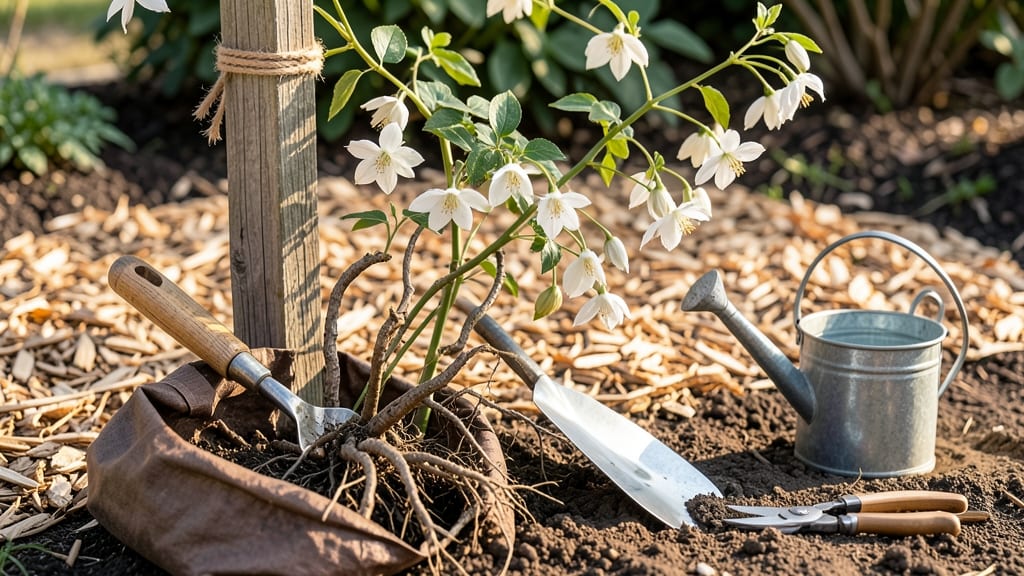
Timing your clematis planting in Texas could mean the difference between a thriving vine covered in 🌸 blooms and a struggling plant that never quite takes off.
With Texas’s wide range of climates—from chilly North Texas to balmy South Texas—knowing the best months to plant ensures your clematis gets the head start it needs to handle our intense summers and occasional freezes.
Most gardeners in zones 8a-10b swear by planting clematis in late winter to early spring (February-March) or fall (September-October), but the exact timing depends on your region’s frost dates and microclimates.
Whether you’re planting in-ground or containers, getting this right means stronger roots, bigger blooms, and vines that climb with confidence.
I’ve tested the best strategies for Texas gardeners, and what works in North Texas might not cut it in South Texas.
In this guide, I’ll break down the ideal planting windows for different clematis varieties, soil prep tips for our heavy clay, and how to protect your investment from unexpected frost. Let’s get those vines growing the right way—so you can enjoy stunning 🌸 displays all season long.
Ready to transform your garden? Skip the guesswork and follow these proven steps to plant clematis like a Texas pro. Your future blooms will thank you!
Best planting months for clematis in Texas by variety type
Texas gardeners have two prime windows to plant clematis: late winter/early spring and fall. The best months depend on your USDA hardiness zone (8a-10b) and whether you’re growing early, mid, or late-season bloomers.
In North Texas (8a-8b), aim for September-October or February-March, while South Texas (9a-10b) gardeners can extend planting to November or even January for cooler microclimates.
Clematis varieties fall into three bloom-time categories: early (spring), mid (summer), and late (fall/winter). Each type benefits from slightly different planting strategies. For example, early bloomers like 'Jackmanii' thrive when planted in fall, giving roots time to establish before spring growth.
Meanwhile, late bloomers such as 'Nelly Moser' can handle spring planting but need consistent moisture during Texas’s brutal summer heat.
Pro Tip: Use Texas A&M’s frost-free date maps to pinpoint your local last frost date. In North Texas, this is around February 15, while South Texas sees frost-free conditions by January 1. Planting clematis 6-8 weeks before your last frost ensures roots establish before summer stress hits.
Here’s the breakdown by variety type, including Texas-specific adjustments for soil heat and humidity fluctuations:
| Variety Type | Best Planting Window (Texas) | Why This Timing Works | Texas-Specific Tip |
|---|---|---|---|
| Early Bloomers (e.g., 'Jackmanii', 'Niobe') | Fall (Sept-Oct) or Early Spring (Feb) | Establishes roots before spring growth surge. | Mulch heavily in North Texas to protect from winter dieback. |
| Mid-Season Bloomers (e.g., 'Durandii', 'Comtesse de Bouchaud') | Late Winter (Feb-Mar) or Fall (Oct-Nov) | Balances root growth with summer flowering. | Use drip irrigation in South Texas to avoid fungal issues. |
| Late Bloomers (e.g., 'Nelly Moser', 'Princess Diana') | Spring (Mar-Apr) or Early Fall (Aug-Sept) | Avoids summer stress; blooms align with cooler months. | Plant with shade cloth in West Texas to reduce heat stress. |
| Evergreen Varieties (e.g., 'Fascination', 'Wyoming') | Fall (Sept-Oct) Only | Root establishment before winter dormancy. | Avoid planting in clay-heavy soils (common in East Texas) without amending. |
For container-grown clematis, Texas gardeners can plant year-round in pots, but timing still matters. Containers heat up faster in summer, so fall planting (September) gives roots time to adjust before Texas’s 100°F+ summers.
If planting in spring, choose larger pots (15+ gallons) to retain moisture and use light-colored containers to reflect heat.
Avoid planting clematis in Texas during peak summer (June-August) unless you’re in a high-elevation microclimate (e.g., Hill Country). The combination of heat, humidity, and poor drainage creates ideal conditions for root rot. If you must plant in summer, use shade cloth and drip irrigation to keep roots cool.
Regional Adjustments: In East Texas (humid), prioritize well-draining soil to prevent fungal diseases. In West Texas (dry), mulch with gravel or straw to retain moisture. South Texas gardeners can push fall planting into November due to milder winters, but monitor for early frosts in zones 9a-9b.
Key Takeaway: The ideal window for most Texas gardeners is September-October, but early spring (February) works for hardy varieties. Always match your clematis type to your local frost dates and soil conditions for the best results.
How to prepare Texas soil and site for clematis success
Clematis thrives in well-draining soil with rich organic matter, but Texas’s heavy clay soil can be a challenge. Before planting, I always test my soil’s pH—clematis prefers 6.0 to 7.0.
If your soil is too alkaline, amend it with compost or peat moss to improve drainage and fertility. The key is balancing moisture retention with aeration, especially in our hot summers.
Choose a sunny spot with afternoon shade at the base of your clematis. These vines need 6+ hours of sun for their 🌸 blooms, but their roots burn in intense afternoon heat.
A trellis, arbor, or fence provides support, and I recommend planting near a north- or east-facing wall to shield roots while letting foliage bask in sunlight.
To prepare your site, I start by removing weeds and loosening compacted soil to a depth of 12-18 inches. Mix in 3-4 inches of compost and a slow-release fertilizer (like 5-10-10) to give roots a nutrient boost.
For clay-heavy soil, I add coarse sand or perlite to improve aeration. This prep work ensures your clematis establishes strong roots before Texas summers arrive.
Companion planting can also boost success. Pair clematis with deep-rooted perennials like lavender or Russian sage, which improve soil structure. Avoid planting near competitive shrubs that steal moisture and nutrients. I’ve seen clematis flourish near roses or peonies—their roots complement each other beautifully.
Finally, mulch around the base with 2-3 inches of wood chips or straw to retain moisture and regulate soil temperature. Just keep mulch 6 inches away from the stem to prevent rot. This simple step saves me hours of watering during our dry spells and keeps roots cool in summer.
With the right soil prep, your clematis will climb with vigor and reward you with 🌸 blooms from spring to fall. Don’t skip this step—healthy soil is the foundation of a thriving vine! 🪴