
Plants
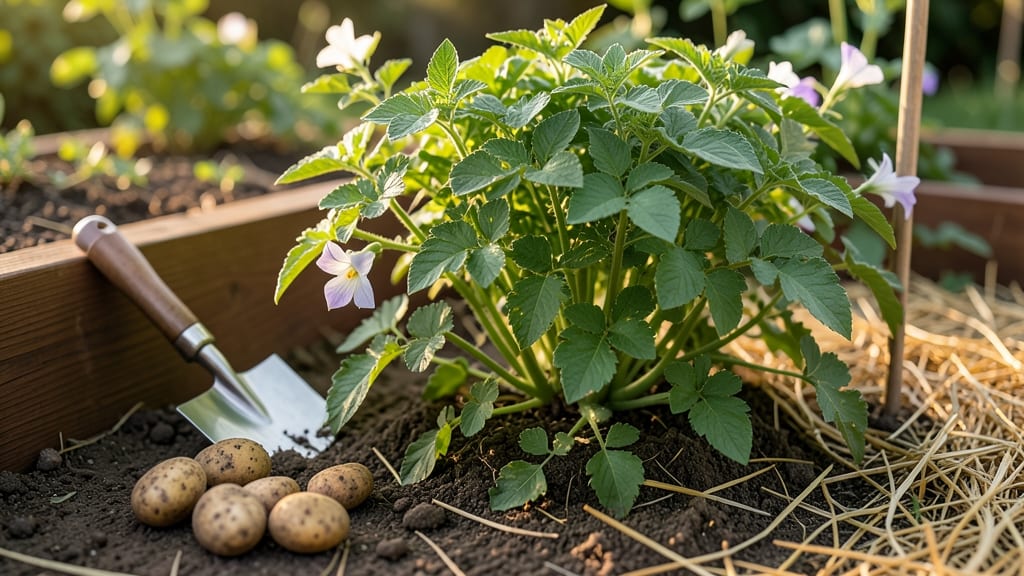
If you’ve ever planted fall potatoes in Virginia only to watch them bolt before harvest—or worse, rot under early frost—you know timing is everything.
The difference between a zero-bolt harvest and a failed crop often comes down to planting 4-6 weeks before your first frost, not guessing at the calendar.
Virginia’s USDA zones 7a-8a give gardeners a narrow window—typically between late August and early September—to get 🥔 potatoes in the ground for a crisp, late-season harvest. But with frost dates varying from Tidewater’s coastal mildness to the Mountains’ earlier chill, one size doesn’t fit all.
Let’s break down the exact weeks you need to plant for success, plus the soil prep and variety tricks that keep your spuds from turning into green, woody disappointments.
You’ll also discover how to adjust for early or late seasons (yes, even Virginia’s weather can throw a curveball), and which varieties—like ‘Yukon Gold’ or ‘Red Pontiac’—thrive in the shorter daylight of fall.
Skip the trial-and-error: this is your no-fail guide to planting 🥔 potatoes for a harvest that lasts through December.
Ready to turn your garden into a potato powerhouse? Let’s get those tubers in the ground at the perfect moment—before the first frost even thinks about showing up.
Virginia’s exact fall potato planting timeline by region (with frost dates)
Virginia’s diverse climate means your fall potato planting window varies by region—from the cooler mountains to the warmer Tidewater coast. To avoid bolting or frost damage, pinpoint your USDA Zone and local frost dates.
Most Virginia gardeners fall into Zones 6-8, but microclimates shift planting by 2-4 weeks.
For zero-bolt success, aim to plant 4-6 weeks before your average first frost. In Virginia, this typically means late August to mid-September, but coastal areas can extend planting into early October. Mountain regions may need to start as early as mid-August to avoid early frosts.
Here’s how Virginia’s three main regions break down for fall potato planting:
| Region | USDA Zone | Avg. First Frost | Ideal Planting Window | Best Varieties |
|---|---|---|---|---|
| Tidewater (Coastal) | 7b-8a | Oct 25–Nov 5 | Late Aug–Early Oct | Red LaSoda, Kennebec |
| Piedmont (Central) | 6b-7a | Oct 15–Oct 25 | Mid-Aug–Late Sept | Yukon Gold, Purple Viking |
| Mountains (SW) | 6a-7a | Oct 1–Oct 15 | Mid-Aug–Early Sept | Katahdin, Irish Cobbler |
Check your local frost dates using the Virginia State Climatology Office or Almanac.com. For example, Richmond (Piedmont) averages frost by October 20, so plant September 1–15 for a 90-day harvest before winter sets in.
If you’re in Zone 8a (coastal), you can push planting to early October using row covers to extend the season. But avoid planting after October 15, as tubers need 4-6 weeks to mature before frost.
For early-maturing varieties (60-70 days), like Red Norland, you have a 2-week buffer to adjust for late starts. Always test soil temperature—potatoes thrive in 50–60°F soil. Use a soil thermometer to confirm readiness before planting.
Pro tip: Plant seed potatoes in warm soil (not cold), which means waiting until soil temps hit 50°F—even if air temps are cooler. This prevents bolting and ensures strong tuber formation.
In warmer years, like 2023, some gardeners in Zone 7b planted as late as September 20 and still harvested Yukon Gold before frost. But don’t gamble—use 5-year frost averages for safety.
🌱
How to calculate your local planting window for fall potatoes
Virginia’s climate varies dramatically from the Tidewater’s coastal breezes to the mountainous western regions, so a one-size-fits-all planting date won’t work. Instead, use your county’s frost history and the maturity days of your potato variety to pinpoint the perfect window.
For example, if your first frost typically hits October 15, aim to plant 4-6 weeks earlier—around September 1-15—for a harvest before winter sets in.
Start by checking your USDA Zone (Virginia ranges from Zone 6b-8a) and cross-reference it with your county’s average first frost date.
Most Virginia counties fall between October 10-25, but mountain areas like Roanoke can see frost as early as October 1, while Norfolk might delay until November 1. Subtract 90-120 days (the maturity time for most potato varieties) to find your ideal planting window.
Next, consider your soil temperature. Potatoes thrive when soil stays above 45°F (7°C)—if your evenings dip below this, delay planting until daytime highs consistently reach 70°F (21°C).
In Virginia, this usually means waiting until late August or early September in cooler mountain regions, while Tidewater gardeners can start as early as mid-August.
📋 Step-by-Step Planting Window Calculation
- Step 1: Find your county’s average first frost date (check Virginia State Climate Office)
- Step 2: Subtract 90-120 days (for Yukon Gold) or 60-80 days (for Red LaSoda)
- Step 3: Verify soil temps are above 45°F (7°C) at planting
- Step 4: Adjust 1-2 weeks earlier for cooler mountain regions or 1-2 weeks later for warmer Tidewater areas
For short-season varieties like ‘Red LaSoda’ (60-80 days), you can push the envelope and plant as late as mid-September in Zone 7-8 areas, but expect smaller yields. Meanwhile, longer-season varieties like ‘Kennebec’ (110-130 days) demand earlier planting—aim for late July to early August—or risk bolting before frost.
My top recommendation for Virginia gardeners? ‘Yukon Gold’ (90-120 days) strikes the perfect balance for most regions.
Don’t forget to account for daylength sensitivity. Potatoes bolt when exposed to long daylight hours, so if you’re planting in late August, use shade cloth (30-50%) to reduce light exposure by 1-2 hours daily.
This trick extends your planting window by 10-14 days without risking bolting. For example, in Blacksburg (Zone 7a), I’ve successfully planted ‘Adirondack Red’ as late as September 1 using shade cloth, harvesting 3 weeks before frost.
Finally, use a planting calendar to track your progress. Mark your soil prep date (4-6 weeks before planting), planting date, and harvest window (4-6 weeks before frost).
Pro tip: Set a reminder for 2 weeks before harvest to start checking for yellowing foliage—this is your cue to dig! In Richmond (Zone 7b), my calendar reminds me to plant August 20-30 and harvest October 20-30, ensuring I beat the first frost by 2-3 weeks.