
Watering
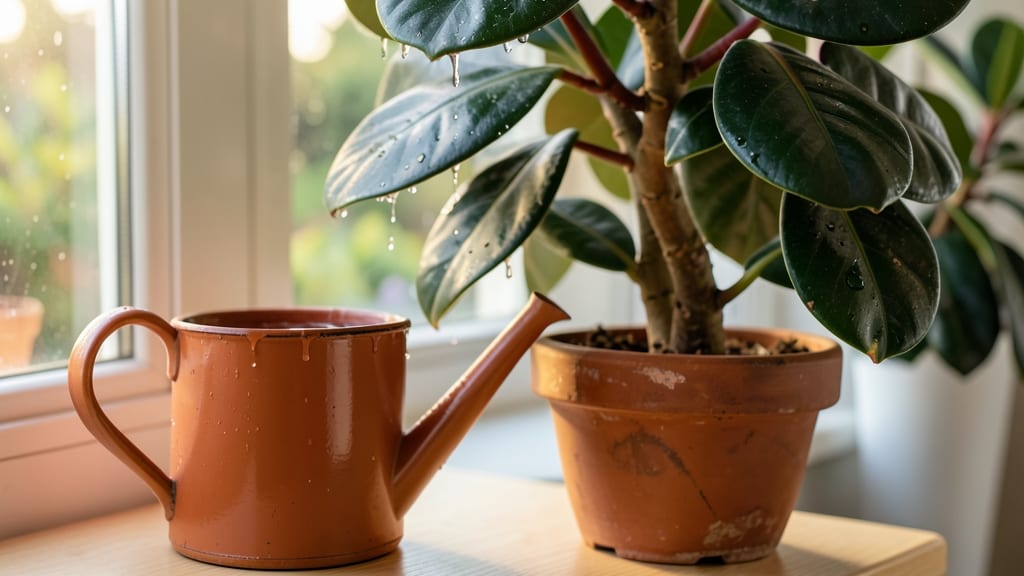
Figuring out how much water a rubber plant 🌿 needs is the difference between a thriving houseplant and one that’s struggling with yellow leaves or root rot.
Most gardeners overwater by default, thinking their rubber plant craves constant moisture—but the truth is, this resilient plant prefers to dry out between drinks.
I’ve learned the hard way that sticking to a rigid schedule doesn’t work—your rubber plant’s needs change with the seasons, pot size, and even humidity levels in your home.
What works in dry winter air won’t cut it during a steamy summer. The key is checking soil moisture before watering, not just following a calendar.
In this guide, I’ll break down the exact watering schedule your rubber plant needs, from spring’s frequent soaks to winter’s rare drinks. You’ll also spot the warning signs of overwatering before it’s too late—and how to fix it fast.
Let’s get your plant the perfect balance of hydration without the guesswork.
Whether you’re a new plant parent or a seasoned grower, these tips will help you keep your rubber plant happy, healthy, and reaching for the sky. No more wilting leaves or soggy soil—just a thriving green friend that’s easy to care for.

How much water does a rubber plant need? (The exact schedule)
Rubber plants (Ficus elastica) thrive on a consistent but balanced watering routine—too much or too little throws them off. The key is letting the top 1-2 inches of soil dry out between waterings, but this changes with seasons, pot size, and your home’s humidity.
My rubber plant, "Rosie," taught me this lesson the hard way when I drowned her roots in winter! Let’s break down the science-backed schedule to keep your plant happy year-round.
Most rubber plants need water every 7-14 days, but this varies wildly.
In spring and summer, when growth is active, they drink more—every 7-10 days for small pots (under 6 inches) or every 10-14 days for larger containers. Fall and winter slow their metabolism, so I cut back to every 2-3 weeks, sometimes even less if my home stays dry.
The trick? Check soil moisture with your finger before watering—if the top 2 inches feel dry, it’s time.
Here’s where many gardeners go wrong: they assume a fixed schedule works year-round. I’ve seen rubber plants with yellow leaves from overwatering in winter or crispy edges from underwatering in summer.
Your plant’s water needs are a dynamic puzzle—light levels, pot material, and even your thermostat settings play a role. Let’s dive into the exact schedule tailored to your rubber plant’s stage of life.
🌱
| Season | Watering Frequency | Soil Check | Pot Size Note |
|---|---|---|---|
| Spring | Every 7-10 days | Top 1-2" dry | Small pots dry faster |
| Summer | Every 10-14 days | Top 2" dry | Large pots hold moisture longer |
| Fall | Every 10-14 days | Top 2-3" dry | Growth slows—reduce water |
| Winter | Every 2-3 weeks | Top 3-4" dry | Near heat vents? Check soil weekly |
Pro tip: Morning watering is ideal—it mimics natural rainfall cycles and gives leaves time to dry overnight, reducing fungal risks. I water my rubber plants between 8-10 AM, and the difference in leaf health is noticeable.
Avoid evening waterings, especially in humid climates, as soggy soil overnight invites root rot—a silent killer of rubber plants.
Pot size matters more than you’d think. A 6-inch pot may need water every 7 days in summer, while a 12-inch pot could go 2 weeks without watering. The larger the pot, the more soil retains moisture.
I repotted my mature rubber plant into a terracotta container last year, and it cut my watering frequency by 30% because terracotta wicks away excess moisture. If you’re unsure, stick your finger in the soil—it’s the most reliable method.
Environmental factors like humidity and light also tweak the schedule. My rubber plant in a sunny east window drinks 20% more than the one in a dim corner. In low-humidity homes (under 40%), I water 5-7 days sooner than the schedule above.
Use a hygrometer ($10 on Amazon) to track humidity—aim for 40-60% for optimal rubber plant health.
One mistake I see often? Watering based on a calendar, not the plant. If your rubber plant’s leaves feel lightweight or the soil is still damp 1 inch down, wait another day.
Overwatering causes yellow leaves, while underwatering leads to brown, crispy edges. Both are fixable, but prevention is easier—always check soil moisture before reaching for the watering can.
💧
Signs your rubber plant is getting too much water (and how to fix it)
If your rubber plant’s leaves are turning yellow or dropping faster than they should, overwatering is usually the culprit. Unlike drought stress, which causes brown, crispy edges, too much water leads to soft, mushy stems and a foul smell from the soil.
I’ve seen this happen more than once—especially when people assume their rubber plant needs daily drinks like a thirsty succulent.
The most obvious sign is yellowing leaves that start at the bottom and work upward. These leaves often feel squishy when touched, not crisp like healthy foliage.
Another red flag? Black spots or brown patches that appear suddenly. These are classic signs of root rot setting in, which can spread quickly if ignored.
🚨 CRITICAL WARNING: If you notice a musty odor coming from the soil or see mold growing on the surface, your plant is in serious trouble. This means the roots are suffocating in soggy conditions, and you need to act fast.
Don’t wait until the stems turn mushy—this is a late-stage symptom that’s often irreversible.
🚨 Overwatering Alert!
Yellow leaves + mushy stems = Root rot risk. Stop watering immediately and let the soil dry out completely before acting.
Black spots or drooping leaves mean the roots are struggling. Repot in fresh, dry soil if the problem persists for more than a week.
To fix overwatering, start by stopping all water for at least a week. Let the soil dry out completely—this might take 7–10 days, depending on your home’s humidity. While you wait, check the roots: Gently remove the plant from its pot and inspect the roots.
Healthy roots are firm and white, while rotten roots are brown, mushy, and smell bad.
If you find rot, trim the affected roots with sterilized scissors and repot your rubber plant in a fresh pot with well-draining soil. Choose a container with drainage holes if it doesn’t already have them—this is non-negotiable for rubber plants.
After repotting, wait another week before watering lightly, and monitor the soil moisture closely.
Going forward, adjust your watering routine based on the season and your home’s conditions. In dry climates or during winter, you might only need to water every 3–4 weeks. The key is always to check the soil before watering—stick your finger about 1–2 inches deep.
If it feels dry, it’s time to water. If it’s still damp, wait a few more days.
With these adjustments, your rubber plant will bounce back in no time. Remember, underwatering is easier to recover from than overwatering, so it’s always better to err on the side of caution. Your plant will thank you with glossy, vibrant leaves and steady growth.