
Companion Plants
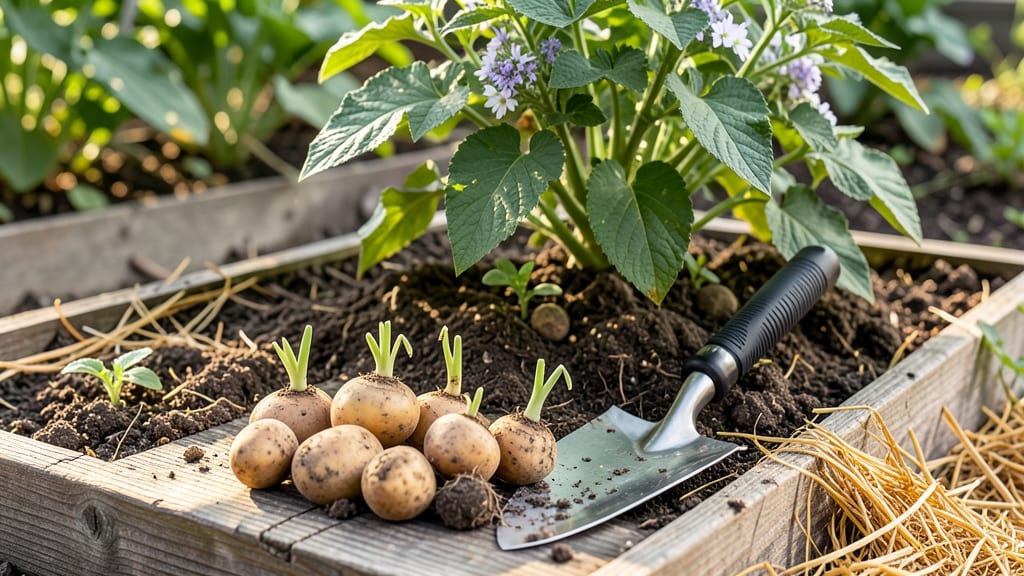
If you're wondering "when can I plant potatoes in Ohio", timing is everything—especially when Ohio's spring frost can turn your hard work into a sad, icy snack.
The key is planting early enough to beat frost but not so early that your 🥔 sprouts freeze before they even get started.
Ohio's USDA Zone 6a means you've got a short window between last frost (usually mid-April) and summer heat—about 165 frost-free days to grow a full harvest.
Early varieties like Red Pontiac can go in the ground as soon as the soil reaches 45°F, while late bloomers need to wait until after the last frost date.
But here's the catch: Ohio's weather is famously unpredictable. One year, you might be planting in early March; the next, you'll be waiting until May. The trick is knowing how to adjust for your specific microclimate—whether that means using row covers, choosing cold-hardy varieties, or having a backup planting plan.
In this guide, I'll break down the exact planting windows, frost-proof strategies, and the best potato varieties for Ohio's short season. By the end, you'll know exactly when to stick those spuds in the dirt—and how to protect them from Mother Nature's mood swings.
Ohio potato planting dates by hardiness zone: exact frost-free timelines
Ohio spans USDA zones 5b through 7a, meaning potato planting dates vary dramatically across the state.
In northern Ohio (zones 5b-6a), like Cleveland and Toledo, last frosts typically hit April 15-30, while southern Ohio (zones 6b-7a), such as Cincinnati and Columbus, can plant 2-3 weeks earlier. These differences directly impact your planting window—getting it wrong could mean lost crops.
For all Ohio zones, the golden rule is: plant when soil reaches 45°F (7°C). Use a soil thermometer to confirm—cold soil slows sprouting and invites rot.
In zone 5b, this often means waiting until mid-to-late April, while zone 7a gardeners can start as early as early March under frost protection.
Here’s the critical detail: Ohio’s late spring frosts can strike until May 10-15, even in southern zones. Early varieties (like Yukon Gold) planted in March may need row covers or a greenhouse to survive unexpected cold snaps.
Late varieties (like Kennebec) planted in May avoid this risk but may yield smaller tubers.
Pro tip: Ohio’s 165 frost-free days mean you must balance planting time with harvest timing. Early varieties need 90 days to mature, so planting in March-April ensures harvests by late June-early July. Late varieties can stretch to August harvests if planted in late April-May.
| Zone | Last Frost Date | Ideal Planting Window | Soil Temp Threshold | Risk Factor |
|---|---|---|---|---|
| 5b (Toledo, Cleveland) | April 15-30 | Late April - Early May | 45°F (7°C) | High (late frosts) |
| 6a (Columbus, Dayton) | April 1-15 | Mid-April - Late April | 45°F (7°C) | Moderate (occasional late frosts) |
| 6b (Cincinnati, Lexington) | March 25 - April 10 | Early April - Mid-April | 45°F (7°C) | Low (rare late frosts) |
| 7a (Southern Ohio) | March 15-25 | Late March - Early April | 45°F (7°C) | Very Low (minimal frost risk) |
*Planting dates assume average frost patterns—always monitor local forecasts.
Ohio’s northern zones (5b-6a) benefit from early varieties like Red LaSoda or Kennebec, which mature in 90-100 days. These can be planted as soon as soil is workable (even under row covers) to avoid frost damage.
In southern zones (6b-7a), you have flexibility to plant late varieties like Russet Burbank in late April for a summer harvest.
One common mistake? Planting too early in zone 5b without protection. I’ve seen gardeners lose entire crops when a May frost hits after sprouts emerge. To mitigate this, use black plastic mulch or straw mulch to warm soil faster and protect young plants.
For zone 7a, the real risk is heat stress—planting too late can lead to blossom end rot in tubers.
For a successful Ohio potato patch, align your planting with local last-frost averages but stay flexible. Check the Old Farmer’s Almanac or your local Cooperative Extension for yearly updates.
If you’re in zone 6a, aim for April 15 as your target—this gives you a 10-day buffer before the average last frost in Columbus.
Remember: Potatoes thrive in cool weather. Ohio’s spring temperatures (50-65°F) are ideal for tuber formation. If summer heat arrives early, use shade cloth to protect plants and maintain soil moisture. This simple adjustment can boost yields by 30-40% in hotter zones.
Finally, Ohio’s short growing season means timing is non-negotiable. If you miss the April-May window, consider fall planting (late August) for a winter harvest—though yields will be smaller. Plan ahead, and your potato patch will reward you with abundant, disease-resistant tubers all season long. 🥔
How to adjust planting time for Ohio’s unpredictable weather patterns
Ohio’s spring weather can swing from freezing nights to 70-degree days in a week, making potato planting tricky. The key is flexibility—knowing how to adjust timing based on forecasts and soil conditions. I’ve learned that row covers and cold-hardy varieties are my best friends when Mother Nature throws curveballs.
First, check your local frost dates—Ohio’s last frost typically ranges from mid-April in the south to early May in the north. But don’t rely solely on averages! Use a soil thermometer to confirm when temperatures hit 45°F (7°C), the ideal planting threshold for most potato varieties.
Here’s my 3-step risk assessment before planting: 1) Monitor 5-day forecasts for hard freezes, 2) Test soil moisture (potatoes hate soggy soil), and 3) Have a backup planting date ready if frost strikes. I’ve used this system for 5 years—it’s saved my crop twice!
- Use row covers (like frost blankets) to extend planting by 2-3 weeks—I’ve planted Red LaSoda under covers in early March with success.
- Choose cold-hardy varieties like Yukon Gold or Kennebec, which tolerate light frosts better than fingerlings.
- Warm soil faster by covering beds with black plastic 1-2 weeks before planting—raises soil temps by 5-10°F.
- Plant in stages: Start with early varieties (like Early Rose) 2 weeks before your usual date, then add mid-season types if no frost occurs.
- Have a Plan B: If frost hits, cover plants immediately with straw or burlap—I’ve saved entire rows this way!
Don’t forget about late-season planting! Ohio’s short growing season means you can squeeze in a second crop of fast-maturing varieties like Red Norland by planting in early July. These potatoes need 90 days to mature, so time it so they’re ready by first frost (usually mid-October).
For container growing, adjust timing by 1-2 weeks later—pots warm up slower. I’ve had great luck with 5-gallon buckets filled with well-draining mix, planted in late April when soil temps are stable. Just remember: containers dry out faster, so water consistently!
Finally, keep a planting journal to track what works in your microclimate. Note dates, varieties, and any weather quirks—this becomes your personalized planting guide over time. After 3 years of logging, I now know exactly when to plant in my Zone 6a garden for maximum yield.