
Plants
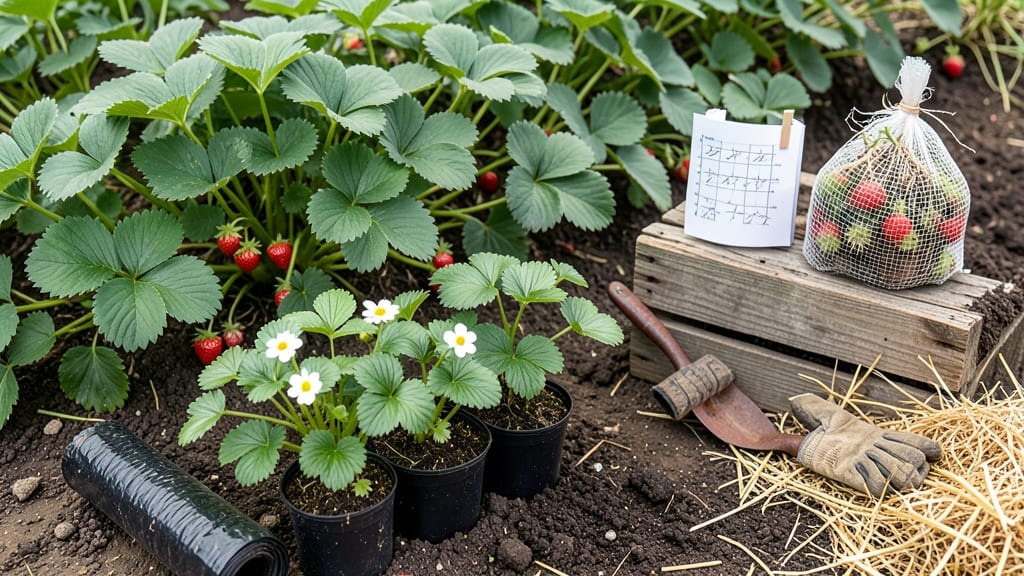
Planting strawberries in Kentucky at the wrong time can mean the difference between a bountiful harvest and wasted effort. With USDA Zones 6a-7a and diverse microclimates—from the Bluegrass to the Appalachian foothills—timing matters more than you might think.
Whether you're growing June-bearing or everbearing varieties, knowing the exact window for planting can save you from frost damage or stunted growth.
Most gardeners in Kentucky plant 🍓 strawberries in early spring (March-April) or early fall (September-October), but those dates shift depending on elevation and frost risks. For example, highland areas like the Cumberland Plateau may need to wait until late April, while lowland regions can start as early as mid-March.
The key is planting 4-6 weeks before the last frost—typically mid-April—to give roots time to establish before summer heat arrives.
If you're unsure whether to go with bare-root plants or potted varieties, don’t worry—both work in Kentucky, but everbearing types offer a second harvest in fall if planted early enough. The trick is balancing soil temperature (ideally 50-60°F) with avoiding late frosts that can kill tender new growth.
With the right timing, you’ll be enjoying fresh strawberries by late spring or early summer.
Ready to maximize your strawberry yield? Let’s break down the best planting deadlines for your specific Kentucky microclimate, so you can avoid common mistakes and enjoy a garden full of sweet, homegrown 🍓.
Kentucky strawberry planting deadlines by elevation zone
Kentucky’s diverse elevations create distinct planting windows for strawberries. Lowland regions (300–600 ft) like the Bluegrass can start as early as mid-March, while highland areas (1,500+ ft) in the Appalachians should wait until late April.
The key is aligning with your last frost date—typically mid-April—and ensuring soil temperatures reach 50-60°F for optimal root growth.
June-bearing varieties (like Jewel or Chandler) thrive when planted in early spring, producing a single harvest in late spring. Everbearing types (such as Albion or Seascape) benefit from both spring and fall plantings, offering two harvests if timed correctly.
Day-neutral varieties (like Tristar) are flexible but still need precise timing to avoid frost damage.
Here’s how to match your elevation to the perfect planting window:
| Elevation Zone | Spring Planting Window | Fall Planting Window | Soil Temp Requirement | Frost Risk |
|---|---|---|---|---|
| Lowland (300–600 ft) | Mid-March to early April | Late September to mid-October | 50–60°F | Low (last frost: mid-April) |
| Midland (600–1,500 ft) | Late March to early April | Early to mid-October | 50–60°F | Moderate (last frost: late April) |
| Highland (1,500+ ft) | Late April to early May | Mid-September to early October | 50–60°F | High (last frost: early May) |
🌱 Note: Adjust 1–2 weeks earlier for urban heat islands or later for cold river valleys.
For June-bearing varieties, focus on spring planting to maximize the single harvest. Everbearing types can handle both spring and fall plantings, but fall plantings must occur 6–8 weeks before the first frost (mid-October) to allow roots to establish.
Day-neutral varieties are more forgiving but still benefit from early spring planting for a longer harvest window.
Soil preparation is critical. Amend your soil with compost or well-rotted manure to improve drainage, and avoid planting in soggy or compacted soil. Strawberries prefer slightly acidic soil (pH 5.5–6.5), so test your soil before planting.
If your pH is too high, add sulfur or peat moss to lower it.
Once planted, use mulch (straw or pine needles) to retain moisture and suppress weeds. This is especially important in Kentucky’s unpredictable spring, where rainfall can fluctuate wildly. Mulch also protects berries from soil-borne diseases like gray mold, a common issue in humid regions.
If you’re planting bare-root strawberries, soak the roots for 1–2 hours before planting to rehydrate them. For potted varieties, plant them at the same depth they were in the container to avoid stress. Space plants 18–24 inches apart in rows 3–4 feet apart to allow for airflow and easy harvesting.
Remember, Kentucky’s microclimates can shift planting dates by 2–4 weeks. If you’re in a river valley, expect cooler soil temperatures and later planting. Conversely, urban areas may warm up faster, allowing earlier planting. Always check your local Cooperative Extension Service for updates on frost dates and soil conditions.
With the right timing and preparation, your Kentucky strawberry patch will thrive, yielding sweet, juicy berries from late spring through early summer—or even a second harvest in fall for everbearing varieties! 🍓
How Kentucky’s microclimates affect strawberry success
Kentucky’s diverse geography—from the flat Bluegrass Region to the rolling Appalachian foothills—creates microclimates that can shift strawberry planting dates by 2-4 weeks. Urban areas like Louisville experience heat islands that warm soil faster, while river valleys (e.g., Kentucky River) trap cold air, delaying spring planting.
Even within 50 miles, your elevation could mean the difference between planting in March (lowland) or late April (highland).
USDA Zones 6a-7a overlap across Kentucky, but microclimates complicate things. For example, Lexington’s average last frost is April 15, while Corbin’s (higher elevation) last frost often hits May 1.
Everbearing varieties benefit most from these variations, as they produce fruit in both spring and fall—giving you flexibility if spring planting is delayed.
🌱 Key microclimate factors to consider:
- Elevation: Every 1,000 ft up = 1-2 weeks later for planting.
- Urban vs. rural: Cities stay 5-10°F warmer at night, speeding up growth.
- Water bodies: Lakes/rivers create cold pockets that delay spring planting.
To pinpoint your microclimate, check local frost records (Kentucky Mesonet) and observe nearby gardens. If your area has late frosts after April 15, opt for everbearing varieties—they’ll reward you with a fall harvest even if spring planting is delayed.
For highland gardeners, row covers can push planting back 2 weeks without frost risk.
🌿 Pro tip: Test your soil temperature with a soil thermometer—strawberries need 50-60°F soil to root properly. If it’s cooler, wait or use black plastic mulch to warm the soil faster. This is especially critical in Appalachian regions, where cold soils delay planting until May.
Even in ideal conditions, Kentucky’s unpredictable spring weather means flexibility is key. Planting bare-root strawberries in early spring gives them 6-8 weeks to establish roots before summer heat, while potted varieties can be planted slightly later (April) with better survival rates.
The right variety and timing can turn your microclimate from a challenge into a strawberry-growing advantage.