
Plants
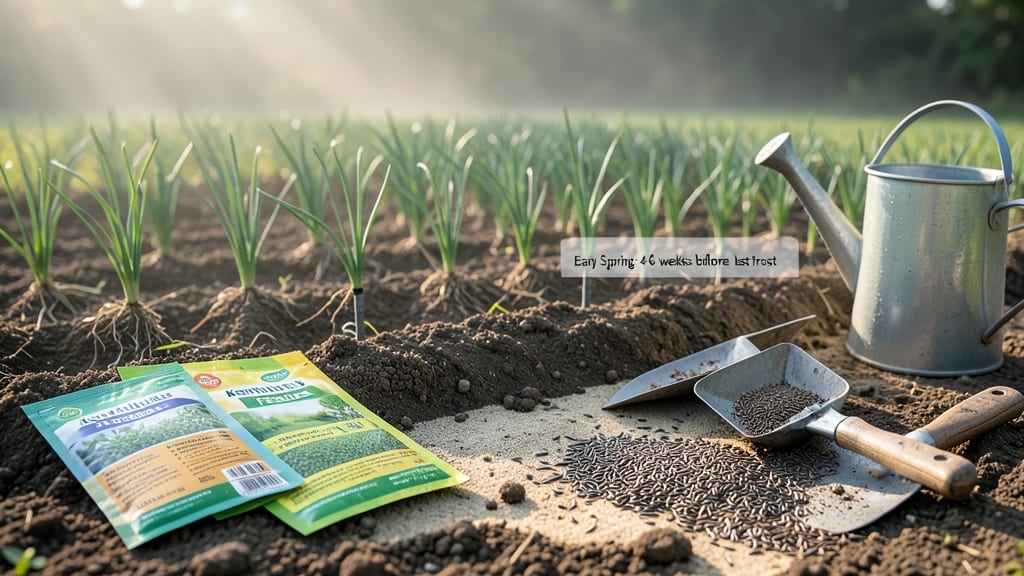
Planting your grass seed at the wrong time in spring can turn your dream of a thick, green lawn into a frustrating wait for patchy growth.
The key to success isn't just planting early—it's timing it perfectly with your local frost dates and soil conditions to give those tiny seeds the best chance to thrive.
In USDA Zone 6a, where last frosts typically hit around mid-April, the ideal window opens 4-6 weeks before that date—meaning late February to early March for most regions.
But here's the catch: rushing too soon can leave seedlings vulnerable to late frosts, while waiting too long risks summer heat stress before roots establish.
I'll show you exactly how to calculate your perfect planting window, from reading frost maps to testing soil temperature, so you can skip the guesswork. Plus, we'll cover the fastest ways to prep your soil and protect your new lawn from common spring pitfalls.
Whether you're seeding a new yard or repairing bare spots, getting this timing right means fewer headaches and a lawn that greens up faster than ever. Let's get started.
How to calculate your local frost date for optimal grass seed planting
Planting grass seed at the wrong time in spring can leave your lawn struggling to establish roots before summer heat sets in. The key to success lies in understanding your local frost dates and soil temperature—two factors that directly impact seed germination.
Most grass seeds need consistent soil temps above 50°F to sprout reliably, while cool-season grasses like fescue can tolerate slightly cooler conditions.
Start by finding your USDA hardiness zone (Zone 5-8 covers most grass-growing regions). Then, use the average last frost date for your area as your planting deadline.
For example, in Zone 6a, the last frost typically falls around April 15, so aim to plant 4-6 weeks before that date. This gives seedlings time to establish before summer stress arrives.
Pro tip: Check your local agricultural extension service for historical frost data—some years can be 1-2 weeks earlier or later than averages. For instance, New England might see frost as late as May 10, while Arizona could be frost-free by March 15. Adjust your timeline accordingly.
| Factor | Ideal Condition | Action Step |
|---|---|---|
| Soil Temperature | 50°F+ (consistent for 1 week) | Use a soil thermometer to test depth of 2-4 inches. |
| Last Frost Date | 4-6 weeks before planting | Plant cool-season grasses 4-6 weeks before last frost; warm-season grasses 2-4 weeks after. |
| Daytime Temps | 60°F+ (daytime highs) | Avoid planting if nights dip below 40°F—seedlings may rot. |
| Rainfall Forecast | 0.5-1 inch weekly | Plan for consistent moisture; drought or flooding can kill seeds. |
| Soil pH | 6.0-7.0 | Test and amend with lime (to raise pH) or sulfur (to lower pH) 2 weeks before planting. |
Once you’ve nailed down your frost date, focus on soil temperature. Most grass seeds need 50°F soil temps for 7-10 days straight to germinate. Use a soil thermometer ($10 at garden centers) to check temps at a 2-4 inch depth.
If your soil is still cold, wait—rushing can lead to poor germination or fungal diseases.
For cool-season grasses like Kentucky bluegrass or tall fescue, plant as soon as soil is workable in early spring. These grasses thrive in cooler temps and can handle light frosts.
In contrast, warm-season grasses like Bermuda or zoysia need to wait until after the last frost, typically late spring to early summer.
Don’t forget to account for seedling establishment time. Grass takes 14-28 days to germinate and 6-8 weeks to develop a strong root system. Planting too late leaves seedlings vulnerable to summer heat stress or drought.
For example, if your last frost is May 1, aim to plant by mid-April for cool-season grasses.
Use a 30-day weather forecast to spot-check for unpredictable cold snaps. If a late frost is forecasted within 2 weeks of planting, consider using a lightweight frost blanket to protect young seedlings. Conversely, if drought conditions are predicted, prioritize drought-tolerant varieties like fine fescue.
Finally, prepare your soil 2-3 weeks before planting. Loosen the top 4 inches of soil, remove debris, and level the area. This gives seeds direct contact with moist soil, which is critical for germination.
A quick soil test for pH (aim for 6.0-7.0) can save you from nutrient deficiencies later.
By mastering these frost date calculations and soil prep steps, you’ll give your grass seed the best possible start—setting the stage for a thick, healthy lawn by summer. 🌱
Cool-season vs. warm-season grasses: spring planting rules by climate Zone
Choosing the right grass type for your climate isn't just about aesthetics—it's about matching your spring planting window to the grass's natural growth cycle. Cool-season grasses like Kentucky bluegrass and fescue thrive when soil temps are 50-65°F, while warm-season varieties like Bermuda and zoysia need 70-85°F to germinate.
Planting at the wrong time can leave you with stunted growth or weeds taking over.
In USDA Zone 6a, where last frosts typically arrive mid-April, cool-season grasses should go in 4-6 weeks before that date—usually late February to early March. Warm-season grasses, however, wait until late spring to early summer (May-June) when soil warms up.
Let's break down the best planting times for each type based on your region.
🌱
| Grass Type | Ideal Planting Window | Soil Temp Requirement | Climate Zone Fit |
|---|---|---|---|
| Kentucky Bluegrass | Late Feb - Early Mar | 50-65°F | Zones 3-9 (Cool) |
| Tall Fescue | Late Feb - Early Apr | 50-65°F | Zones 4-8 (Cool) |
| Bermuda | Late May - Early Jun | 70-85°F | Zones 7-10 (Warm) |
| Zoysia | Late Apr - Early May | 65-75°F | Zones 5-10 (Transitional) |
If you're in the Northeast, where springs are unpredictable, aim for March planting of cool-season grasses. For the Southeast, warm-season grasses like Bermuda can handle April sowing if soil temps are consistent.
In the Mountain West, where nights stay chilly, wait until after May 1 to avoid frost damage.
Pro tip: Use a soil thermometer ($10 at garden centers) to confirm temps before planting. Cool-season grasses need 50°F+ for 5+ days, while warm-season types require 70°F+ consistently. Skipping this step is the #1 reason for poor germination.
Once you've picked your grass type and timing, the next critical step is prepping your soil. Loosen the top 4 inches with a rake, remove debris, and level the area—this ensures seed-to-soil contact for faster germination. For high-traffic areas, consider adding compost to boost nutrient levels before seeding.
🌿