
Plants
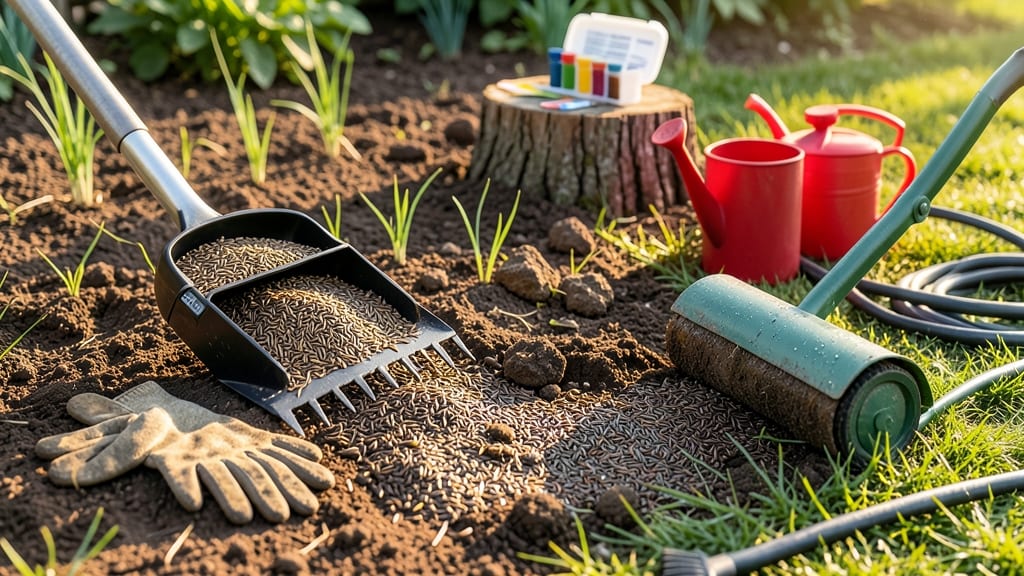
If you've ever stared at your patchy lawn and wondered when is the best time to plant grass seed in Georgia, you're not alone.
The Peach State's mix of humid summers and mild winters creates a unique challenge for lawn care, but timing your planting just right can mean the difference between a lush carpet of green and a frustrating struggle.
Most Georgia gardeners know spring and fall are the prime windows, but the exact timing matters more than you might think. In zones 7a-8b, planting too early risks frost damage while waiting too late means battling summer heat stress.
I'll break down the ideal soil temperatures, frost-free windows, and how to match your grass type to Georgia's microclimates for maximum success.
What you'll discover isn't just about calendar dates - it's about reading your local climate cues. We'll cover everything from preparing your soil in March-April to the late summer window when temperatures drop just enough for cool-season grasses to thrive.
With these insights, you'll avoid common mistakes that waste time and money while creating a lawn that stays green through Georgia's hottest months.
Ready to transform your yard? Let's dive into the science behind perfect planting times and the simple steps that will give you the best results year after year. Your future self (and that perfect lawn) will thank you.
Georgia's ideal grass seed planting windows by season (soil temp & climate zones)
Timing your grass seed planting in Georgia depends on two key factors: soil temperature and seasonal climate zones. The Peach State's USDA Zones 7a-8b create microclimates where North Georgia (cooler) and South Georgia (warmer) have different ideal windows.
For best results, aim for soil temps between 60-75°F—this sweet spot ensures strong germination without heat stress.
Most Georgia gardeners focus on two prime windows: early spring (March-April) and late summer (August-September). Each season offers unique advantages. Spring planting gives seeds a longer growing season before summer heat, while fall planting lets grass establish strong roots before winter.
Let's break down what works best for your region.
🌱 PRO TIP: Use a soil thermometer to check temps before planting—this simple tool prevents costly mistakes. Aim for 60°F+ for cool-season grasses (like fescue) and 70°F+ for warm-season types (like Bermuda).
| Season | Best Months | Soil Temp | Grass Types | Key Advantage |
|---|---|---|---|---|
| Early Spring | March-April | 60-70°F | Cool-season (Fescue, Ryegrass) | Longer growing season before summer heat |
| Late Summer | August-September | 70-75°F | Warm-season (Bermuda, Zoysia) | Strong root establishment before winter |
| Fall (Bonus Window) | October-November | 50-65°F | Cool-season only | Avoids summer heat stress |
Note: North Georgia (e.g., Atlanta) has 2-3 weeks earlier frost dates than South Georgia (e.g., Savannah). Adjust planting by 1-2 weeks accordingly.
For North Georgia (Atlanta, Dahlonega), the ideal window shifts slightly earlier. Plant cool-season grasses in February-March to beat summer heat, while warm-season types thrive when seeded in late April-May. In contrast, South Georgia (Savannah, Macon) can extend planting into May for warm-season grasses due to warmer soils.
Watch for last frost dates, which vary by region. In North Georgia, average last frost is March 15, while South Georgia sees frost as late as February 15. Planting 4-6 weeks after your local last frost date gives seeds time to establish before summer stress hits.
🌡️ CLIMATE ZONE ALERT: Coastal areas (like Savannah) have higher humidity and longer growing seasons. If planting in August-September, prioritize drought-resistant varieties like Zoysia grass to handle summer's intensity.
One common mistake is planting too late in spring (June+) when soil temps exceed 80°F. Seeds struggle to germinate in extreme heat, leading to patchy lawns.
Similarly, fall planting after October 15 risks frost damage before roots establish. Use the comparison table above as your guide to avoid these pitfalls.
Pro tip: If you miss the ideal windows, consider sod instead of seed for summer planting. Sod establishes faster in 80°F+ soils than grass seed. For seed, late August is the absolute latest safe window in most of Georgia.
Remember, Georgia's unpredictable weather means flexibility is key. Keep a soil thermometer and weather app handy—adjust your planting timeline if a heatwave or cold snap threatens your schedule. With the right timing, you'll have a lush, green lawn that outshines your neighbors'! 🌿
Critical mistakes to avoid when planting grass seed in Georgia (and how to fix them)
Planting grass seed in Georgia isn’t just about picking the right season—it’s also about avoiding common pitfalls that can turn your lush lawn dreams into brown patches. I’ve seen firsthand how timing errors, poor soil prep, and regional mistakes can derail even the best-laid plans.
Let’s break down the biggest blunders and how to fix them before they happen.
First, planting too early in spring is a classic mistake. When Georgia’s soil is still too cold (below 60°F), seeds won’t germinate properly. I’ve had clients rush to plant in February only to watch their seeds rot in the damp, chilly ground.
Wait until soil temps hit 60-75°F—usually late March to April—for best results.
⚠️ Callout Warning
🌱 Mistake #1: Planting Without Testing Soil pH
Georgia’s soil can be too acidic (pH < 6.0) or too alkaline (pH > 7.5), both of which stunt grass growth. Fix it: Test your soil with a home kit or send a sample to the UGA Extension Service. Aim for a pH of 6.0-7.0—amend with lime (to raise pH) or sulfur (to lower pH) 4-6 weeks before planting.
Another big mistake is skipping soil preparation. Simply scattering seed over hard, compacted soil is like planting in concrete. I always loosen the top 4 inches of soil with a rake or tiller to create a seed-friendly bed.
Remove debris, level the area, and mix in 2-3 inches of compost to improve drainage and fertility. Pro tip: If your soil is sandy (common in Coastal Georgia), add peat moss to retain moisture.
For northern Georgia (Atlanta area), planting warm-season grasses like Bermuda too late in summer can lead to heat stress. Seeds need 60-75°F soil temps to germinate, but August’s heat can push temps above 85°F, causing seeds to dry out.
Instead, aim for early September when temps start cooling. In southern Georgia (Savannah), the window is slightly wider—late July to early September—but still avoid peak summer heat.
One of the sneakiest mistakes is overwatering or underwatering new seed. Too much water can wash seeds away or cause fungal diseases, while too little leads to dormant seeds. My rule?
Water lightly 2-3 times daily (about ¼ inch per watering) to keep the soil consistently moist but not soggy. Once sprouts appear, switch to deep watering (½ inch) 2-3 times per week. Morning watering is key—it reduces evaporation and fungal risks.
Finally, choosing the wrong grass type for your region is a setup for failure. Planting cool-season grasses like Kentucky Bluegrass in southern Georgia’s heat will leave you with a struggling, thin lawn. Match your grass to your USDA zone (7a-8b) and climate.
For example, tall fescue thrives in North Georgia’s cooler summers, while Zoysia handles South Georgia’s humidity and heat. Always check the seed bag for Georgia-friendly varieties.
By avoiding these common mistakes, you’ll give your grass seed the best shot at thriving in Georgia’s unique climate. Remember: patience and prep are just as important as timing. With the right approach, you’ll be enjoying that deep green lawn in no time! 🌿