
Plants
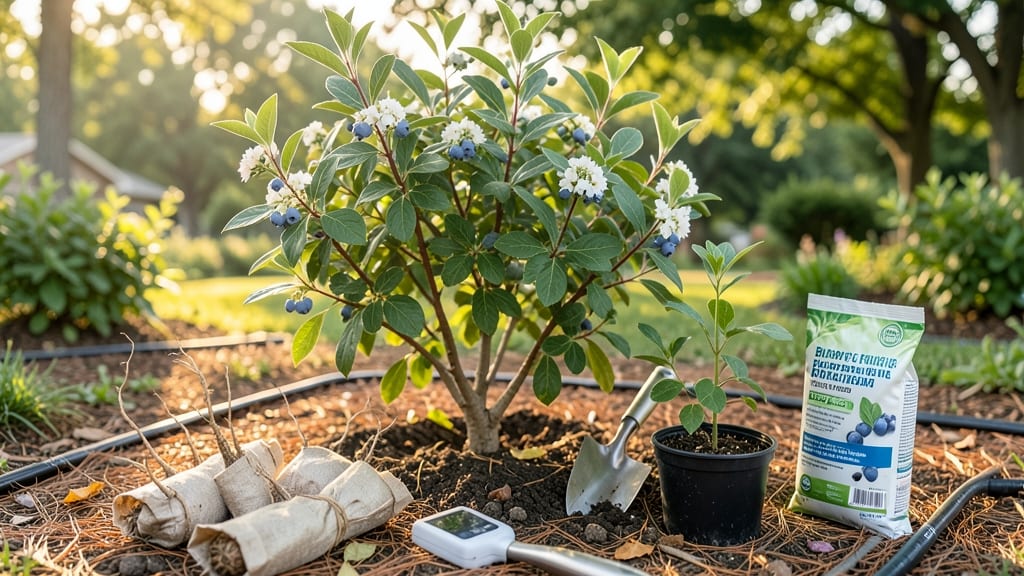
Timing your blueberry 🫐 planting in Colorado isn’t just about the calendar—it’s about matching your bushes to the chill hours your zone delivers. Plant too soon, and a late frost could wipe out your tender new shrubs; too late, and they won’t establish roots before winter’s bite.
With USDA zones 5-7 across the state, the right window makes all the difference between a thriving harvest and a sad, frost-nipped failure.
Most Colorado gardeners wait until late April to early June after the last frost, but that’s not a one-size-fits-all rule.
Whether you’re in Denver’s 5b zone or the higher elevations of zone 6, your blueberries need a specific chill-hour match—like pairing a Southern Highbush with milder winters or a Northern Highbush with Colorado’s crisp air.
Get this wrong, and you’ll end up with bushes that either flower too early or never fruit at all.
Here’s the game-changer: soil prep and microclimates matter just as much as timing. Colorado’s thin, alkaline soils need a pH boost to 4.5-5.5, and container growers face extra challenges with moisture control.
I’ll walk you through the exact steps to plant your 🫐 bushes—whether you’re a first-timer or a veteran gardener adjusting for altitude—so you can enjoy homegrown berries by July or August**.
Ready to avoid the common pitfalls? Let’s break down the best varieties for your zone, the precise planting windows, and how to protect your bushes from Colorado’s unpredictable weather—so you can finally enjoy that first taste of sweet, sun-ripened blueberries without the guesswork.
Colorado planting zones & best blueberry varieties by chill hours
Colorado’s diverse USDA hardiness zones 4–7 create unique challenges for blueberry growers. Unlike coastal regions, our chill hours (200–1,200) and sudden spring frosts demand careful variety selection.
Southern Highbush varieties (like 'Duke') thrive in zones 6–7, while Northern Highbush ('Bluecrop') handles zones 4–5. Half-High varieties bridge the gap for zones 5–6.
Your elevation matters too: Denver’s 5,280 ft averages 800 chill hours, while Grand Junction’s 4,433 ft sees 500–600 hours. Planting at the wrong time—like in March before last frost—can kill tender roots. Let’s match your zone to the perfect variety and timing for reliable harvests every July.
📌 Key Rule: Plant Southern Highbush in zones 6–7 (Front Range), Northern Highbush in zones 4–5 (Eastern Plains), and Half-High in zones 5–6 (transition areas).
| Zone | Chill Hours | Best Varieties | Planting Window | Frost Risk |
|---|---|---|---|---|
| 4 (Eastern Plains) | 900–1,200 | 'Bluecrop', 'Patriot' | Late April–May | High late spring |
| 5 (Denver/Boulder) | 600–900 | 'Duke', 'Top Hat' | Late April–June | Moderate |
| 6 (Western Slope) | 300–600 | 'Southern Highbush' | May–June | Low |
| 7 (Lower Elevations) | 200–400 | 'O’Neal', 'Misty' | May–June | Very low |
🌱 Pro Tip: Test soil pH (4.5–5.5) before planting—Colorado’s alkaline soils need sulfur amendments.
Spring planting (April–June) is safest for most Colorado zones, but fall planting (September) works in zones 6–7 if bushes establish roots before first frost (mid-October). In zone 4, wait until after May 15 to avoid late-spring frosts that can damage new growth.
🌡️ Critical Deadline: Never plant after June 15—bushes need 6–8 weeks to harden off before winter. For containers, extend your window by 2–3 weeks since roots warm up faster.
Soil prep is non-negotiable: Colorado’s clay-heavy soils (especially Western Slope) drain poorly. Amend with peat moss or pine fines to maintain acidic pH (4.5–5.5). Mulch with pine needles to mimic natural forest floors where blueberries thrive.
🚜 Zone-Specific Hack: In zone 5–6, use black plastic mulch in spring to warm soil and protect roots from temperature swings common in Denver’s urban heat islands.
For high-altitude gardens (7,000+ ft), like those near Leadville, stick to Northern Highbush varieties and plant 1–2 weeks later than your local extension office recommends. Microclimates matter—your neighbor’s zone 6 might be zone 5 just a mile uphill.
🌿 Variety Deep Dive: 'Top Hat' (dwarf) is perfect for containers or small yards in zones 5–6, while 'Duke' (semi-dwarf) handles heat and drought better for Western Slope gardens.
Step-by-step planting timeline for Colorado’s microclimates
Colorado’s diverse microclimates mean your blueberry planting timeline depends heavily on whether you’re in the Front Range, Western Slope, or Eastern Plains.
Denver’s zone 5b has a later last frost (mid-April) than Grand Junction’s zone 6a (early April), while Fort Collins’ zone 5a faces earlier frost risks. I’ll break down the exact steps for each region to ensure your bushes thrive.
For all Colorado regions, late April to early June is the safest window for spring planting, but container growers can start 4-6 weeks earlier indoors. Fall planting is trickier—only attempt it 6-8 weeks before your first frost (mid-October for most areas). If you miss this, wait until next spring.
📅 Step-by-Step Planting Timeline
- March (Front Range/Eastern Plains) – Test soil pH (4.5-5.5) and amend with peat moss or sulfur if needed. Start container plants indoors (Western Slope can wait until April).
- Late April (All Regions) – Plant bare-root bushes in well-draining soil. Water deeply (1-2 gallons) and mulch with pine needles (acidic).
- May (Critical for Frost-Prone Areas) – Monitor weather forecasts for late frosts. Cover young plants with frost cloth if temps drop below 28°F.
- June (Establishment Phase) – Fertilize with 10-10-10 acid fertilizer and maintain 1-inch water weekly. Prune dead branches to encourage bushiness.
- Fall (Optional for Zones 6-7) – Only plant 1-year-old bushes by September 1st. Water deeply before first frost to harden roots.
Container growers in Grand Junction (zone 6a) can plant 2 weeks earlier than Denver, thanks to warmer microclimates. However, avoid planting in clay-heavy soils (common in Western Slope) without amending with compost—blueberries hate soggy roots.
If your yard has alkaline soil, raise beds or use acid-loving plant mixes.
Protect young bushes from windburn (common in Eastern Plains) by planting near a windbreak or using burlap shields. In high-altitude areas (zone 5a), delay spring planting until after May 15th to avoid late frosts. Always check your local CoCoRaHS frost dates for precision.
Remember: First-year bushes won’t fruit—they’re building roots. Focus on soil health and water consistency to set up a 5-7 year harvest. With these steps, your Colorado blueberries will be ready for July-August picking—just in time for fresh cobbler or smoothies! 🫐