
Plants
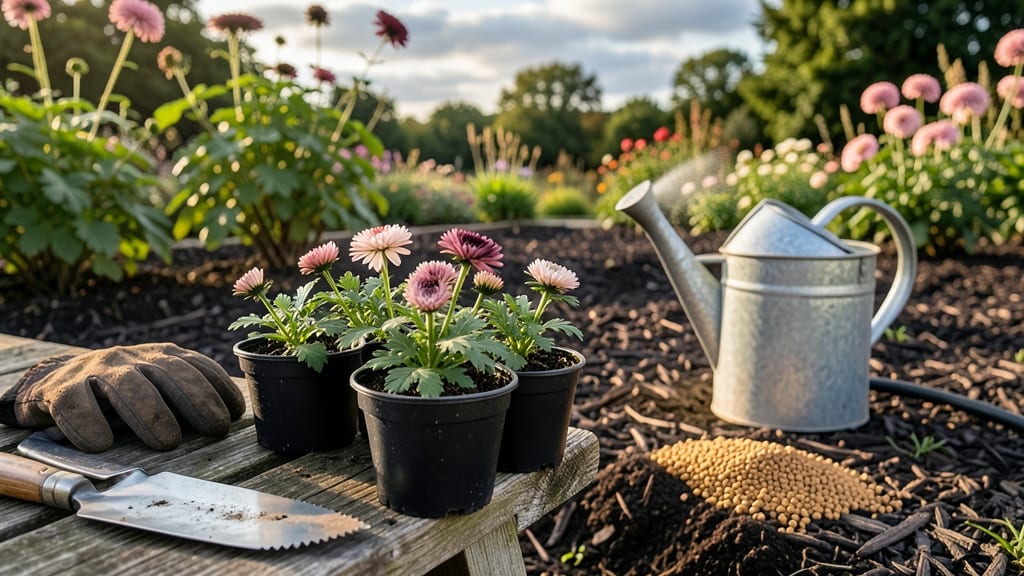
Timing your fall chrysanthemum planting can mean the difference between a burst of vibrant blooms next spring and struggling plants that barely survive. The 4-6 week window before your first frost isn't just a suggestion—it's the sweet spot where these hardy flowers establish roots without racing against winter's early chill.
I've learned the hard way that planting too early can leave your 🌼 chrysanthemums vulnerable to pests and weak growth, while waiting too long risks stunted development before dormancy. The key lies in understanding your specific USDA zone—whether you're in Zone 6a or further south—and adjusting for your local microclimate.
What you're about to discover isn't just about dates—it's about creating the perfect conditions for your plants to thrive through winter. We'll cover soil prep that prevents root rot, mulching techniques that protect against freeze-thaw cycles, and how to choose varieties that bloom reliably even after a cold snap.
By the end, you'll know exactly when to plant for maximum impact, plus 3 pro tips to ensure your chrysanthemums return stronger than ever next season. Let's get your garden ready for that perfect fall planting window.
Fall planting deadlines by USDA hardiness zones: exact dates for thriving chrysanthemums
Timing your chrysanthemum planting is critical—aim for 4-6 weeks before your first frost. This window ensures roots establish before winter dormancy. In USDA Zone 6a (like much of the Midwest), that means planting between September 15 and October 15.
Miss this window, and your blooms may struggle to emerge next spring.
Your local frost dates are your best guide. Check the National Weather Service or plant your chrysanthemums 6 weeks before your area’s average first frost.
For example, gardeners in Zone 5 (northern U.S.) should plant by early September, while those in Zone 8 (southern U.S.) have until late October.
Soil temperature matters too. Chrysanthemums thrive when soil is between 50°F and 65°F. Use a soil thermometer to confirm—cool soil slows root growth, while warm soil risks frost damage. In cooler zones, wait until soil warms after summer’s heatwave before planting.
| USDA Zone | Planting Window | Soil Temp | Last Chance |
|---|---|---|---|
| Zones 3-4 | August 15–September 15 | 50°F–60°F | September 20 |
| Zones 5-6 | September 1–October 1 | 55°F–65°F | October 15 |
| Zones 7-8 | September 15–October 30 | 60°F–70°F | November 10 |
| Zones 9-11 | October 1–November 15 | 65°F–75°F | December 1 |
Regional microclimates can shift these deadlines. For example, Pacific Northwest gardeners in Zone 7 may plant until mid-November thanks to milder winters, while Deep South gardeners in Zone 9 can extend planting to December in frost-free areas.
Always account for early frosts—mountain valleys and coastal areas often freeze earlier than inland zones.
Prepare your planting site 2 weeks ahead. Chrysanthemums prefer well-draining soil with a pH of 6.0–7.0. Amend heavy clay with compost or sand, and loosen soil to 12 inches deep to encourage root growth.
A slow-release fertilizer (like 10-10-10) at planting time gives them a nutrient boost for early spring blooms.
Adjust for late-season varieties. If you’re planting ‘Bonanza’ or ‘Mammoth’ chrysanthemums, which bloom later, push your deadline to 6 weeks before frost. These varieties need extra time to establish roots and still produce vibrant fall color.
In contrast, early-blooming types like ‘Bright Golden Anne’ can handle planting up to 4 weeks before frost.
Watch for false springs—unseasonably warm spells in late fall can trick you into planting too late. If temperatures spike above 70°F in November, delay planting until soil cools below 65°F to avoid stressing young roots.
A frost cloth can buy you extra time if you’re cutting it close to the deadline.
After planting, mulch heavily with 3–4 inches of straw or shredded leaves to insulate roots. This protects against temperature swings and retains moisture. In Zone 5 or colder, add a thick layer of evergreen boughs over mulch for extra winter protection.
Your goal: keep roots frozen but alive until spring thaw.
Remember, fall-planted chrysanthemums reward patience. Those planted in September or early October often bloom earlier and more vigorously than spring-planted ones.
With the right timing, your garden will burst into golden, red, and purple hues just as winter’s chill sets in—proof that fall is the perfect season for these resilient blooms. 🌼
How to choose the right chrysanthemum variety for fall planting: bloom time, hardiness, and color
Selecting the perfect chrysanthemum variety for fall planting can make all the difference between a garden that dazzles and one that disappoints. Not all varieties thrive in cooler temperatures, and some bloom earlier or later than others.
I’ve learned that hardiness and bloom timing are the two most critical factors when choosing varieties for fall planting.
For example, ‘Mammoth’ chrysanthemums are known for their large, showy blooms and can handle cooler temperatures, making them ideal for Zone 5 and below. Meanwhile, ‘Bonanza’ series varieties are better suited for milder climates like Zones 7–10, where they’ll continue blooming well into winter.
Color also plays a role—deep purple and bronze varieties often handle cold better than lighter shades like white or pale yellow. If you’re aiming for a long-lasting display, look for varieties labeled as late-season bloomers, such as ‘Dynasity’ or ‘Korean Chrysanthemums’, which thrive in cooler weather.
Disease resistance is another key consideration. Varieties like ‘Bright Golden Anne’ are less prone to fungal issues, which can be a lifesaver in damp fall conditions. Always check the USDA hardiness rating and bloom duration to match your climate and goals.
Here’s how to match varieties to your fall planting needs based on your zone and desired bloom time:
| Variety | Bloom Time | Hardiness Zone | Key Features |
|---|---|---|---|
| ‘Mammoth’ | Late fall to early winter | 3–9 | Large blooms, cold-tolerant, great for cutting |
| ‘Bonanza’ | Mid-fall to late fall | 7–10 | Compact, disease-resistant, long-lasting |
| ‘Bright Golden Anne’ | Early fall to frost | 5–10 | Bright yellow, fungal-resistant, great for borders |
| ‘Korean Chrysanthemum’ | Late fall to winter | 5–9 | Unique spider-like blooms, cold-hardy |
| ‘Dynasity’ | Mid-fall to frost | 4–10 | Disease-resistant, uniform blooms, great for containers |
If you’re in a warmer climate (Zones 8–10), prioritize varieties that bloom later in the season, like ‘Bonanza Pink’ or ‘Dynasity White’, which will continue to thrive even as temperatures drop.
For cooler zones (3–6), focus on ‘Mammoth’ or ‘Korean’ types, which can withstand early frosts and still produce stunning blooms.
Pro tip: If you’re unsure about your local microclimate, opt for multi-season varieties like ‘Bright Golden Anne’, which perform well in a wide range of conditions. And always check the plant tag for specific care instructions—it’s your best guide to success!