
Plants
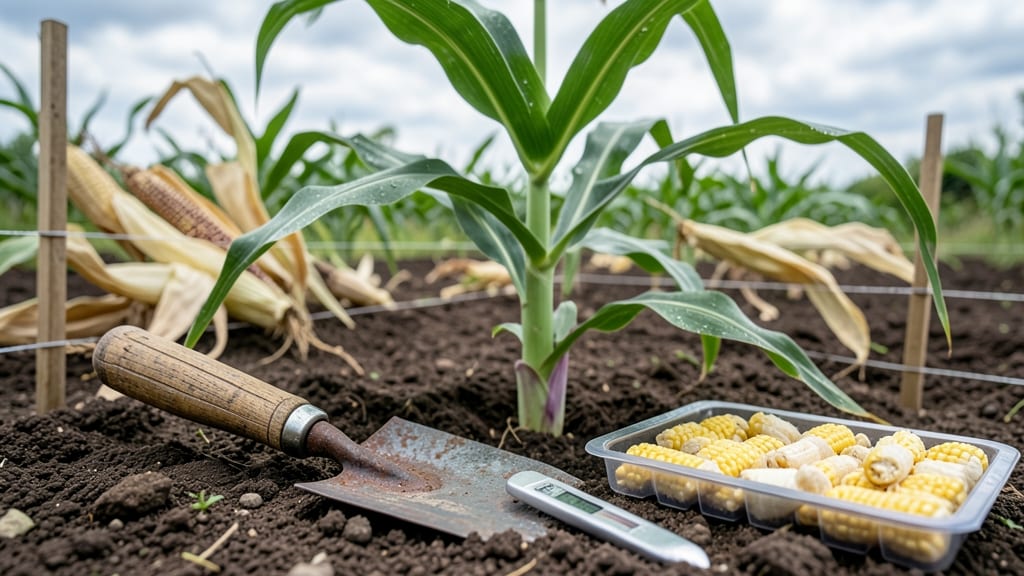
Timing your 🌽 corn planting in Northeast Ohio isn't just about following a calendar—it's about outsmarting frost, soil temperatures, and those infamous late-May cold snaps that can turn your hard work into stunted stalks.
With USDA Zone 6a weather that swings from icy April nights to sweltering July afternoons, getting those seeds in the ground between mid-April and early May is your golden ticket to a bountiful harvest.
Here's the kicker: planting too early risks frost damage, while waiting too long shortens the growing season, leaving you with ears that never quite reach their potential. I've seen gardeners in Cleveland and Akron pull their hair out over this exact dilemma, and the solution isn't guesswork—it's data.
We're talking soil thermometers, last-frost-date trackers, and knowing when those 60°F+ temperatures stick around for at least 10 days straight.
What if your spring decides to play hard to get? That's where the real strategy comes in.
I'll show you how to adjust your timeline based on microclimates—whether you're tucked into a sheltered valley or battling wind on a hillside—and when to pull out the black plastic mulch to give your soil a head start.
Plus, we'll cover companion planting tricks to maximize space and succession planting for a harvest that stretches from late July through September.
By the end of this, you won't just know when to plant your corn—you'll understand why those dates matter and how to tweak them for your specific patch of Northeast Ohio. Let's turn that high-stakes gamble into a guaranteed win.
Northeast Ohio corn planting dates by frost-free zone
Corn thrives in Northeast Ohio’s USDA zones 5b-6a, but the 10-14 day difference between Cleveland’s and Youngstown’s last frost dates means your planting window varies by 2 weeks or more.
For example, Cleveland’s average last frost is April 15, while Youngstown’s is April 22—planting too early in the latter risks frost damage to tender seedlings.
To simplify, I’ve mapped out the ideal planting windows for major cities, plus how to adjust for microclimates like urban heat islands or sheltered valleys. These dates assume you’re growing standard sweet corn varieties (75-90 days to maturity) like ‘Silver Queen’ or ‘Peaches and Cream’.
🌽
| City | USDA Zone | Avg Last Frost | Ideal Planting Window | Soil Temp Threshold | Harvest Window |
|---|---|---|---|---|---|
| Cleveland | 6a | April 15 | April 25–May 10 | 55°F+ for 10+ days | Late July–early Sept |
| Akron | 6a | April 18 | May 1–May 15 | 55°F+ for 10+ days | Late July–mid-Sept |
| Canton | 6b | April 20 | May 2–May 16 | 55°F+ for 10+ days | Late July–mid-Sept |
| Youngstown | 6a | April 22 | May 3–May 18 | 55°F+ for 10+ days | Late July–early Sept |
| Microclimates (e.g., urban areas, valleys) | 5b–6a | April 10–25 | Adjust ±7 days | 50°F+ for 7+ days (with row covers) | Late July–Sept |
For early varieties (60-75 days to maturity), like ‘Ambrosia’, you can push the window back by 1-2 weeks. Conversely, late varieties (90+ days) need to go in by May 10 at the latest to avoid frost before harvest.
Use the 5/10 rule: Wait until nighttime temps stay above 50°F for 10 consecutive days.
Pro tip: Plant succession crops every 2 weeks after your initial planting for a staggered harvest. This extends your fresh corn supply from 2 weeks to 6+ weeks—critical in Northeast Ohio’s short season.
🌱
If you’re in a warmer microclimate (e.g., near a south-facing wall or pavement), you can plant 1 week earlier. Conversely, cold pockets (like shaded valleys) may need a 1-week delay. Always check the NOAA 7-day forecast and your local Old Farmer’s Almanac for real-time adjustments.
For container growing, start seeds indoors 2-3 weeks earlier (late March) and transplant after last frost. Use 5-gallon pots or larger to accommodate deep roots.
☀️
5 Critical factors that determine your exact planting window
Northeast Ohio’s soil temperature is the #1 factor dictating when to plant corn—seeds need 50°F+ soil for 10+ days to germinate properly. Cold soil delays sprouting, and stunted seedlings rarely recover. My soil thermometer becomes my best friend in April, checking daily until the needle hits 60°F consistently.
Even if air temperatures feel spring-like, ground-level warmth lags behind. For example, in Cleveland’s USDA Zone 6a, I’ve seen 30°F air temps at night while soil stayed a steady 55°F—just cold enough to stall germination.
Black plastic mulch can add 5-10°F to soil warmth, creating a microclimate that speeds things up.
I also track moisture levels because dry soil can cause seeds to rot before sprouting. A simple squeeze test works: grab a handful of soil—if it crumbles easily, it’s too dry. If it forms a tight ball, it’s too wet.
The ideal texture is like a damp sponge, which is why I always water my planting rows 24 hours before dropping seeds in.
For microclimates, I adjust timing based on location. Gardens near Lake Erie (like Ashtabula) can plant 1-2 weeks earlier thanks to moderating lake breezes, while inland areas (like Canton) often need to wait until mid-May for safety.
My neighbor in Youngstown swears by planting sweet corn varieties like 'Silver Queen' in early June for fall harvests—his trick is using row covers to extend the season.
Finally, I never ignore local weather patterns. The Old Farmer’s Almanac predicts 50% chance of frost in early May for my area, so I hold off until May 1st unless I’m using row covers.
For short-season varieties (like 'Early Sunglow'), I plant by April 20th to ensure a 90-day maturity before frost. Longer-season varieties (like 'Peaches and Cream') get the May 10th slot to avoid late-summer heat stress.
Pro tip: Mark your calendar for May 15th as your final deadline—any later, and your corn may not reach full maturity before October’s first frost.
That’s when I break out the garden journal to compare my planting dates against actual yields—because in NE Ohio, perfect timing separates the great harvests from the disappointing stubble. 🌽