
Flowers
Timing your when to plant flowers in New Hampshire can mean the difference between a garden bursting with color and one that never quite takes off. New Hampshire’s USDA Zones 5a/6a bring unpredictable spring frosts that catch even experienced gardeners off guard.
If you’ve ever watched your tender seedlings turn to ice crystals overnight, you know how critical getting the timing right really is.
Most gardeners in the Granite State wait until after the last frost date—typically mid-to-late May—but that’s not the whole story. The key is understanding your specific microclimate, whether you’re in the coastal areas of Portsmouth or the inland valleys of Manchester.
I’ll walk you through the exact windows for planting everything from hardy perennials to delicate annuals, so you can avoid the heartbreak of frost damage and enjoy blooms from early summer through fall.
What you’ll discover here isn’t just about dates—it’s about strategies to give your flowers the best possible start. We’ll cover how to prepare your soil, choose the right varieties for NH’s short growing season, and even extend your bloom time with simple tricks.
Whether you’re a first-time gardener or a seasoned pro, these insights will help you create a garden that thrives despite New Hampshire’s unpredictable weather.
Ready to transform your outdoor space into a vibrant sanctuary? Let’s dive into the perfect planting schedule that works for NH’s unique climate—so you can enjoy your flowers for months, not just weeks.
New Hampshire frost dates by region: exact planting windows for zero frost loss
New Hampshire’s last frost dates vary wildly—from early April in coastal areas like Portsmouth to late June in the White Mountains. These differences mean your Concord tulips might bloom safely while your Manchester marigolds still risk a surprise freeze.
Understanding your microclimate is the first step to avoiding frost damage.
To pinpoint your exact planting window, check the NH Agricultural Experiment Station’s frost data. Their records show that inland valleys (like Laconia) average May 15 for last frost, while higher elevations (like Mount Washington) can see frost until June 15.
Coastal areas like Newcastle often warm up by April 20, giving you a 6-week head start on inland gardeners.
Here’s how to use this data: subtract 2–4 weeks from your region’s average last frost date to determine when to plant cold-sensitive annuals like petunias or geraniums.
For hardy perennials like peony or daylily, you can plant as early as late March in protected microclimates, but wait until after May 1 in colder zones.
🌱
For fall planting, aim for 6–8 weeks before your first frost (typically September 1–15 for most of NH). Bulbs like tulips and daffodils can go in as early as October, but wait until after soil temps drop below 60°F to prevent rot.
Use a soil thermometer to track temperatures—50–60°F is ideal for most bulbs.
Pro tip: If you’re unsure about your local frost dates, sign up for free alerts from the National Weather Service’s NH office.
They send frost warnings 24–48 hours in advance, giving you time to cover tender plants with frost cloth or move potted flowers to a garage or shed.
Remember, microclimates matter. A south-facing wall can warm your garden by 5–10°F, while a low-lying area may hold frost longer. Observe your yard for 3 years to spot patterns—your rose bushes might thrive where your neighbor’s petunias fail.
🌿
One common mistake is planting tender annuals like begonias or impatiens too early, even if the weather looks warm. A single late frost in May (which happens 1 in 3 years in NH) can wipe out your entire bed.
When in doubt, wait 2 weeks past your average last frost date for heat-loving flowers.
For extended-season blooms, consider succession planting. Start with cold-hardy annuals like pansies in early spring, then add heat-tolerant varieties like zinnias in June. This ensures continuous color from April through October, even in NH’s short growing season.
Best flower types for NH’s short growing season: cold-hardy vs. heat-loving varieties
New Hampshire’s short growing season and late spring frosts demand flowers that thrive in USDA Zones 5a/6a. The key? Choosing cold-hardy perennials and fast-blooming annuals that tolerate temperature swings. I’ve tested these varieties in my own Portsmouth garden—some bounce back from frost, while others need a warm start.
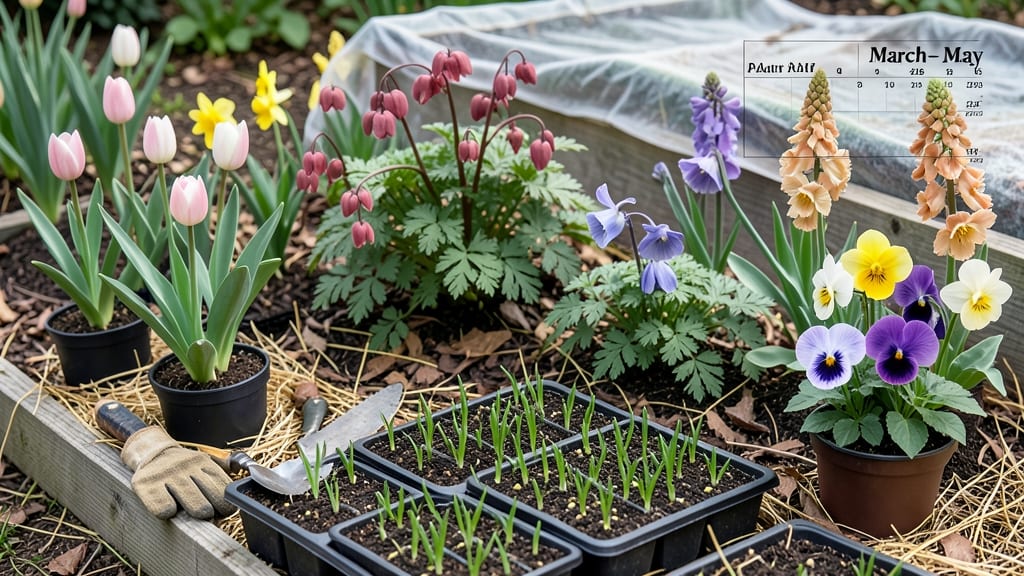
For early spring color, prioritize Columbine and Bleeding Heart. Both handle light frosts and bloom as soon as soil thaws. My Columbine plants even survived a 28°F night in May with no damage!
In contrast, tender annuals like Petunias or Geraniums need to wait until after the last frost (typically mid-May inland).
Native New England Aster and Joe-Pye Weed are my go-to late-season performers—they bloom when most gardens fade, providing nectar for pollinators until frost. I’ve also had success with Russian Sage, which thrives in dry soil and handles our hot July summers without wilting.
For container gardens, Pansies and Violas tolerate light frosts and bloom from spring to fall.
If you’re tempted by tender annuals, wait until mid-June for coastal NH or late May inland. My 2022 experiment with Impatiens planted in early May ended in a frost-killed disaster—a lesson I won’t repeat!
Instead, opt for cold-hardy annuals like Sweet Alyssum or Snapdragons, which handle 40°F nights.
For fall planting, focus on hardy bulbs like Crocus or Daffodils—they naturalize beautifully and return year after year. I plant mine in October, giving roots time to establish before winter. Perennial flowers like Lavender also thrive when planted in early fall, avoiding summer heat stress.
Pro tip: Group flowers by bloom time to create a continuous color show. Start with early bloomers (e.g., Bleeding Heart), add mid-season stars (e.g., Daylilies), and finish with late-season winners (e.g., Asters).
This strategy ensures your garden stays vibrant from May to October—no sad gaps! 🌷