
Plants
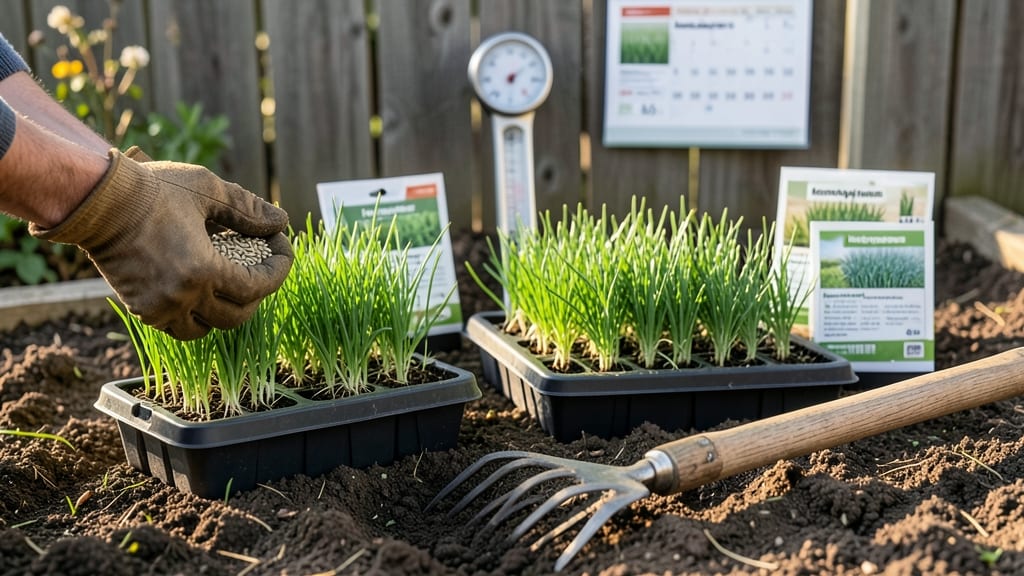
Planting grass seed in the fall is your best shot at a lush, weed-resistant lawn—but timing is everything. If you miss the 4-6 week window before frost, your grass won’t have time to establish roots before winter hits.
This isn’t just guesswork; it’s about understanding your climate zone and soil conditions to give your lawn the perfect head start.
In Zone 6a, where frost typically arrives around mid-October, you’ll want to get seeds in the ground by early September. Why? Cool fall temperatures and shorter daylight hours trigger deeper root growth, while fewer weeds compete for nutrients.
Think of it as giving your grass a cozy blanket to grow strong before winter’s nap.
But here’s the catch: planting too early or too late can backfire. Warm soil in late summer can cause seeds to dry out, while late fall planting risks frost damage before roots take hold.
I’ll walk you through the exact steps to prep your soil, choose the right seed, and care for your lawn so it wakes up vibrant and ready next spring.
Skip the trial-and-error—let’s break down the science and simple strategies to turn your fall planting into a game-changer for your lawn’s health. Ready to dig in?
The 4-Week pre-frost window: exact dates by U.s. climate Zone
Planting grass seed in the fall gives your lawn a head start on spring growth, but timing is everything. The 4-week pre-frost window is your golden opportunity—roots establish before winter dormancy, while weeds slow down. Miss this window, and your seed may struggle to take hold before cold sets in.
Your U.S. climate zone determines the exact dates. Northern regions (Zones 3–5) have shorter windows, while Southern zones (6–10) can plant later. The rule of thumb: aim for soil temperatures between 50–65°F and 4–6 weeks before the first frost.
Here’s how to calculate your ideal planting window using USDA hardiness zones. For example, in Zone 5, the window is typically late August to mid-October, while Zone 8 can extend until early December. Always check your local frost date averages for precision.
Cool-season grasses like tall fescue and Kentucky bluegrass thrive in fall, while warm-season grasses (e.g., Bermuda) should wait until spring. Planting at the right time ensures your grass outcompetes weeds and establishes deep roots for spring’s rapid growth.
Pro tip: Use a soil thermometer to confirm temperatures. If the soil is still above 65°F, wait a week or two—hot soil can dormant seeds instead of germinating them.
🌱
| USDA Zone | Ideal Planting Window | Soil Temp Threshold | Key Grass Types |
|---|---|---|---|
| Zones 3–4 | Mid-August to early October | 50–60°F | Tall fescue, Fine fescue |
| Zones 5–6 | Late August to mid-October | 55–65°F | Kentucky bluegrass, Perennial ryegrass |
| Zones 7–8 | September to early November | 60–65°F | Tall fescue, Buffalo grass |
| Zones 9–10 | October to early December | 60–70°F | Warm-season grasses (spring planting) |
Note: Adjust for early/late frost years. Check local frost date forecasts for accuracy.
If you’re in a transitional zone (e.g., Zone 6b–7a), err on the earlier side of the window. Cooler nights can accelerate root growth, while lingering summer heat may delay germination.
For example, in Zone 6, planting in early September gives seeds time to establish before the first frost in late November.
Another critical factor is daylight length. Shorter fall days signal grass to focus on root development rather than leafy top growth. This natural shift means your lawn will recover faster in spring with a robust root system already in place.
For northern climates, aim to finish planting by October 1st to avoid winter stress. In the South, you can push closer to November 15th, but monitor weather patterns—unexpected cold snaps can damage young seedlings.
🌿
Use a frost date calculator (like the one from the National Oceanic and Atmospheric Administration) to pinpoint your local window. Input your ZIP code, and it’ll generate a 10-year average for first frost dates—your best guide for planning.
Remember: Overseeding (adding seed to an existing lawn) follows the same timeline. Just reduce seed rates by 25–50% to avoid overcrowding. For new lawns, aim for 1–1.5 lbs of seed per 100 sqft of cool-season grass.
How to prepare soil and seed for fall planting success
Fall planting sets the stage for a thicker, greener lawn next spring—but only if your soil and seed are ready. Cool temperatures and shorter days reduce weed competition, giving grass seedlings a fighting chance. Here’s how to prep like a pro.
Start by testing your soil pH (aim for 6.0–7.0). Most grass seeds struggle in acidic or alkaline soil. If your pH is off, add lime (to raise pH) or sulfur (to lower pH) 4–6 weeks before planting.
A simple home test kit costs less than $10 and saves you from wasted seed.
Next, choose the right grass seed type for your climate. Cool-season grasses (like Kentucky bluegrass or fescue) thrive in fall, while warm-season grasses (like Bermuda or Zoysia) should wait for spring. Mixing seed varieties can also improve drought resistance.
🌱 Step-by-Step Fall Planting Prep
- Test soil pH (4–6 weeks before planting) and amend if needed.
- Aerate compacted soil using a core aerator to improve seed-to-soil contact.
- Rake the area to remove debris and create a fine, level surface.
- Spread seed evenly (use a broadcast spreader for large areas).
- Lightly rake seeds into soil (¼ inch deep max) to ensure good contact.
- Water gently (keep soil moist but not soggy for 10–14 days).
Don’t skip aeration—compacted soil is the #1 reason seeds fail to germinate. Rent a core aerator (or hire a pro) to pull small soil plugs, which loosens the ground and lets roots penetrate deeper.
After aerating, rake the area to smooth out rough spots, then spread a starter fertilizer (high in phosphorus) to boost early root growth.
Once seeds are down, watering consistency is critical. Aim for ¼ inch of water daily for the first 2 weeks, then taper to ½ inch weekly once seedlings emerge. Water in the early morning to prevent fungal diseases like damping-off, which thrives in damp, evening conditions.
Pro tip: Use a straw mulch (not wood chips) to hold moisture and shield seeds from birds. Remove mulch after germination to avoid smothering young grass. With these steps, your lawn will establish stronger roots before winter—setting you up for a lush, weed-free spring.