
Watering
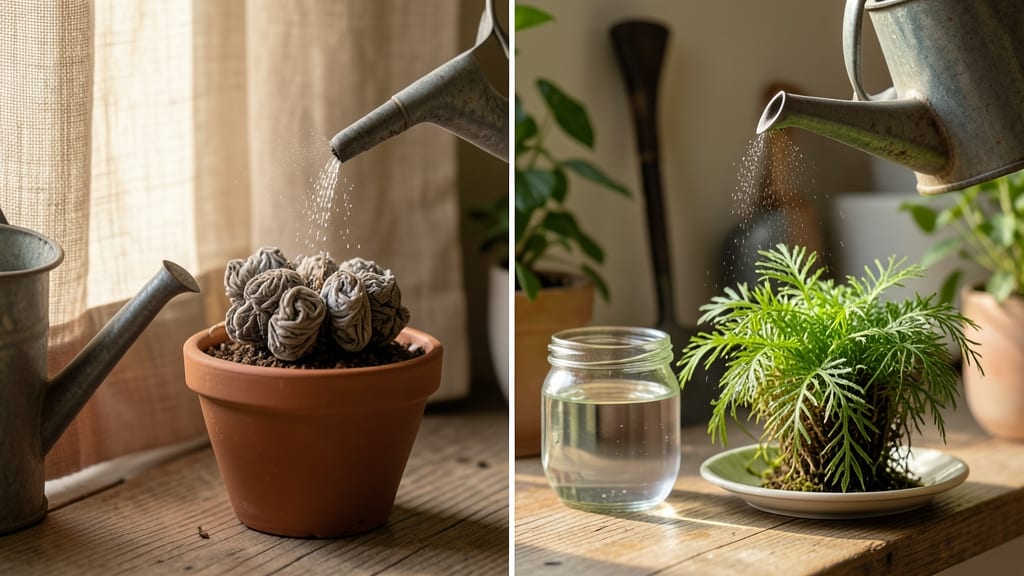
How much water does a resurrection plant need weekly?
The resurrection plant (Selaginella lepidophylla) thrives on minimal water—so little that most gardeners overdo it. Unlike thirsty houseplants, this drought-loving perennial stores moisture in its leaves and stems, surviving months without a drop. The key? Water just enough to moisten soil—never saturate it.
Overwatering triggers root rot, while too little sends it into dormancy. Let’s break down the exact weekly schedule to keep yours lush (or revive it from a dried husk).
Your resurrection plant’s water needs shift with the seasons. In spring and fall, when it’s actively growing, aim for bi-weekly waterings—about 50-100ml per watering for potted plants. During summer dormancy, reduce to monthly soaks or skip entirely if humidity is high.
Winter? Once every 4-6 weeks is plenty. The goal? Mimic its desert origins—dry spells force it to conserve, while brief hydration revives it.
Here’s the golden rule: Always check soil moisture before watering. Stick your finger 1 inch deep—if it’s dry, water lightly. If damp, wait. Never let water pool in the saucer or pot.
This plant’s roots hate soggy conditions, and excess moisture suffocates them faster than dehydration. Think of it like a cactus’s cousin: it’s built for survival, not comfort.
🌱 Pro Tip: Use room-temperature water to avoid shocking the roots. Tap water left out for 24 hours removes chlorine, which can stress delicate resurrection plants. If you’re unsure whether to water, err on the side of dryness—this plant would rather look shriveled than drowned.
🌱 Resurrection Plant Watering Guide
| Season | Watering Frequency | Amount per Watering | Soil Moisture Test | Signs of Overwatering |
|---|---|---|---|---|
| Spring (March-May) | Every 10-14 days | 50-100ml (light soak) | Top 1" dry | Yellowing leaves, mushy stems |
| Summer (June-August) | Monthly (or skip) | 25-50ml (bare minimum) | Top 2" dry | Blackened roots, foul odor |
| Fall (September-Nov) | Every 3-4 weeks | 50ml (revival soak) | Top 1" dry | Wilted but firm stems |
| Winter (Dec-Feb) | Every 6-8 weeks | 25ml (mist only) | Top 3" dry | Shriveled but intact |
💧 Note: Adjust for humidity—drier air = more frequent watering (but still minimal!).
Your resurrection plant’s soil mix plays a huge role in water retention. Use a blend of 60% cactus/succulent mix, 30% perlite, and 10% coarse sand to mimic its native rocky terrain.
This ensures excess water drains within 30 minutes, preventing root rot. If you’re growing it outdoors, plant in well-draining soil with a 50% sand amendment—this is non-negotiable for survival.
Watch for visual cues to refine your watering schedule. A healthy resurrection plant has bright green, plump leaves. If it looks dull or wrinkled, it’s thirsty—but don’t drown it! Instead, place it in a shallow tray of water for 10 minutes to revive it gradually.
Overwatering signs include yellowing leaves or a mushy base. At this point, stop watering entirely and let the soil dry out completely for 2-3 weeks to recover.
🌿 Fun Fact: This plant can survive 12+ years without water in dormancy! Its revival process is
How much water does a resurrection plant need weekly?
The resurrection plant thrives on neglect—its secret weapon is surviving extreme drought. Unlike most plants, it needs dry spells to trigger its revival process. In active growth months (spring/fall), water every 14 days with just 50-100ml—enough to barely moisten the soil.
Think of it like a desert cactus: too much water = instant death. The key is minimal moisture during its dormancy phases (summer/winter), where monthly watering suffices.
Your finger is the best tool: stick it 1 inch deep into the soil. If it feels dry, water lightly. If damp, wait. Overwatering causes root rot, while underwatering simply puts your plant into its natural dormant state—no harm done!
The resurrection plant’s ability to revive proves it’s built for survival, not convenience. This drought tolerance makes it perfect for forgetful gardeners or those with busy schedules.
| Season | Watering Frequency | Amount | Soil Check |
|---|---|---|---|
| Spring (Mar-May) | Every 14 days | 50-100ml (light soak) | Dry 1 inch deep |
| Summer (Jun-Aug) | Monthly (every 30 days) | 30-50ml (minimal) | Dry 2 inches deep |
| Fall (Sep-Nov) | Every 14-21 days | 50-80ml (moderate) | Dry 1 inch deep |
| Winter (Dec-Feb) | Every 30-45 days | 20-40ml (bare minimum) | Dry 2+ inches deep |
Seasonal shifts matter more than calendar dates. If your resurrection plant looks crispy, it’s not dead—it’s dormant. Store it in a cool, dry place (like a windowsill) with no water for 2-3 months to mimic its natural cycle.
When you’re ready to revive it, place it in bright indirect light and water sparingly for 2 weeks before increasing frequency. This mimics the rainfall patterns of its native desert habitats.
Container size affects water needs: smaller pots dry out faster, so terracotta pots (which wick moisture) are ideal. If using a plastic pot, reduce watering by 25%—plastic retains moisture longer.
Always use a pot with drainage holes to prevent soggy soil. Pro tip: group your resurrection plants with succulents to create a microclimate with similar watering needs.
Watch for visual cues like curled leaves (dormancy) or soft, mushy stems (overwatering). A healthy resurrection plant should feel firm to the touch when dormant and plump green when revived. If your plant looks wilting but not dead, it’s ready for revival.
If it’s mushy or smells foul, it’s been overwatered and likely beyond saving—time to propagate from cuttings!
Remember: this plant’s superpower is surviving on almost no water. Treat it like a desert survivor, not a thirsty houseplant. With this schedule, your resurrection plant will reward you with instant greenery whenever you’re ready to bring it back to life—like magic! 🌱