
Plants
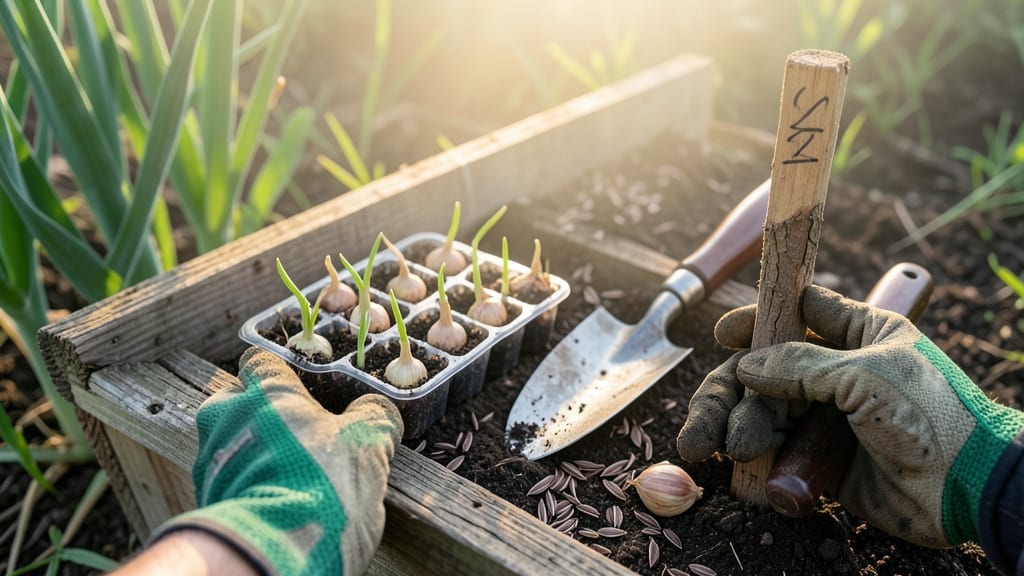
Timing your 🧅 onion planting in Michigan isn’t just about the calendar—it’s about beating frost, choosing the right variety, and working with your local climate. Get it wrong, and you might end up with sad, stunted bulbs or worse, no harvest at all.
The key lies in understanding your USDA Zone 5b-6b frost dates and adjusting for Michigan’s unpredictable swings between winter and summer.
Most gardeners know spring is the prime time, but did you realize fall planting can also yield a bountiful harvest? Whether you’re sowing seeds indoors or transplanting sets, the window for success is narrow—typically between March and April for spring onions and August to September for fall varieties.
Missing these dates could mean waiting another year for that crisp, homegrown flavor.
Here’s the game-changer: short-day, intermediate-day, and long-day onions all have different needs, and Michigan’s climate throws extra curveballs. I’ll break down exactly when to plant each type, how to prep your soil for optimal growth, and what to watch for when frost sneaks back in.
No more guesswork—just a foolproof plan for strong starts and plentiful harvests.
Ready to transform your garden? Let’s dive into the frost-free timeline that’ll have your onions thriving from seed to bulb, no matter where you are in the state.
You’ll learn how to adjust for late frosts, early heat waves, and even regional differences between the Upper and Lower Peninsulas—so you can finally get those onions right.
Michigan onion planting calendar: exact frost dates by variety type
Michigan gardeners face a unique challenge with onions—their day-length requirements and frost sensitivity demand precise timing. Unlike warm-season crops, onions thrive when planted 4-6 weeks before the last frost (typically mid-April in most of Michigan).
But not all onions are created equal: short-day, intermediate-day, and long-day varieties each need different windows to form bulbs properly.
For example, Yellow Granex (a sweet onion) performs best when planted in early spring (March-April), while Red Creole (a storage onion) can handle late summer (August-September) plantings.
The key is matching your variety to Michigan’s USDA Zones 4-6 and adjusting for regional microclimates—like the Upper Peninsula’s cooler temperatures versus Detroit’s urban heat islands.
🌱
🧅 Michigan Onion Planting Timeline
| Variety Type | Best Planting Window | Soil Temp Requirement | Days to Maturity | Key Notes |
|---|---|---|---|---|
| Short-Day | March 15 - April 15 | 40°F+ | 90-120 | Ideal for Southern Michigan; avoid Upper Peninsula |
| Intermediate-Day | April 1 - May 15 | 45°F+ | 100-130 | Best for most of Michigan; adaptable to zones |
| Long-Day | March 1 - April 10 OR August 15 - Sept 1 | 50°F+ | 110-150 | Critical for Northern Michigan; fall planting extends harvest |
📅 Pro Tip: Use seed-starting trays indoors 8-10 weeks before last frost for early varieties.
If you’re planting onion sets (pre-grown bulbs), aim for 2-4 weeks before your target date—they’re hardier than seedlings and can tolerate cooler soils.
For seeds, start them indoors 10-12 weeks before transplanting to give them a head start against Michigan’s late spring frosts, which can still dip below 28°F in April.
For gardeners in USDA Zone 4 (Upper Peninsula), push planting to late April or early May to avoid soil-borne diseases that thrive in cold, wet springs. In Zone 6b (southern Michigan), you can even try an early February start under row covers for a jump on the season.
Don’t overlook fall planting for storage onions! In August-September, plant long-day varieties like Candy or Sweet Spanish—they’ll mature before winter sets in. Just ensure they have 60-70 days of warm weather to bulb up properly.
🌡️ Soil temperature is your best friend here. Use a soil thermometer to confirm 40°F+ for sets or 50°F+ for seeds. Cold soils delay germination, and Michigan’s chilly springs can leave you waiting weeks for sprouts.
Finally, spacing matters: 1-2 inches apart for sets, 4-6 inches apart for seedlings. Crowding stresses onions and reduces bulb size—something you’ll want to avoid when Michigan’s growing season is already short.
✅ Ready to plant? Mark your calendar for March 15 (early varieties) or April 1 (most gardeners) and set reminders for soil checks and frost watches. With this timeline, you’ll beat Michigan’s weather and enjoy homegrown onions from July through October!
How to adjust onion planting for Michigan’s unpredictable weather patterns
Michigan’s weather is famous for its unpredictable swings, and onions are particularly sensitive to those late frosts and early heat waves. If you’ve ever planted onions only to watch them wilt under unexpected cold snaps or bolt in sudden summer heat, you’re not alone.
The key to success lies in flexible planting strategies that account for regional microclimates and weather quirks.
For example, the Upper Peninsula often experiences later frost dates than Detroit, meaning your planting window might shift by weeks. Meanwhile, areas near Lake Michigan can enjoy milder springs due to the lake effect, giving you an extra buffer.
Understanding these variations lets you fine-tune your approach—whether that means delaying planting or using protective measures to safeguard your crop.
Here’s the critical adjustment: always plant 4-6 weeks before your average last frost date, but be ready to extend that window if your spring stays cold. In the Upper Peninsula, where frosts can linger until May 15, aim for early April planting.
In southern Michigan, where frost typically retreats by April 15, you can start slightly later without risking damage.
🚨 Watch for Late Frosts
Even after the official last frost date, late frosts can still occur. If nighttime temperatures dip below 28°F, your onions are at risk. Use frost cloth or row covers for protection, especially for spring-planted sets. In high-risk areas like the Thumb region, have a backup planting date ready—typically May 1-15—if your first attempt fails.
Another trick is to warm your soil before planting. Cold soil slows germination, so use black plastic mulch or a cold frame in early spring to raise soil temperatures by 10-15°F. This not only speeds up growth but also helps onions establish roots before the ground cools again.
For fall planting, focus on late August to early September to ensure bulbs mature before the first frost.
Don’t overlook heat tolerance either. Varieties like Sweet Spanish struggle in Michigan’s hot summers, often bolting (sending up flowers) if temperatures exceed 85°F for prolonged periods. To combat this, provide afternoon shade with shade cloth or plant in partial shade during peak summer months.
Mulching with straw also helps regulate soil temperature and retain moisture.
Finally, keep an eye on your local weather forecasts in the weeks leading up to planting. If a cold snap is predicted, delay planting or use protective covers. For fall plantings, aim to finish by September 1 to allow bulbs to mature before winter sets in.
With these adjustments, you’ll turn Michigan’s weather challenges into opportunities for a reliable onion harvest.