
Companion Plants
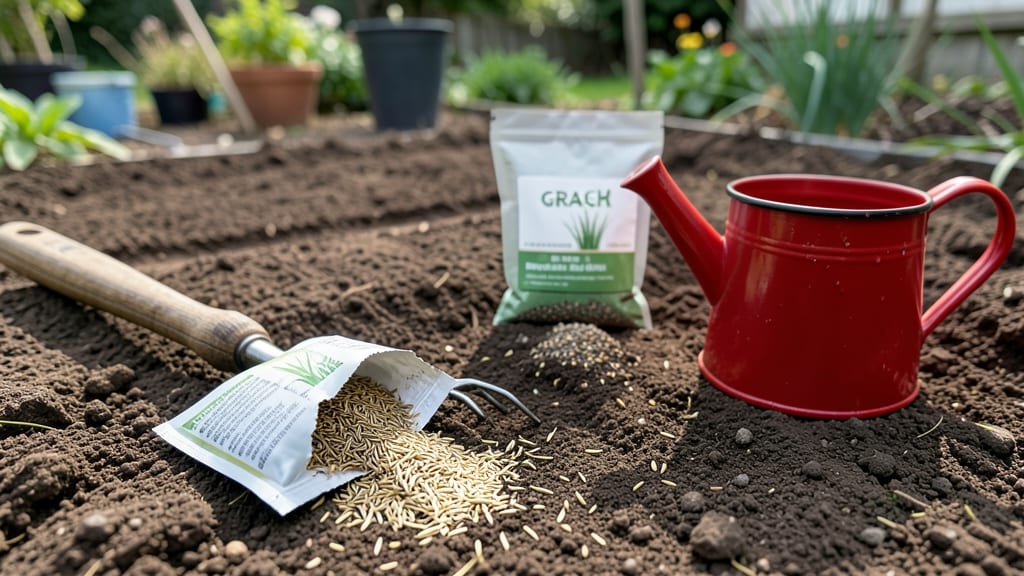
Timing your grass seed planting in spring is the game-changer between a vibrant lawn and a frustrating patchwork of dirt and grass.
If you're in Zone 6a like most of the Midwest, getting those seeds in the ground at the right moment—4-6 weeks before your last frost—makes all the difference for strong germination.
Here's the catch: planting too early risks frost damage, while waiting too long means your grass struggles to establish roots before summer heat sets in.
I've seen firsthand how a well-timed planting transforms a bare yard into a lush carpet of 🌱 Grass (Turfgrass)—and I'll show you exactly how to nail that window for your region.
We'll break down the ideal planting weeks based on your specific zone, plus how to check soil temperature and other key signs your lawn is ready. No more guessing games—just science-backed timing to give your grass the best possible start.
Ready to skip the trial-and-error? Let's dive into the exact steps to plant your grass seed at the perfect moment this spring, so you can enjoy that green oasis all season long.
Best spring planting weeks before last frost by USDA hardiness Zone
Planting grass seed in spring requires precision—timing it 3-6 weeks before your last frost date ensures seeds germinate in warm soil without risking frost damage. Your USDA hardiness zone dictates the exact window, with cooler zones (like Zone 3) needing earlier planting than warmer ones (like Zone 9).
For example, in Zone 6, aim for early to mid-April, while Zone 8 can wait until late March. Always verify your local frost dates using the National Weather Service or Almanac tools.
Soil temperature is just as critical as frost dates. Grass seeds need soil temps between 55°F and 65°F to germinate properly. A soil thermometer ($10 at garden centers) is your best tool—plant only when readings consistently hit this range for 5-7 days.
In northern climates (Zones 3-5), this often means waiting until late April or early May, while southern zones (Zones 7-10) can start as early as February.
Regional microclimates add another layer of complexity. Urban areas with heat islands may warm up faster than rural zones, while mountainous regions can have delayed springs. Check with local cooperative extension offices for hyper-local advice.
For instance, Denver (Zone 5) might plant in mid-April, while Atlanta (Zone 8) could start in early March—both correct for their climates.
| Zone | Ideal Planting Window | Soil Temp Requirement | Last Frost Date |
|---|---|---|---|
| 3-4 | Late April - Early May | 55-60°F | May 1-15 |
| 5-6 | Early April - Mid-April | 55-65°F | April 15-30 |
| 7-8 | Late March - Early April | 60-65°F | March 15-April 15 |
| 9-10 | February - Early March | 60-70°F | January 15-February 15 |
*Adjust for elevation: Add 1-2 weeks later for every 1,000 ft above sea level.
Calculating your planting window starts with finding your last average frost date. Use the USDA Plant Hardiness Zone Map to locate your zone, then add 3-6 weeks before that date. For example, if your last frost is April 15, plant between March 15 and April 1.
Pro tip: Bookmark the Old Farmer’s Almanac frost calendar or use apps like PlantNet to get real-time updates. Don’t forget to account for elevation—mountain regions may need to delay planting by 1-2 weeks per 1,000 feet.
Choosing the right grass seed variety also affects timing. Cool-season grasses (like Kentucky Bluegrass or Fescue) thrive when planted in early spring or fall, while warm-season grasses (like Bermuda or Zoysia) prefer late spring after soil warms.
Always check the seed packet for optimal planting months. For instance, Tall Fescue germinates best at 50-65°F, while Bermuda needs 70-80°F—planting them at the wrong time can lead to poor germination or disease.
Weather forecasts play a pivotal role. Avoid planting if a frost warning is issued within 7-10 days, even if your average last frost is past. Monitor 7-day highs and lows—aim for consistent daytime temps above 60°F and nights above 45°F.
Tools like the Weather Channel’s "Garden Planner" can alert you to optimal planting days based on your location. In Zone 5, this might mean waiting until mid-May if April shows unpredictable cold snaps.
Once you’ve nailed down the timing, soil preparation becomes your next focus. Loosen the top 2 inches of soil with a rake or tiller to create a fine, crumbly texture—this ensures seeds make direct contact with moisture and nutrients.
Remove debris and level the area to prevent water pooling, which can drown seeds. For large lawns, consider renting a core aerator ($60/day) to create 1/2-inch deep holes every 2-3 inches—this boosts root penetration by 30-50%.
After planting, consistent moisture is key. Water lightly but frequently (every 1-2 days) to keep the top 1/4 inch of soil damp until germination (
How to prepare your lawn for spring grass seed planting
Preparing your lawn properly before planting grass seed is half the battle for success. Skipping this step means seeds won't germinate evenly, leading to thin spots or weeds taking over.
I've learned the hard way—my first attempt at overseeding failed because I didn't aerate first, leaving compacted soil that smothered new growth.
Start by testing your soil pH (ideal range: 6.0-7.0 for most grasses). A simple home test kit costs under $10 and takes 5 minutes. If your soil is too acidic (<6.0), add lime 2-3 weeks before planting. For alkaline soil (>7.0), work in sulfur or peat moss.
Next, clear all debris and weeds. Use a stiff rake to remove thatch (dead grass layer) and pull weeds by hand or spot-treat with vinegar (for small areas) or a pre-emergent herbicide (apply 2 weeks before seeding). Never use post-emergent herbicides—they'll kill your new grass too.