
Plants
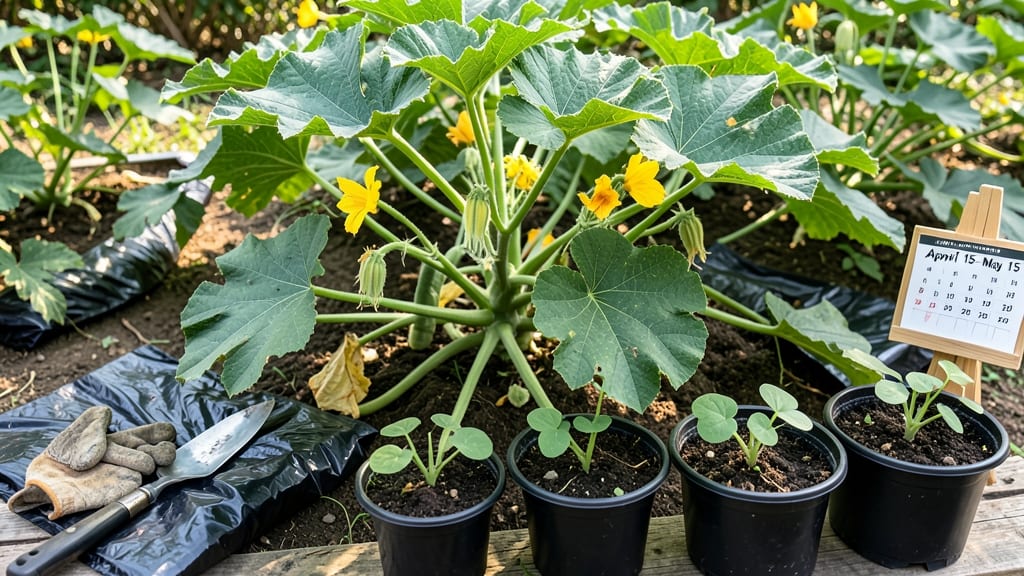
If you're dreaming of a bountiful pumpkin harvest 🎃 this fall, timing your Missouri planting is the single most important decision you'll make. Planting too early risks frost damage to tender vines, while waiting too long shrinks your yield before winter arrives.
The exact window for Missouri's 5b-6a zones balances frost risk with soil warmth—typically mid-April to mid-May after your last frost date.
Missouri's climate throws curveballs, but understanding your region's frost patterns and soil temperature thresholds makes all the difference.
Whether you're growing giant Jack-o'-lanterns or sweet pie pumpkins, the 3-4 week window before your last frost date (usually around April 15) gives vines enough time to establish before summer heat sets in.
I'll walk you through Missouri-specific planting strategies that account for everything from St. Louis' urban microclimates to Kansas City's variable weather. You'll learn how to adjust for late frosts, when to start seeds indoors versus direct sowing, and which pumpkin varieties thrive best in Missouri's 165-day growing season.
By the end, you'll have a clear planting schedule that maximizes your chances of healthy vines and plump pumpkins ready for harvest between late September and October. Let's get those seeds in the ground at the perfect moment!
Missouri pumpkin planting calendar: exact weeks before last frost by region
Missouri’s diverse climate means your pumpkin planting window varies by region—from St. Louis to Kansas City and beyond. The key is planting 2-3 weeks after your average last frost date, when soil temperatures hit 60°F (15°C).
For most of Missouri, this falls between mid-April and mid-May, but rural areas may need adjustments due to microclimates. Let’s break down the exact timing for your zone.
Pumpkins thrive in USDA zones 5b-6a, but Missouri’s frost dates shift dramatically. In southern Missouri (zone 6a), you can plant as early as late March, while northern regions (zone 5b) should wait until mid-May.
The difference? Up to 6 weeks in planting windows. Use these guidelines to align with your local frost data from the Missouri State Climatologist.
🌱 Missouri Pumpkin Planting Timeline by Region
| Region | Last Frost Date | Planting Window | Soil Temp Threshold | Harvest Ready By |
|---|---|---|---|---|
| St. Louis (Zone 6a) | April 1-15 | April 15-May 1 | 60°F+ (15°C+) | Late Sept-Oct |
| Columbia (Zone 6a) | April 5-15 | April 20-May 5 | 60°F+ (15°C+) | Late Sept-Oct |
| Kansas City (Zone 6a) | April 10-20 | May 1-15 | 60°F+ (15°C+) | Late Sept-Oct |
| Northern MO (Zone 5b) | May 1-15 | May 15-June 1 | 60°F+ (15°C+) | Mid-Oct |
💡 Pro Tip: Use black plastic mulch to warm soil faster in cooler zones, shaving off 1-2 weeks of waiting time.
For giant pumpkins (like Atlantic Giant), start seeds indoors 3-4 weeks before transplanting—typically by mid-March in southern Missouri. Smaller varieties like Jack Be Little can go straight into the ground after frost, but giant vines need extra time to establish before summer heat sets in.
Missouri’s short growing season (about 165 frost-free days) demands precision. If you’re in zone 5b, prioritize fast-maturing varieties (under 90 days) to avoid early frost. In zone 6a, you’ve got room for longer-season pumpkins like New England Pie (110 days) or Howden (100 days).
Don’t rely solely on frost dates—soil temperature is your true guide. Use a soil thermometer to confirm 60°F+ at 4 inches deep. Cold soil slows germination, leaving your pumpkins vulnerable to damping off or late blight.
If your soil is still chilly, consider row covers or a greenhouse to jumpstart growth.
Missouri’s unpredictable spring rains can delay planting. If your soil is waterlogged, wait for it to dry and warm. A simple test: press your finger into the soil—if it springs back slowly, it’s ready. Overwatered soil leads to rotten seeds and stunted vines, so patience pays off.
Once planted, mulch heavily with straw or leaves to retain moisture and regulate soil temperature. This is especially critical in July and August, when Missouri’s heat can cause blossom end rot in pumpkins. Mulch keeps roots cool and consistent—your secret weapon for a bountiful harvest.
For late plantings (after May 15), choose compact varieties like Cinderella (80 days) or Waltham Butternut (90 days). These handle shorter seasons better and still produce decent-sized pumpkins for pies or carving. Just be prepared for smaller yields.
Track your local frost dates annually—they shift with climate change. Use resources like the Midwestern Regional Climate Center to adjust your planting schedule. By mastering these regional windows, you’ll turn Missouri’s variable climate into your pumpkin patch’s advantage. 🎃
Missouri pumpkin planting calendar: exact weeks before last frost by region
Missouri’s 4 distinct climate zones create wildly different planting conditions—St. Louis’ urban heat islands warm soil faster than rural areas, while Kansas City’s unpredictable spring frosts demand extra caution.
The key rule for all regions: plant pumpkin seeds 3-4 weeks before your last frost date (typically April 15) when soil reaches 60°F (15°C).
For St. Louis (Zone 6a), aim for mid-April plantings, while Columbia (Zone 6b) can start slightly earlier in late March. Rural southern Missouri (Zone 7a) enjoys a 2-week earlier window, but watch for late frosts—even in May.
Each zone’s 165-day growing season means timing is critical to avoid harvest losses.
🎃 Pro Tip: Use a soil thermometer to confirm readiness—pumpkin seeds won’t sprout below 60°F. If your soil is cold, opt for black plastic mulch to warm it faster.
| Region | Last Frost Date | Planting Window | Soil Temp Threshold | Notes |
|---|---|---|---|---|
| St. Louis (Zone 6a) | April 15 | Mid-April | 60°F (15°C) | Urban heat islands warm soil faster; monitor closely. |
| Kansas City (Zone 6a) | April 20 | Late April | 60°F (15°C) | Late frosts common; use frost cloth if needed. |
| Columbia (Zone 6b) | April 10 | Late March-Early April | 58°F (14°C) | Soil warms quickly; ideal for early starts. |
| Rural South (Zone 7a) | March 25 | Early April | 55°F (13°C) | Longer season; can plant 2 weeks earlier. |
For giant pumpkin varieties (like Atlantic Giant), start seeds indoors 3-4 weeks before your outdoor planting date. Smaller varieties (e.g., Jack Be Little) can be direct-sown after frost. Always space hills 4-6 feet apart—pumpkin vines spread aggressively!
Missouri’s unpredictable weather means flexibility is key. If a late frost threatens, cover seedlings with row fabric until temperatures stabilize. For ornamental pumpkins, prioritize early planting to ensure full color development before frost.
🌱 Remember: The first 2 weeks after planting are critical—keep soil moist but not soggy to prevent rot. Once vines establish, they’ll thrive until your October 15 first frost.