
Plants
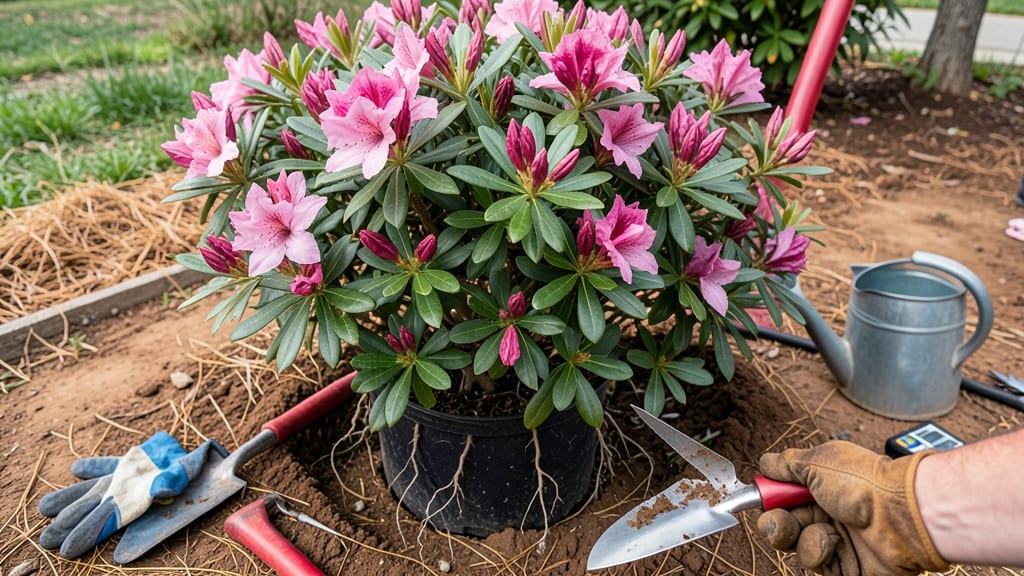
Timing your azalea planting in Texas isn't just about picking a month—it's about understanding your region's chill-hour needs and avoiding the brutal summer heat that can kill young roots before they take hold.
If you've ever watched your azalea 🌸 struggle or fail to bloom in Texas' intense climate, you know the stakes. The difference between a thriving shrub and a sad, wilted plant often comes down to when you put it in the ground.
I'll show you exactly how to match your azalea variety to Texas' diverse zones—from the cooler East to the hotter Hill Country—so you can plant with confidence.
Fall and early spring are your best bets, but there's more to it than just those seasons. We'll dive into the science behind chill hours, how to prep your soil for acid-loving azaleas, and even special tips for container planting that works in Texas' unpredictable weather patterns.
Ready to grow azaleas that not only survive but thrive in Texas? Let's get started with the planting schedule that'll make all the difference for your garden's most vibrant shrubs.
Best planting months for azaleas in Texas by chill-hour zones
Texas spans multiple chill-hour zones, from 400 hours in South Texas to over 1,000 hours in the Panhandle. This affects when you can safely plant azaleas—some varieties need cool fall temperatures to establish roots, while others tolerate warmer spring soil.
Let’s break down the best planting windows by region to avoid heat stress or winter dieback.
For North and Central Texas (USDA Zones 7b-8a), where chill hours range from 600-900 hours, the ideal planting window is October through mid-November. This gives roots time to establish before winter chill sets in.
In East Texas (Zone 8a), you can extend planting slightly later, up to early December, thanks to milder winters.
In South Texas (Zones 8b-10a), where chill hours drop below 600 hours, spring planting becomes critical. Aim for February through early March to avoid the brutal summer heat. Container-grown azaleas can handle this better than bare-root plants, so opt for potted varieties if planting in late spring.
Here’s a quick reference for critical deadlines by region to maximize success:
| Region | Chill Hours | Best Planting Window | Critical Deadline |
|---|---|---|---|
| North Texas (Panhandle) | 900-1,000+ | October 1 - November 15 | November 30 (avoid winter chill) |
| Central Texas (Austin, San Antonio) | 600-800 | October 15 - November 15 | December 1 (risk of frost) |
| East Texas (Tyler, Beaumont) | 500-700 | October 15 - December 1 | December 15 (milder winters) |
| South Texas (Corpus Christi, Brownsville) | 400-600 | February 1 - March 15 | March 31 (summer heat stress) |
If you miss the fall window, don’t panic—early spring planting (February-March) works for container-grown azaleas in South Texas. Just be sure to water deeply and mulch heavily to protect roots from drying out.
In North Texas, spring planting is riskier due to late frosts, so fall remains the gold standard.
For urban gardeners, microclimates matter. Azaleas near buildings or in shaded yards may tolerate later fall planting (up to December), while those in full sun exposure should go in by November. Always check your local average first frost date—planting too late leaves roots vulnerable to winter dieback.
Pro tip: Bare-root azaleas need to be planted sooner (by October) because their roots dry out faster. Container-grown plants give you more flexibility—you can plant them up to December in East Texas or even early April in South Texas, provided you water consistently during the first growing season.
Remember, azaleas thrive when planted in their dormant season. This means fall for most of Texas and early spring for the southernmost regions. By following these guidelines, you’ll give your azaleas the best chance to establish strong roots and bloom beautifully next season.
🌸
Top azalea varieties for Texas heat and their planting timelines
Not all azaleas thrive in Texas's intense heat, but these heat-tolerant varieties are perfect for our USDA Zones 8a-10b. Each variety has unique chill-hour requirements and ideal planting windows to ensure stunning blooms without stress.
For North Texas (Zones 8a-8b), where winters are cooler, varieties like 'George L. Taber' (pink blooms) and 'Southern Indigo' (deep purple) thrive with 400-600 chill hours. Plant these in October-November or February-March for best results.
In Central and South Texas (Zones 9a-10b), opt for low-chill varieties like 'Dr. Huey' (red blooms, 200-400 chill hours) or 'Birmingham' (white blooms, 300-500 chill hours). These should be planted in November-December or January-February to avoid summer heat stress.
| Variety | Chill Hours | Best Planting Months | Texas Zone Fit |
|---|---|---|---|
| 'George L. Taber' | 400-600 | Oct-Nov, Feb-Mar | 8a-9a |
| 'Southern Indigo' | 500-700 | Oct-Nov, Feb-Mar | 8a-9b |
| 'Dr. Huey' | 200-400 | Nov-Dec, Jan-Feb | 9a-10b |
| 'Birmingham' | 300-500 | Nov-Dec, Jan-Feb | 9a-10a |
| 'Oconee' | 300-500 | Oct-Nov, Feb-Mar | 8b-10a |
Urban gardeners in microclimates like Austin's downtown or Houston's coastal areas should prioritize low-chill varieties like 'Dr. Huey' or 'Birmingham'. These handle urban heat islands better and bloom reliably despite limited chill hours.
For container gardening, choose dwarf varieties like 'P.J.M.' (purple blooms, 400-600 chill hours) or 'Girard's Pink' (pink blooms, 300-500 chill hours). Plant these in November-December to ensure roots establish before summer heat peaks.
Always check your local chill-hour data—some Texas regions (like Far West Texas) may need even lower-chill varieties like 'Natchez' (white blooms, 150-300 chill hours) for reliable blooms.