
Plants
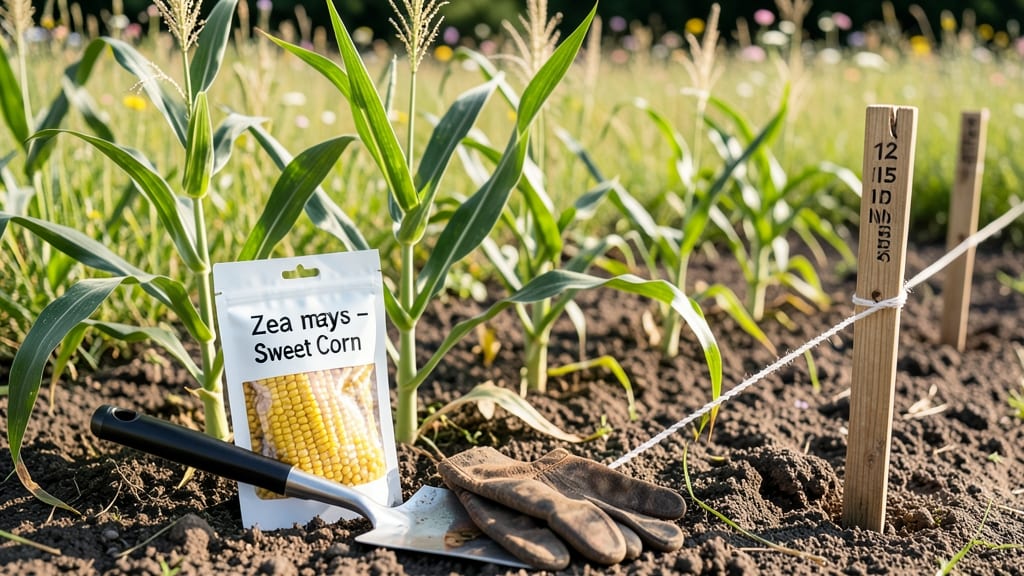
Timing your 🌽 corn planting in North Alabama isn't just about throwing seeds into the ground—it's the difference between a bountiful harvest and a sad, stunted crop.
With USDA Zone 7a-7b weather that can swing from frost to heatwaves in a week, knowing exactly when to plant gives you the edge local gardeners swear by.
Most gardeners here wait until mid-April to early May, but that window can shift based on your microclimate—whether you're in a cool valley or a warmer ridge.
The key is planting 2-3 weeks after your last frost date, when soil temperatures hit at least 60°F, ensuring your corn sprouts strong and avoids those dreaded late-spring freezes.
I'll show you how to calculate your precise frost-free deadline using local heat-unit charts and variety-specific maturity times, so you can adjust for North Alabama's unpredictable spring. No more guessing—just data-driven planting that maximizes your yield from late July through October.
Ready to turn your garden into a cornfield that rivals the pros? Let's break down the exact steps, from soil prep to seed selection, so you can plant with confidence and harvest like a local expert. Your future 🌽 corn feast starts here.
North Alabama corn planting deadlines by variety and frost risk zones
North Alabama’s USDA Hardiness Zones 7a-7b create unique challenges for corn growers, where last-frost dates can vary by weeks between valleys and mountain ridges.
The key to success lies in matching your corn variety to your local frost-free window—typically between March 15 and April 15, but with significant regional variation.
For example, Huntsville’s average last frost occurs around April 1, while Chattanooga’s is closer to March 25. These differences mean your planting window could shift by 2-3 weeks depending on elevation and microclimate. Let’s break down the optimal planting deadlines by corn type and frost risk zone.
🌽 CORN PLANTING SUMMARY FOR NORTH ALABAMA
| Variety Type | Days to Maturity | Ideal Planting Window | Frost Risk Zone | Soil Temp Requirement |
|---|---|---|---|---|
| Sweet Corn (e.g., Silver Queen) | 60-75 days | April 10-May 10 | 7a (valleys) | 60°F+ |
| Sweet Corn (e.g., Peaches & Cream) | 75-90 days | April 1-May 5 | 7b (ridges) | 60°F+ |
| Field Corn (e.g., Pioneer 39T23) | 90-120 days | April 1-April 15 | All zones | 55°F+ |
| Popcorn (e.g., Golden Bantam) | 70-85 days | April 15-May 1 | 7a-7b | 60°F+ |
Notice how shorter-day varieties like Silver Queen can be planted later in the season, while longer-maturing field corn requires an earlier start. The soil temperature threshold of 60°F is critical—corn seeds won’t germinate below this mark, even if frost risk has passed.
For valley locations (Zone 7a), aim to plant by April 10 to ensure harvest before the first frost in November. In higher elevations (Zone 7b), you have until May 5 for most varieties, but always check your local Alabama Extension frost date maps for precision.
One pro tip: If you’re in a microclimate with late frosts (like mountain gaps), consider row covers for early plantings. These can extend your window by 1-2 weeks while protecting tender seedlings from 28°F temperatures or lower.
For successful germination, wait until soil temperatures consistently reach 60°F at a 4-inch depth. Use a soil thermometer—this is more reliable than air temperature readings. In North Alabama, this typically aligns with late April for most areas.
Remember: Corn is sensitive to cold snaps even after germination. A 32°F night can kill young plants, so monitor your local National Weather Service forecasts closely during the first 3 weeks after planting.
🌱 For the most accurate timing, combine these deadlines with your variety’s heat-unit requirements—a topic we’ll explore in the next section on calculating your exact frost-free deadline.
How to calculate your exact frost-free deadline for corn in North Alabama
Calculating your exact frost-free deadline for corn in North Alabama isn’t just about checking a calendar—it’s about understanding your local microclimate and your chosen corn variety’s heat requirements.
Since North Alabama falls in USDA Zones 7a-7b, you’ll need to account for both average last-frost dates and soil temperature thresholds that corn simply won’t tolerate.
Start by identifying your local last-frost date, which typically ranges from March 15 to April 15 in North Alabama. However, this average can shift by 7-10 days depending on whether you’re in a valley (cooler) or on a ridge (warmer).
For example, Huntsville’s last frost often arrives 2-3 days earlier than Decatur’s due to its higher elevation.
Next, use a frost-free deadline calculator like the one from the Alabama Cooperative Extension System. Input your corn variety’s days to maturity (e.g., 70-90 days for sweet corn) and subtract this from your average first-frost date (around November 15).
This gives you a maturity deadline—planting too late risks ears forming before frost.
- Step 1: Find your local last-frost date (check Alabama Maps or Old Farmer’s Almanac).
- Step 2: Add 2-3 weeks to this date for a safe planting window (soil must be 60°F+).
- Step 3: Subtract your corn’s days to maturity from your first-frost date (Nov 15) to find your maturity deadline.
- Step 4: Adjust for heat units: Corn needs 2,500-3,000 growing degree days (GDD) to mature. Use a GDD calculator (like Purdue’s tool) to confirm your window.
- Step 5: Plant successive crops every 2 weeks for a staggered harvest (e.g., April 15, May 1, May 15).
For example, if you’re planting ‘Silver Queen’ sweet corn (85 days to maturity) in Zone 7a, your maturity deadline would be around August 10. This means you should aim to plant by May 15 to ensure ears form before frost.
If you’re in a cooler microclimate, like the Tennessee Valley, shift your planting window 1-2 weeks earlier.
Don’t overlook soil temperature, either. Corn seeds won’t germinate below 50°F, and roots struggle to establish in cold, wet soil. Use a soil thermometer to confirm temperatures are consistently 60°F+ at a 4-inch depth before planting.
In North Alabama, this often aligns with mid-to-late April, but early April plantings in raised beds (warmer soil) can work with row covers.
Pro tip: If you’re unsure about your local frost patterns, plant a test row of fast-maturing ‘Early Sunglow’ corn (60 days) in early April. This gives you a real-time read on your site’s frost risk while still providing an early harvest.
Pair this with a frost cloth for extra protection in valley gardens where cold air pools.