
Plants
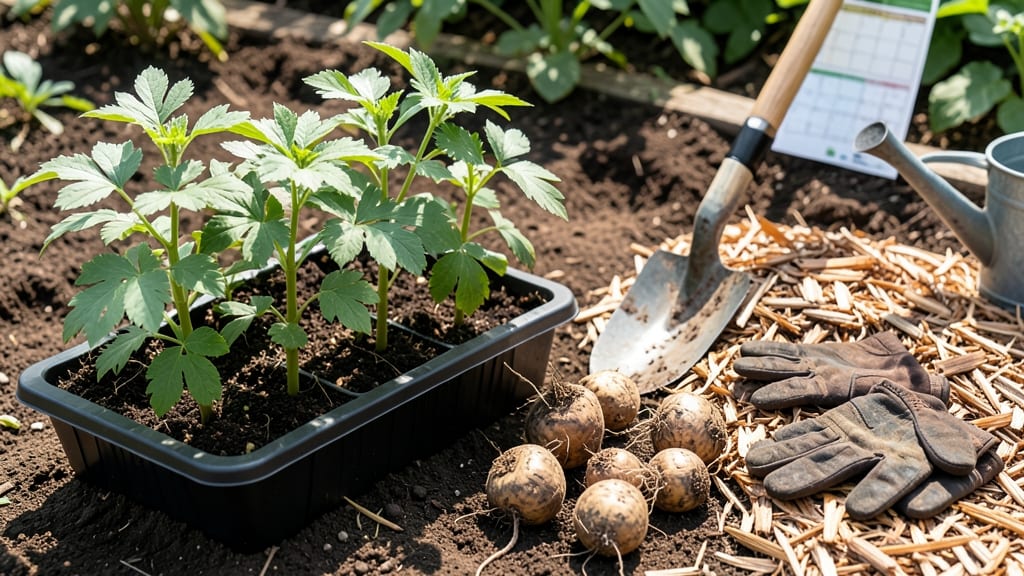
Timing your dahlias planting in Georgia isn't just about avoiding frost—it's about unlocking their full potential before summer heat sets in. Those stunning 🌼 blooms you dream of won't appear if you plant too early, leaving tubers vulnerable to cold snaps or too late, risking stunted growth.
Georgia's 7b-8b climate gives us a narrow window between late March and early May, but getting it right means warmer soil temperatures (60°F+) and knowing your exact last frost date.
I'll show you how to read your local microclimate like a pro so your dahlias thrive from the first bud to the final harvest.
Most gardeners make one of two mistakes: rushing tubers into cold soil or waiting until the heat forces bolting. Neither approach works for Georgia's humidity and summer intensity.
What you really need is a foolproof schedule that accounts for soil prep, tuber conditioning, and the critical 6-week window before peak blooming season.
In this guide, I'll break down the exact steps to plant your dahlias for maximum impact—from chitting tubers to mulching strategies that beat the heat. Let's get those 🌼 flowers growing on time, every time.
Georgia’s ideal dahlias planting timeline by region (soil temp & frost-free dates)
Georgia’s diverse climate means your dahlias planting window varies dramatically from North Georgia’s chilly hills to South Georgia’s balmy lowlands. Timing isn’t just about frost dates—it’s about soil temperature thresholds of 60°F+ and avoiding the dreaded bolt risk that ruins summer blooms.
Let’s break it down by region so you can plant with confidence.
In North Georgia (USDA Zones 7b), where frost lingers until mid-April, wait until after May 1 to plant. The soil needs to stay consistently above 60°F for at least 10 days to prevent tuber rot.
Meanwhile, Central Georgia (Zone 8a) gardeners can start as early as late March, but hold off until April 15 to ensure no surprise frosts.
For South Georgia (Zone 8b), the window opens February 15–March 15, but don’t rush—soil in this region can still be too cold for dahlias until mid-March.
Pro Tip: Use a soil thermometer to verify temperatures. Dahlias won’t thrive in cold soil, even if frost risk is past. Aim for 60°F+ at 4-inch depth for optimal root growth. If your soil is still chilly, chit your tubers indoors 4–6 weeks before planting to give them a head start.
🌱 Georgia Dahlias Planting Timeline by Region
| Region | USDA Zone | Last Frost Date | Soil Temp Threshold | Ideal Planting Window | Bolt Risk Window |
|---|---|---|---|---|---|
| North Georgia | 7b | Mid-April | 60°F+ (10+ days) | After May 1 | April 1–15 (high risk) |
| Central Georgia | 8a | Early April | 60°F+ (7+ days) | April 15–May 1 | March 20–April 5 |
| South Georgia | 8b | Late March | 60°F+ (5+ days) | February 15–March 15 | February 1–15 (moderate risk) |
⚠️ Bolt Risk: Planting too early causes dahlias to produce seed stalks instead of flowers. Use this table to avoid it!
Georgia’s humidity and heat also play a role. Once planted, dahlias thrive in full sun (6–8 hours daily), but afternoon shade in South Georgia can prevent wilting. If you’re in a hotter microclimate, prioritize well-draining soil and mulch heavily to retain moisture.
I’ve seen dahlias in Columbus and Savannah bolt prematurely when planted in heavy clay—so amend your soil with compost or sand if needed.
For extra insurance, monitor your local weather using tools like the National Weather Service or Plant Maps app. These platforms provide hyperlocal frost forecasts and soil temperature data.
For example, Athens (Zone 8a) might have a late frost in early April, while Savannah (Zone 8b) could be frost-free by mid-March. Adjust your timeline accordingly—don’t guess, don’t lose blooms.
If you’re chitting tubers indoors (a process where you sprout them in bright light before planting), start 6–8 weeks before your region’s ideal planting window. This gives you a 4–6 inch head start on growth, ensuring your dahlias hit the ground running when soil temps are perfect.
Place tubers in a bright, warm spot (70°F+) and watch for sprouts in 2–3 weeks.
Once your dahlias are in the ground, stake or cage them immediately—especially in North Georgia’s windier conditions. Tall varieties like ‘Café au Lait’ can reach 6 feet and need support. In South Georgia’s heat
How to prep dahlias for planting in Georgia’s climate (soil, chitting, and hardening)
Georgia’s humid summers and unpredictable spring weather demand extra prep work before planting dahlias. Skipping these steps can lead to weak stems, poor blooms, or even rotting tubers.
Start by selecting healthy tubers—look for firm, plump growth points with no soft spots or mold. Dormant tubers should be stored in a cool, dry place until planting season. For Georgia gardeners, this means waiting until after your last frost date, which varies by region.
Before planting, chitting your tubers gives your dahlias a head start. Place tubers in a tray with the growth points facing up, and position them in a warm spot (around 60-65°F) with indirect light.
This encourages roots to sprout before transplanting. Chitting takes 4-6 weeks, so start this process in early March for North Georgia or late February for South Georgia.
Test your soil’s drainage and pH. Dahlias thrive in well-draining soil with a pH of 6.5-7.0. If your Georgia soil is heavy clay, amend it with compost or sand to improve aeration. Work in a 2-3 inch layer of compost 2-3 weeks before planting.
Apply a 3-inch layer of mulch (straw or pine bark) after planting to retain moisture and regulate soil temperature. In South Georgia’s heat, mulch helps prevent tuber rot, while in North Georgia, it adds warmth for slower soil warming.
If you chitted tubers indoors, harden them off for 7-10 days before planting. Place them outdoors in partial shade during the day and bring them in at night. Gradually increase their sun exposure to avoid shock when transplanted.
Use a soil thermometer to confirm soil temps are at least 60°F at a depth of 6 inches. In Georgia, this typically aligns with mid-April in North GA and early April in South GA. Planting too soon can stunt growth.
One of the biggest mistakes Georgia gardeners make is planting dahlias too deep. Dahlias need 4-6 inches of soil coverage, but burying them deeper can cause rot.
Plant tubers with the growth points facing up and the neck slightly above soil level. Space them 12-15 inches apart to allow for airflow and reduce disease risk.
After planting, water deeply to settle the soil and encourage root growth. Avoid overhead watering, which can spread fungal diseases like powdery mildew—a common issue in Georgia’s humid climate.
Instead, use a drip irrigation system or water at the base of the plant in the morning to allow foliage to dry quickly.
With proper prep, your dahlias will establish strong roots and bloom prolifically from late summer through fall. In Georgia, this means 6-8 weeks of vibrant flowers, depending on your variety.
For extra-long blooming, deadhead spent flowers regularly and fertilize lightly every 4-6 weeks with a balanced 5-10-10 fertilizer. 🌼