
Plants
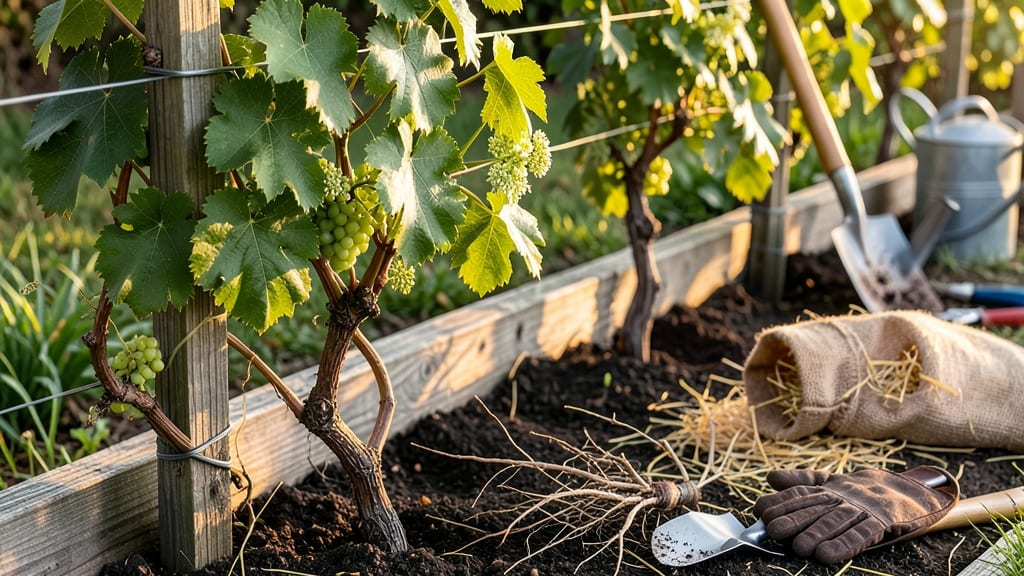
Planting grapes in North Carolina at the wrong time can mean struggling vines or poor fruit set—so getting the timing right is everything. With USDA zones 6a-8b offering diverse microclimates, your success depends on understanding chill-hour needs and frost patterns.
Whether you're growing Muscadines or French hybrids, the key is planting when vines are dormant but soil is workable.
For late winter to early spring (February-March) or fall (September-October), you’ll need to consider your specific zone. Coastal areas with milder winters may handle fall planting better, while inland regions might prefer spring’s cooler temperatures. The goal? Avoid late frosts that can damage tender new growth.
I’ll break down the best planting windows by variety, including soil prep and post-planting care to keep your 🍇 grapes thriving. From trellis setup to watering schedules, you’ll learn exactly what works for NC’s climate challenges.
Ready to grow grapes that produce bountiful harvests? Let’s dive into the step-by-step guide that’ll set you up for success—no guesswork required.
North Carolina grape planting calendar: chill-hour requirements by variety
North Carolina’s grape growers rely on chill hours—the number of hours below 45°F—to determine when to plant. Most NC varieties need 200-1,000 chill hours, with Muscadines thriving in lower-chill zones and Vinifera requiring more.
Understanding your USDA zone (6a-8b) and local frost patterns ensures your vines establish roots before summer heat arrives.
For example, Coastal Plain regions (Zone 8a-8b) like Wilmington can plant Muscadines as early as late February because they need fewer chill hours.
Meanwhile, Piedmont areas (Zone 7a-7b), like Raleigh, should wait until mid-March to align with French hybrid varieties like Cynthiana or Norton, which demand 500-700 chill hours.
Fall planting is also viable for container-grown vines, allowing roots to establish before winter dormancy. However, avoid planting after October 15 in most of NC to prevent frost damage to new growth.
🌱 Key Tip: Use a chill-hour calculator (like the one from NC State Extension) to match your variety to your microclimate. For instance, Vinifera grapes (like Cabernet Sauvignon) need 800+ chill hours and are best suited for Zone 7b and higher.
| Variety | Chill-Hour Needs | Best NC Zones | Optimal Planting Window |
|---|---|---|---|
| Muscadine (e.g., Scuppernong) | 200-400 | 6a-8b (Coastal Plain) | Late Feb–March |
| French Hybrids (e.g., Cynthiana) | 500-700 | 7a-8a (Piedmont) | Mid-March–April |
| Vinifera (e.g., Cabernet Sauvignon) | 800-1,000 | 7b-8b (Mountains) | April–May |
| Cold-Hardy (e.g., Concord) | 400-600 | 6a-7a (High Elevation) | Late Feb–March |
🌱 Note: Adjust for late-spring frost risks in Zone 6a.
If you’re in Zone 6a (e.g., Asheville), prioritize cold-hardy rootstocks like Riparia or Rupestris to extend your planting window. These rootstocks help vines survive 20°F temperatures, giving you flexibility to plant as late as early April without risking frost damage.
For Coastal NC, where winters are milder, fall planting (September–October) is ideal for container-grown vines. This allows roots to establish before the first frost (Nov 1) while avoiding summer heat stress. Just ensure your containers have drainage holes and use mulch to insulate roots.
Pro tip: Check your local Cooperative Extension Service for microclimate-specific frost alerts. For example, Mountain regions (Zone 7b+) often experience late-spring frosts in April, so delay planting Vinifera until mid-May to avoid bud damage.
Remember, soil temperature matters too! Aim for 60°F+ soil when planting to ensure root growth. Use a soil thermometer to monitor—especially in sandy Coastal Plain soils, which warm faster than clay-heavy Piedmont soils.
Finally, Muscadines are the low-maintenance champions of NC grapes, thriving in Zone 6a-8b with minimal chill hours. They’re perfect for beginner growers or those in warmer microclimates like the Outer Banks, where Vinifera grapes would struggle.
🍇 Action Step: Test your soil’s chill-hour accumulation using a home weather station or local Extension data. This ensures you plant when your vines are dormant but not stressed.
How to adjust planting timing for NC’s microclimates and frost risks
North Carolina’s diverse microclimates—from the Coastal Plain’s mild winters to the Mountains’ colder temperatures—mean you can’t use a one-size-fits-all planting schedule.
For example, Zone 8b areas (like Wilmington) can plant Muscadines in late fall (October-November), while Zone 6a regions (like the Appalachian foothills) should wait until early spring (March-April) to avoid frost damage.
Your elevation and proximity to water also play a role. Coastal areas have fewer chill hours and milder winters, making them ideal for fall planting of varieties like Scuppernong.
Meanwhile, inland Piedmont zones with higher chill hours (like 500-800 hours) can handle French hybrids planted in late winter for early spring growth.
Here’s how to adjust your planting timeline based on your specific conditions:
| Microclimate | Best Planting Window | Frost Risk | Recommended Varieties |
|---|---|---|---|
| Coastal Plain (Zone 8a-8b) | Fall (Sept-Oct) or Early Spring (Feb-Mar) | Low (mild winters) | Muscadines (Scuppernong, Carlos) |
| Piedmont (Zone 7a-7b) | Late Winter (Feb-Mar) or Fall (Oct-Nov) | Moderate (late spring frosts) | French Hybrids (Cynthiana, Norton) |
| Mountains (Zone 6a-6b) | Early Spring (Mar-Apr) | High (late frosts) | Cold-hardy Vinifera (Chardonnay, Cabernet Franc) |
If you’re in a high-frost-risk area, consider using cold-hardy rootstocks like Riparia or Rupestris to extend your growing window. These rootstocks help vines survive temperatures down to 0°F, giving you flexibility to plant earlier or later in the season.
Another trick? Plant container-grown vines in late spring (April-May) if you’re worried about frost. Containers warm up faster in spring and can be moved to sheltered spots if frost is forecasted. Just ensure your containers are at least 15 gallons to support mature vines.
For all planting scenarios, monitor local frost dates and adjust your schedule accordingly. The NC State Climate Office provides free frost forecasts—bookmark their site for real-time updates.
With the right timing and a little flexibility, you’ll avoid the heartbreak of frost-damaged vines and enjoy a bountiful grape harvest year after year.