
Plants
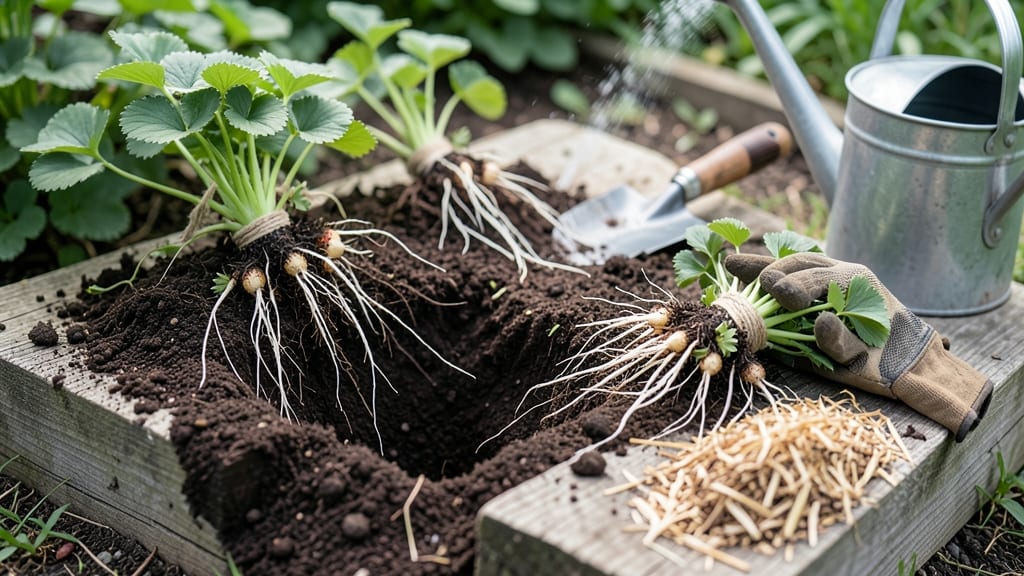
Timing your bare root strawberry planting in Zone 8 could mean the difference between a thriving 🍓 patch and one that struggles to produce. Unlike cooler climates, Zone 8’s mild winters demand precise planning to ensure your plants get the right chill hours before spring growth kicks in.
Most gardeners in Zone 8 make the mistake of planting too early, risking frost damage or too late, missing the optimal window. The key is understanding your specific microclimate and matching it with the right planting window—whether that’s late fall or early spring.
I’ll walk you through the exact steps to get it right, so you can enjoy a bountiful harvest from April to June.
You don’t need years of gardening experience to master this. With the right soil prep, chill-hour awareness, and a few simple care tips, even beginners can grow strawberries that thrive in Zone 8’s unique conditions.
Let’s dive into the best times to plant and how to set your strawberries up for success.
From soaking roots to mulching strategies, I’ll cover everything you need to know to avoid common pitfalls and maximize your strawberry yield. Ready to transform your garden into a sweet, berry-filled paradise? Let’s get started.

Optimal planting windows for bare root strawberries in Zone 8 based on chill hours
Zone 8’s mild winters make timing critical for bare root strawberries—plant too early, and roots rot; too late, and plants struggle to establish before heat arrives. The key is matching your variety’s chill-hour needs (300–1,000+ hours) with your microclimate’s frost dates.
Most June-bearing varieties thrive with 500–800 chill hours, while everbearing types often need fewer (300–500 hours).
In Zone 8, your last frost date typically falls around January 15, but coastal areas may see frost-free winters entirely.
Use this as your planting deadline: aim to get roots in the ground 6–8 weeks before last frost (by December 1 for inland areas) or early spring (February–March) if winters are frost-free.
For June-bearing varieties, the best window is late fall (October–November)—roots establish before winter, and plants bloom in spring. Everbearing varieties, however, handle early spring planting (February–March) better, producing fruit in two flushes (spring and fall).
Always check your chill-hour range—some modern varieties (like Seascape or Albion) adapt to Zone 8’s 300–500 chill hours.
🌱 Zone 8 Strawberry Planting Timeline
| Planting Window | Chill-Hour Needs | Best Varieties | Zone 8 Microclimate Notes |
|---|---|---|---|
| Late Fall (Oct–Nov) | 500–1,000+ hours | June-bearing (e.g., Chandler, Seascape) | Inland areas; mulch heavily for frost protection. |
| Early Spring (Feb–March) | 300–500 hours | Everbearing (e.g., Albion, Tristar) | Coastal/frost-free zones; avoid heat stress. |
| Winter (Dec–Jan) | 700+ hours | Day-neutral (e.g., Fort Laramie) | High-elevation Zone 8; use row covers for cold snaps. |
📌 Pro Tip: Test your microclimate’s chill hours using a chill-hour calculator or local extension office data.
If you’re in a coastal Zone 8 (e.g., Southern California), where winters rarely drop below 40°F, focus on early spring planting (February–March).
These areas often see fewer than 300 chill hours, so choose day-neutral varieties like Seascape or Ozark Beauty, which produce fruit without strict chill requirements.
For inland or high-elevation Zone 8 (e.g., parts of Arizona or Nevada), late fall (October–November) is ideal. Plant 6–8 weeks before last frost to allow roots to establish before winter dormancy.
Use June-bearing varieties like Chandler or Portola, which handle 500–800 chill hours and reward you with heavier spring harvests.
Always check your local frost dates—they can vary by 1–2 weeks even within Zone 8. For example, Phoenix rarely sees frost, while Denver’s outskirts may hit 20°F in winter. Adjust your planting window accordingly: if frost is likely, plant earlier (October); if frost-free, wait until February–March.
After planting, mulch heavily (4–6 inches) with straw or leaves to insulate roots from temperature swings. In Zone 8, this means protecting against both cold snaps and early heat waves. Remove mulch in early spring once soil warms to 50°F to prevent rot.
One critical mistake in Zone 8 is planting too early (September)—soil may still be warm, causing roots to rot. Conversely, planting too late (April) risks heat stress before roots establish. Aim for cool but frost-free soil (50–60°F) at planting time.
Finally, soil temperature matters as much as air temperature. Use a soil thermometer to confirm it’s above 40°F before planting. In Zone 8, this often aligns with November–February, but coastal areas may extend planting into March.
Optimal planting windows for bare root strawberries in Zone 8 based on chill hours
Zone 8’s mild winters make timing critical for bare root strawberries—plant too early, and roots rot; too late, and they struggle to establish before summer heat. The key is matching your variety’s chill-hour needs (300–1,000+ hours) with your local microclimate.
June-bearing types need more chill hours (600–1,000), while everbearing varieties tolerate fewer chill hours (300–500).
For most of Zone 8, the sweet spot is late fall to early spring—specifically, October through February. This window ensures roots establish before summer’s heat stress, while avoiding the frost risks of winter.
Coastal areas (like San Diego) can plant as late as February, while inland valleys (like Sacramento) should aim for November to avoid early freezes.
| Planting Window | Chill Hours Needed | Best Varieties | Zone 8 Notes |
|---|---|---|---|
| Late Fall (Oct–Nov) | 600–1,000 hrs | June-bearing (e.g., Chandler, Seascape) | Ideal for inland areas; mulch heavily for frost protection. |
| Winter (Dec–Jan) | 300–600 hrs | Everbearing (e.g., Albion, Tristar) | Best for coastal Zone 8; avoid if temps drop below 20°F. |
| Early Spring (Feb) | 300+ hrs | Day-neutral (e.g., Seascape, Fort Laramie) | Risky in hot inland areas; prioritize shade cloth. |
If you’re unsure about your chill hours, check your local Cooperative Extension Service or use a chill-hour calculator. For example, Los Angeles averages 500–700 chill hours, while Phoenix barely hits 300 hours.
In Phoenix, stick to day-neutral varieties like Seascape, while Los Angeles can handle June bearers like Chandler if planted in November.
Pro tip: Plant bare root strawberries in the morning when temps are cool (below 70°F). This reduces transplant shock and gives roots time to acclimate before afternoon heat. Water deeply before and after planting to encourage root spread—aim for 1–1.5 inches of water per week once established.
Zone 8’s unpredictable temperature swings (from 30°F to 90°F in a single season) demand extra care. After planting, apply a 3-inch layer of mulch (straw or pine needles) to insulate roots. In cooler microclimates (like higher elevations), delay planting until January to avoid winter dieback.
Remember: June-bearing varieties planted in fall will fruit next spring/summer, while everbearing types may produce two harvests per year if planted in spring and fall. Test a few varieties to see what thrives in your specific Zone 8 pocket!