
Plants
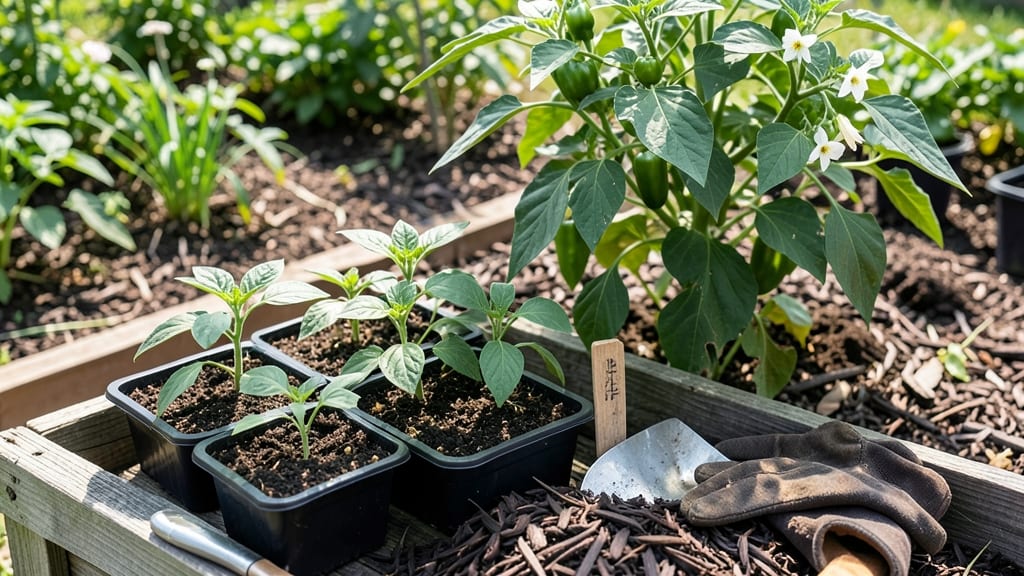
Timing your 🌶️ bell pepper planting in Southern California isn’t just about throwing seeds in the dirt—it’s the difference between a bountiful harvest and bitter, bolted plants.
With our year-round growing season, you’ve got two prime windows to get it right, but one wrong move can send your peppers into early flowering or wilting under summer’s intensity.
Most gardeners in zones 9b-11 swear by planting in February-April for spring crops and August-October for fall, but coastal areas near 10a-11 can push those dates later. The key? Soil temps—wait until they hit 60°F+ in spring or 70°F+ in fall, or your peppers will stall.
I’ve seen even experienced growers miss this, leading to stunted plants or wasted effort.
What if you want fresh peppers year-round? The secret lies in succession planting—staggering starts every 3-4 weeks to keep your garden producing through summer’s heat.
Plus, I’ll show you how to pick the right varieties (like heat-tolerant ‘Jupiter’) and use shade cloth to trick your plants into ignoring the thermometer.
Ready to stop guessing and start growing? Let’s break down the exact months, soil tricks, and microclimate hacks that’ll have you harvesting glossy, flavorful peppers from April through December—without the stress.
Best planting months for bell peppers in Southern California’s climate zones
Southern California’s diverse microclimates mean your bell pepper planting window varies dramatically from coastal Santa Barbara to the Coachella Valley. Unlike northern regions, we don’t have to worry about frost, but soil temperature and heat tolerance are critical.
Plant too early in inland areas, and you’ll trigger premature flowering—resulting in bitter peppers. Plant too late, and summer’s 100°F+ heatwaves will stress your plants before they fruit. Let’s break it down by zone.
Coastal areas like Malibu to San Diego (USDA zones 10a-11) enjoy milder summers and cooler nights, giving you a 6-month planting window. Inland valleys (e.g., San Fernando Valley, Riverside) in zones 9b-10a face hotter days and drier soils, requiring precise timing.
Meanwhile, desert regions like Palm Springs (zone 10b-11) can plant nearly year-round but must avoid peak July-August heat.
🌱 Key Rule: Always plant when soil temps hit 60°F+ (spring) or 70°F+ (fall). Use a soil thermometer—don’t guess! Coastal gardeners can start 2-3 weeks earlier than inland growers due to cooler soils. For example, Los Angeles coastal may plant in late January, while Palm Springs waits until mid-February.
| Zone | Ideal Planting Window | Soil Temp Threshold | Key Risks | Pro Tip |
|---|---|---|---|---|
| Coastal (10a-11) | Jan 20 - Apr 15 Aug 1 - Sep 30 |
60°F (spring) 70°F (fall) |
Fungal risk in wet winters Bolting if planted too early |
Use shade cloth 30% in summer |
| Inland Valleys (9b-10a) | Feb 15 - Mar 31 Aug 15 - Sep 15 |
65°F (spring) 75°F (fall) |
Heat stress above 95°F Dry soil cracks |
Mulch with straw to retain moisture |
| Desert (10b-11) | Feb 1 - Mar 15 Sep 1 - Oct 15 |
70°F+ year-round | Bolting in spring Sunscald in summer |
Plant in shade cloth until established |
In coastal Southern California, I’ve seen gardeners in San Diego successfully plant bell pepper seeds as early as mid-January under row covers to protect against cool ocean breezes.
However, if you’re in San Luis Obispo, wait until late February—the Santa Lucia Mountains create microclimates where frost pockets can still form. Always check your local ag extension office for heatwave forecasts, as unusual temperature spikes can derail your crop.
For inland areas, the spring planting window shrinks to just 6-8 weeks (February-March). This is because soil warms quickly, and by mid-April, daytime temps often exceed 90°F.
My Riverside garden failed miserably when I planted Jupiter peppers in early April—they bolted within 3 weeks! Instead, aim for late February when nights are still 55°F+.
Fall planting offers a second chance for harvests, but timing is just as critical. Inland valleys can plant as late as mid-September, while coastal areas extend to early October. The goal is to give peppers 90-100 days to mature before December’s cooler temps slow growth.
For example, ‘Early California Wonder’ (60-day variety) planted in late August will be ready by late October, just as holiday demand peaks.
💡 Pro Tip: Use black plastic mulch to warm soil faster in spring or reflective mulch to cool roots in summer. In my Palm Springs garden, I’ve added aluminum foil mulch under plants during July heatwaves—it reduces soil temps by 10°F+ and prevents root stress
Best planting months for bell peppers in Southern California’s climate zones
Southern California’s diverse microclimates—from coastal fog belts to inland deserts—create distinct windows for planting bell peppers. Unlike northern climates, you won’t worry about frost, but soil temperature and heat tolerance dictate the perfect timing.
Coastal areas (like Santa Barbara) have a longer spring window, while inland valleys (like Riverside) face earlier heat stress. Let’s break it down by zone to avoid bolting or stunted growth.
For coastal Southern California (USDA zones 10a-11), your sweet spot is February through April. The ocean breeze keeps soil cooler longer, giving seedlings time to establish before summer’s intensity.
Inland areas (zones 9b-10a) should plant March through early May, while desert regions (like Palm Springs) shift to late February through April to escape June’s scorching heat.
| Zone | Ideal Planting Window | Soil Temp Threshold | Key Risk |
|---|---|---|---|
| Coastal (Santa Barbara, LA) | February – April | 60–65°F | Overwatering (foggy mornings) |
| Inland (San Bernardino, Riverside) | March – Early May | 65–70°F | Heat stress (above 90°F) |
| Desert (Palm Springs, Coachella) | Late Feb – April | 70–75°F | Bolting (rapid flowering) |
Pro tip: Use a soil thermometer to confirm readiness—bell peppers need 60°F+ soil to germinate. In coastal areas, wait until March 15th to avoid chilly nights slowing growth. For inland zones, April 1st is your cutoff to prevent summer burnout.
Varieties like ‘Early California Wonder’ thrive in these windows, while ‘Jupiter’ handles heat better for late starts.
Fall planting is equally critical. Aim for August through early October to harvest before winter rains. Coastal areas can extend to November, but inland zones should finish by October 15th.
The key? Plant 6-8 weeks before first frost risk (yes, even SoCal has rare inland frosts in December). Shade cloth (30-50%) helps seedlings adjust to summer heat if you’re pushing the envelope.
Remember: Heat waves above 95°F will stunt growth or cause blossom drop. If your forecast shows triple-digit days, delay planting or use drip irrigation to keep roots cool.
Mulch with straw or wood chips to maintain even soil temps—this is non-negotiable in inland deserts where daytime highs can swing wildly.
For year-round success, pair spring and fall plantings with succession sowing every 2 weeks. This ensures a continuous harvest from April through December, even in Southern California’s mild winters. Just avoid planting in June or July—the heat will overwhelm young plants, leading to bitter, underdeveloped peppers.