
Plants
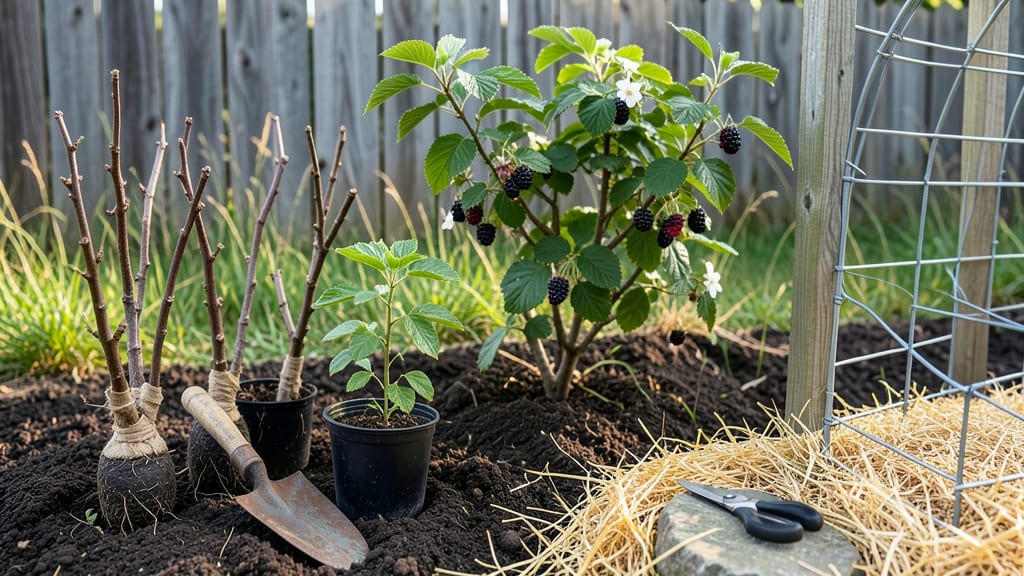
Timing your blackberry 🫐 planting in Georgia isn't just about following a calendar—it's about matching your variety's chill-hour needs with the state's unpredictable springs. Plant too early in Zone 7b-8b, and late frosts can wipe out tender roots; too late, and your fall-bearing varieties miss their prime growth window.
Most Georgia gardeners swear by late winter to early spring planting (February-March), but fall planting (October-November) works too—especially for primocane varieties that fruit on new canes.
The key is preparing your soil 4-6 weeks before planting to give roots time to establish before Georgia's last frost (mid-March).
I've helped Georgia growers double their harvests by aligning planting with chill-hour requirements—whether you're working with low-chill 'Natchez' or hardy 'Prime-Ark Freedom'. Let's break down exactly when to plant for your specific variety and how to protect your investment from Georgia's unpredictable frost patterns.
From soil prep to frost protection, you'll discover the 3 critical windows that separate a struggling patch from a thriving blackberry thicket. Ready to plant with confidence? Let's get started.
Georgia blackberry planting timeline by chill-hour needs
Timing your blackberry planting in Georgia isn’t just about the calendar—it’s about matching your variety’s chill-hour requirements with the state’s USDA Zones 7b-8b. Georgia’s mild winters mean most varieties need 300-700 chill hours to break dormancy, but planting too early risks frost damage while late planting delays fruit production.
Let’s break down the optimal planting windows for each category.
For low-chill varieties (300-500 hrs), like 'Arapaho' or 'Chester', your window opens in late winter (February-March) once soil temperatures hit 50°F+. These varieties thrive in Georgia’s warm winters and produce fruit earlier.
Meanwhile, semi-hardy (500-700 hrs) types like 'Natchez' or 'Prime-Ark Freedom' can handle a slightly broader window—plant them in early spring (March) or fall (October-November).
Hardy varieties (700+ hrs), though rare in Georgia, might include 'Black Satin'—plant these in fall (October) to establish roots before winter. Fall planting also gives canes time to root before Georgia’s last frost (March 15), reducing transplant shock.
Always check your local frost risk maps—northern Georgia (Zone 7b) has higher frost chances than southern areas (Zone 8b).
Soil temperature is just as critical as air temperature. Aim for 55-65°F soil temps when planting—use a soil thermometer to avoid guessing. Cold soil slows root growth, leaving plants vulnerable to stress. In Georgia’s unpredictable early springs, soil may warm faster than air, so monitor closely.
Here’s how Georgia’s climate zones affect your planting strategy:
| Chill-Hour Needs | Best Planting Window | Soil Temp Requirement | Frost Risk Zone | Georgia Variety Examples |
|---|---|---|---|---|
| 300-500 hrs | Late Winter (Feb-Mar) | 50-55°F | Zone 8b (low risk) | Arapaho, Chester |
| 500-700 hrs | Early Spring (Mar) or Fall (Oct-Nov) | 55-65°F | Zone 7b-8b | Natchez, Prime-Ark Freedom |
| 700+ hrs | Fall (Oct) | 60-70°F | Zone 7b (higher risk) | Black Satin (rare) |
Fall planting (October-November) is ideal for most Georgia growers because it allows canes to establish roots before winter. However, avoid planting after November 15, when Georgia’s first frost typically arrives.
If you miss fall, don’t panic—spring planting (February-March) works too, but prioritize varieties with lower chill-hour needs to avoid delayed fruiting.
Bare-root plants are cheaper but must be planted immediately upon arrival. Potted blackberries, however, offer flexibility—plant them anytime soil is workable (no frost risk). Amend planting holes with compost or aged manure to improve drainage, as Georgia’s clay-heavy soils can suffocate roots.
Space canes 3-4 feet apart in rows 6-8 feet apart for airflow and disease prevention.
Pro tip: Use a mulch blanket of straw or pine needles after planting to retain moisture and suppress weeds. In Georgia’s humid climate, mulch also reduces fungal diseases like botrytis, which thrives in damp conditions. Water deeply after planting to encourage root growth, but avoid overwatering—blackberries hate soggy roots.
Remember, Georgia’s 210 frost-free days create a long growing season, but timing is everything. Plant too early, and you’ll battle frost; too late, and your harvest shrinks. Match your variety’s chill needs to your zone, and you’ll enjoy juicy blackberries from late spring through fall.
Best blackberry varieties for Georgia’s climate and their planting quirks
Georgia’s diverse climate—from the cool Appalachian mountains to the hot Coastal Plain—means not all blackberry varieties thrive equally. Choosing the right cultivar for your region ensures better disease resistance, yield consistency, and harvest timing. Let’s break down the top performers and their unique planting needs.
For northern Georgia (USDA Zones 7a-7b), varieties like 'Natchez' and 'Prime-Ark Freedom' excel—they handle 500-700 chill hours and produce summer-bearing fruit. Meanwhile, southern Georgia (Zones 7b-8a) favors low-chill varieties like 'Ouachitambelle' or 'Arapaho', which need 300-500 chill hours and thrive in warmer winters.
Here’s how their planting windows differ: Fall-planted varieties (like 'Natchez') establish roots before winter, while spring-planted types (like 'Prime-Ark Freedom') rely on early-season warmth. Your choice depends on your last frost date and soil temperature—aim for 50-60°F soil for optimal root growth.
| Variety | Chill Hours | Best Planting Time | Harvest Window | Key Quirk |
|---|---|---|---|---|
| Natchez | 500-700 hrs | Fall (Oct-Nov) | Late May-June | Thornless, needs trellis |
| Prime-Ark Freedom | 500-700 hrs | Spring (Feb-Mar) | June-July | Disease-resistant, primocane-bearing |
| Ouachitambelle | 300-500 hrs | Fall (Oct-Nov) | July-August | Heat-tolerant, fall-bearing |
| Arapaho | 300-500 hrs | Spring (Feb-Mar) | June-July | Drought-resistant, thorny |
Primocane vs. floricane varieties also dictate planting strategies. Primocane-bearing types (like 'Prime-Ark Freedom') produce fruit on new growth, so plant them in early spring to maximize summer harvests. Meanwhile, floricane-bearing varieties (like 'Natchez') fruit on second-year canes, making fall planting ideal for establishing next year’s crop.
One critical quirk for Georgia growers: soil pH matters. Most blackberries prefer 5.5-6.5 pH, but southern varieties (like 'Ouachitambelle') tolerate slightly higher pH (up to 7.0). Test your soil before planting—lime or sulfur amendments can save a struggling patch.
Finally, thornless vs. thorny isn’t just about comfort—it affects pruning ease and pest access. Thornless varieties (like 'Natchez') are easier to harvest but may need extra support from trellises. Thorny types (like 'Arapaho') deter birds but require gloves and caution during maintenance.
🌱