
Plants
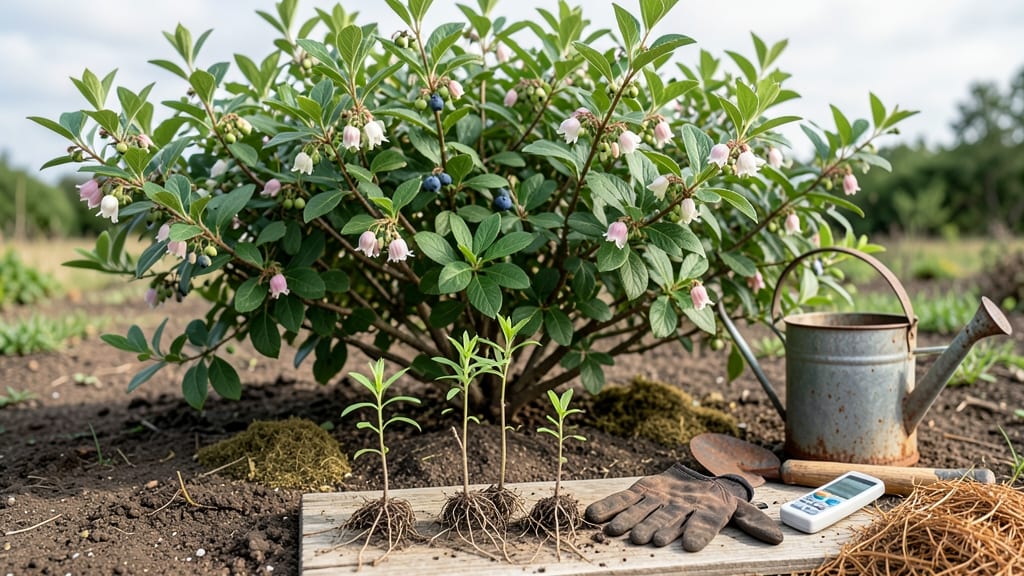
If you've ever wondered when to plant blueberries in Kansas, timing isn't just about avoiding frost—it's about giving your 🫐 bushes the exact chill hours they need to thrive.
Kansas' unpredictable spring weather can make or break your harvest, so getting it right means the difference between a few sad berries and a bush bursting with sweet fruit.
Most Kansas gardeners plant blueberries between February and April, but the best window depends on your variety and microclimate. High-chill varieties need those cold winter hours to set fruit, while low-chill types can handle a shorter dormancy period.
I'll break down exactly which varieties work best in your USDA Zone 5b-7a and how to time your planting for maximum success.
You might think spring is the only option, but fall planting can actually give your blueberries a head start—if you do it right. We'll cover soil prep, frost protection, and even container planting tips for renters or small spaces.
With the right approach, you can enjoy Kansas-grown blueberries every summer, no matter where you live in the state.
Ready to grow blueberries that produce like crazy? Let's dive into the exact planting schedule, variety recommendations, and pro tips that'll have your bushes thriving—no guesswork required.
Best planting times for Kansas blueberries by chill-hour requirements
Kansas’ USDA Zones 5b-7a create unique challenges for blueberry growers. The key to success lies in matching your blueberry variety to the chill hours your region receives—typically 400-900 hours below 45°F during dormancy.
Planting at the wrong time can mean poor fruit set or even plant death from late frosts or heat stress.
Most Kansas gardeners should focus on spring planting (March-April) for high-chill varieties like Bluecrop or Duke, while low-chill varieties (like Top Hat) can handle fall planting (September-October). The last frost date in Kansas typically falls between mid-April and early May, depending on your microclimate.
Here’s how to align your planting schedule with Kansas’ climate quirks—including frost risks, soil thaw, and chill-hour accumulation.
For spring planting, aim to get your blueberries in the ground 4-6 weeks before the average last frost date. In Zone 5b (northeast KS), this means mid-March; in Zone 7a (southwest KS), you can wait until early April.
Use row covers if planting early to shield from late frosts.
Fall planting is riskier in Kansas due to early frosts, but it works for low-chill varieties. Plant 6-8 weeks before the first expected frost (typically mid-October) to allow roots to establish. Water thoroughly after planting to prevent drought stress during winter.
Soil temperature is critical—wait until the ground warms to 45°F for spring planting. Use a soil thermometer to monitor. In containers, you can plant 2-3 weeks earlier since pots warm faster than in-ground soil.
Kansas’ variable weather means you’ll need to stay flexible. If unseasonably cold snaps hit in spring, delay planting until soil stabilizes. Conversely, if heatwaves arrive early, prioritize shade cloth and mulch to protect young plants.
Protecting your blueberries from Kansas’ wind is another key factor. Plant in a sheltered location (e.g., near a fence or building) or use windbreaks to prevent root desiccation and branch damage.
Finally, remember that blueberries need acidic soil (pH 4.5-5.5). Test your soil 3-4 weeks before planting and amend with sulfur or peat moss if needed. Kansas’ alkaline soils often require ongoing pH adjustments.
With the right timing and preparation, your Kansas blueberry bushes will thrive—producing sweet, abundant harvests for years to come. 🌱
Best planting times for Kansas blueberries by chill-hour requirements
Kansas’ USDA Zones 5b-7a create a unique challenge for blueberry growers: chill-hour needs must align with planting windows. Most Kansas varieties require 400-900 chill hours, meaning they need cold winter temperatures to set fruit buds.
Planting at the wrong time can leave your bushes struggling to produce—or worse, dying from frost damage.
Spring planting (March-April) is ideal for most Kansas gardeners because it gives young bushes time to establish roots before summer heat arrives. However, fall planting (September-October) works for low-chill varieties (200-400 hours) if you’re in Zone 6-7a, where winters are milder.
The key is avoiding late spring frosts, which can kill tender new growth.
Here’s how to match your blueberry variety to Kansas’ planting windows based on chill hours:
| Chill-Hour Range | Best Planting Window | Kansas Zone Fit | Key Consideration |
|---|---|---|---|
| 900-1,200 hours | Late March-April | Zones 5b-6a | Highest frost risk; use frost cloth if planting early. |
| 600-900 hours | April-May (after last frost) | Zones 6a-7a | Ideal for most Kansas varieties like 'Bluecrop'. |
| 400-600 hours | March-April OR September-October | Zones 6b-7a | Fall planting works if soil isn’t frozen. |
| 200-400 hours | September-October (6-8 weeks before first frost) | Zones 7a | Best for low-chill varieties like 'Southern Highbush'. |
For Zone 5b gardeners (e.g., Wichita, Salina), stick to late March-April planting to avoid late frosts. In Zone 7a (e.g., Kansas City, Topeka), you can push fall planting to early October, but monitor weather forecasts—an early frost can kill young roots.
Pro tip: Use mulch (4-6 inches of pine straw) after planting to insulate roots during Kansas’ unpredictable temperature swings. This is especially critical in spring, when nighttime frosts can still occur even after the last official frost date.
Remember, blueberries are perennial, so planting at the right time ensures decades of harvests. If you’re unsure about your chill hours, check your local Cooperative Extension Service or use a chill-hour calculator tailored to Kansas’ microclimates.