
Trees
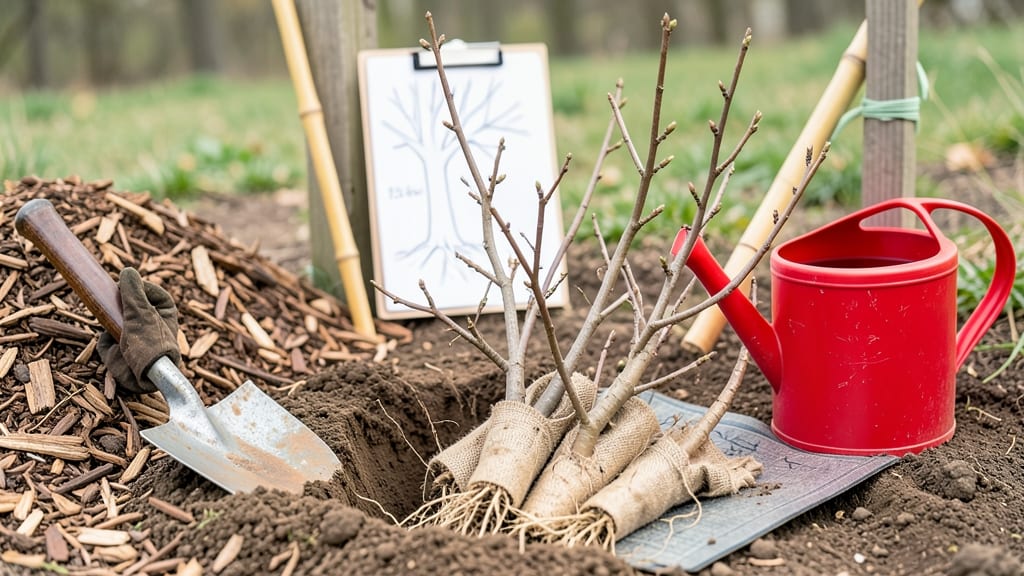
Planting fruit trees in Massachusetts at the wrong time could mean the difference between a thriving orchard and a frost-killed disappointment.
With chill-hour requirements and frost dates varying by region, knowing when to plant fruit trees in Massachusetts is more than just picking a month—it’s about matching your variety to your microclimate.
Whether you’re dreaming of crisp 🍎 apples or juicy berries, timing matters. Early spring (March–April) is ideal for bare-root trees, while container-grown varieties can go in until early fall (September–October).
But here’s the catch: planting too late in spring risks shallow roots before winter, while fall planting must finish before the first frost—typically around October 15 in most of the state.
I’ll break down the exact chill-hour needs for your favorite fruit trees and how to adjust for Massachusetts’ 5b-6b zones. From soil prep to frost-proofing, you’ll learn how to give your trees the best shot at a bountiful harvest—no guesswork, just science-backed timing.
Ready to plant with confidence? Let’s dive into the step-by-step guide tailored to your region, so you can avoid the most common mistakes and set your orchard up for success.
Massachusetts fruit tree planting dates by chill-hour requirements
Massachusetts spans USDA Zones 5b–6b, where chill hours (the number of hours below 45°F) dictate which fruit trees thrive. Most apple varieties need 800–1,200 chill hours, while peaches and cherries require 400–800 hours.
Planting at the wrong time disrupts dormancy cycles, stunting root growth or triggering premature blooming—both fatal in our unpredictable spring frosts.
Spring planting (March–April) works best for bare-root trees because the soil thaws first in Western MA (e.g., Worcester) but stays frozen longer in Eastern MA (e.g., Boston).
Fall planting (September–October) suits container-grown trees, giving roots time to establish before winter. Ever-bearing varieties like arctic kiwi or honeycrisp apples need extra care—delay planting until after the last frost (mid-April on average).
Here’s how to match your tree to Massachusetts’ chill-hour zones and dormancy needs:
| Variety | Chill Hours | Best Planting Window | Notes |
|---|---|---|---|
| Apples (e.g., Honeycrisp, MacIntosh) | 800–1,200 | Early spring (March–April) or early fall (Sept 15–Oct 15) | Needs full sun; prune in late winter. |
| Peaches/Nectarines (e.g., Redhaven, Fantasia) | 400–800 | Late spring (April–May) after frost risk | Avoid low spots (frost pockets). |
| Cherries (e.g., Montmorency, Stella) | 600–900 | Early fall (Sept 1–Oct 15) | Plant on slight slope for drainage. |
| Pears (e.g., Bartlett, Anjou) | 400–800 | Early spring (March–April) | Thin fruit in summer to improve size. |
| Blueberries (e.g., Patriot, Bluecrop) | 200–600 | Spring (April–May) or fall (Sept–Oct) | Soil pH 4.5–5.5; mulch with pine needles. |
For low-chill varieties (e.g., arctic kiwi or dwarf plums), plant in late April to avoid premature blooming. High-chill varieties (e.g., winter bananas) need fall planting to establish roots before dormancy.
Always check the UMass Extension chill-hour map for your specific town—some areas like Nantucket have fewer than 600 chill hours, limiting options to low-chill apples or pears.
Pro tip: Use row covers or frost cloth for early bloomers like cherries or peaches if planting in Zone 5b.
These varieties bloom earliest and are most vulnerable to late frosts (May 10–20 is peak risk). Ever-bearing strawberries planted in early fall can produce fruit the following spring, but avoid planting after October 1—roots won’t harden before winter.
Soil temperature matters too: Plant when soil is 45°F+ (use a soil thermometer) and avoid waterlogged ground. Western MA (e.g., Springfield) warms faster than coastal areas (e.g., Provincetown), so adjust your timeline by 1–2 weeks accordingly.
For container-grown trees, plant in early fall to let roots acclimate before winter—just don’t wait past October 15, or roots may not establish before frost.
If you’re planting dwarf varieties (e.g., columnar apples or patio peaches), prioritize well-draining soil and full sun. These trees establish faster but still need 6–8 hours of sunlight daily. Semi-dwarf varieties (e.g., Liberty apples) strike a balance—plant them 3–4 feet apart for airflow and disease prevention.
Remember: Bare-root trees must be planted within 24–48 hours of purchase. Soak roots in water or compost tea before planting to revive them. For container-grown trees, remove the pot and loosen roots if they’re circling. Amend the planting hole with compost and a balanced fertilizer (10-10-10) to kickstart growth.
🌱
Frost-free deadlines & microclimate adjustments for Massachusetts regions
Massachusetts’ diverse climate means last frost dates can vary by 10–14 days between Western MA (warmer) and coastal areas (cooler). For bare-root trees, aim to plant 4–6 weeks before your region’s average last frost—typically mid-March to early April for most areas.
Container-grown trees get a slightly later window (April–May) since their roots are less frost-sensitive.
Coastal regions like Barnstable County often see frost until April 20–25, while inland areas like Pittsfield may thaw by April 10–15. Use the UMass Extension Frost Calculator to pinpoint your local deadline.
For fall planting (best for container-grown trees), wait until September–October when soil temps drop below 70°F—this prevents root stress before winter dormancy.
| Region | Last Frost Date | Spring Planting Window | Fall Planting Window |
|---|---|---|---|
| Western MA (Pittsfield) | April 10–15 | March 15–April 5 | Sept 20–Oct 10 |
| Boston Area | April 15–20 | March 30–April 10 | Sept 15–Sept 30 |
| Coastal (Cape Cod) | April 20–25 | April 5–April 15 | Sept 1–Sept 15 |
Microclimates can shift planting deadlines by weeks. If your yard sits in a frost pocket (common in valleys), plant 2–3 weeks later than the regional average. Conversely, south-facing slopes warm up faster—ideal for early spring planting of frost-sensitive varieties like peaches (which need 500–800 chill hours).
For high-risk zones, use row covers or windbreaks to protect young trees until late May.
Pro tip: Monitor soil temperature with a probe—roots won’t establish below 40°F. In Zone 5b (northern MA), wait until soil reaches 50°F for 2–3 inches deep before planting. Use black plastic mulch in early spring to warm soil faster if needed.
For container-grown trees, fall planting is ideal because their roots stay active longer than bare-root trees. In September–October, focus on watering deeply (1–2 inches per week) to encourage root growth before dormancy. Avoid planting in November—trees need 4–6 weeks to harden off before winter.
🌱 Remember: Peaches and nectarines are the most frost-sensitive—plant them last in your spring window or choose low-chill varieties like ‘Redhaven’ apples (only 400–500 chill hours) for warmer microclimates.